










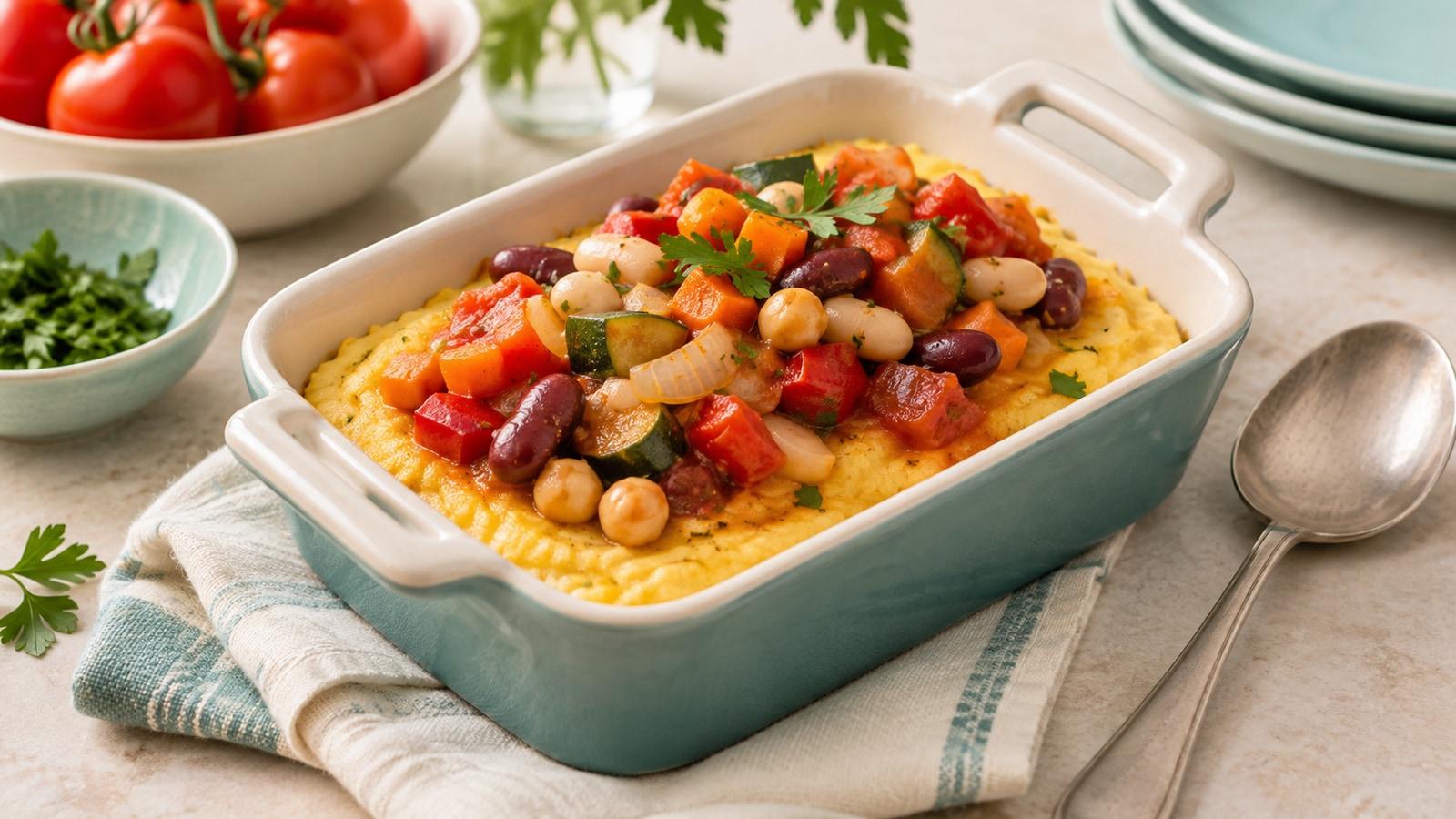
Polenta makes a soft base for a colorful mixture of beans, tomatoes, and vegetables. In this version, you spread the cooked polenta in a baking dish, spoon the bean mixture over it, and warm everything together. The result is a meal you can scoop into bowls or let rest briefly before serving in portions.
Using three kinds of canned beans adds variety without three separate cooking projects. If you only have two kinds, that’s fine; keep the total amount roughly the same and use what’s in the cupboard.
Ingredients
Makes: about 4 servings
Prep: about 15 minutes
Cook: about 30–35 minutes
- 1 cup dry quick-cooking polenta
- Water or lower-sodium broth, according to the polenta package
- 1 tablespoon olive oil
- 1 small onion, diced
- 1 bell pepper, diced
- 1 small zucchini, diced
- 1 garlic clove, minced
- 1 can (14–15 ounces) crushed tomatoes
- ½ can each black beans, kidney beans, and cannellini beans, drained and rinsed
- 1 teaspoon dried oregano
- ¼ cup grated parmesan or another cheese, optional
- Chopped parsley, optional
This recipe uses canned kidney beans, which are already cooked. If you prefer to start with dried kidney beans, prepare them safely and fully before adding them; they need proper soaking and boiling rather than a brief bake. Save unused canned beans in covered containers in the refrigerator and use them in another meal.
Cook the layers
- Heat the oven to 375°F. Wash your hands and rinse the pepper, zucchini, and herbs. Dice the vegetables into small pieces.
- Prepare the polenta on the stove according to its package directions. The amount of liquid and cooking time vary by product. Spread the cooked polenta in a lightly oiled baking dish.
- Warm the olive oil in a skillet over medium heat. Add onion, pepper, and zucchini and cook until beginning to soften. Stir in garlic and oregano briefly.
- Add tomatoes and the drained beans. Simmer for 5–8 minutes, adding a splash of water if the mixture becomes too thick. Spoon it over the polenta and sprinkle with cheese if using.
- Bake for about 15–20 minutes, until the topping is bubbling and everything is hot. If any components were cooked ahead and refrigerated, check that they reach 165°F. Let the dish rest for several minutes before serving; add parsley at the table.
Polenta without guesswork
Polenta products differ. Quick-cooking polenta can be ready in minutes, while coarser cornmeal may take longer and require more liquid. Use the ratio and timing on your package rather than assuming every product behaves the same way.
Stir as directed, especially while the mixture thickens. If it becomes too stiff to spread, add a little warm water. If it’s very loose, give it a little more time on the stove. It will firm somewhat as it cools, but the goal here is a spoonable base rather than a solid slice.
A wider, shallower dish gives you a thinner polenta layer and more surface area for the topping. A smaller, deeper dish makes softer portions. Either works, although the time needed to heat the center can differ.
Choosing and handling the beans
Black, kidney, and cannellini beans each have a slightly different texture. Together they provide plant protein and fiber. Rinsing canned beans removes some of the packing liquid, and lower-sodium varieties leave more room to season the finished dish to taste.
If using dried kidney beans, follow safe preparation guidance: soak them in water for at least five hours, discard that water, then boil them in fresh water for at least 30 minutes before continuing to cook until tender. Don’t rely on the brief oven time in this recipe to make raw kidney beans safe.
If your household isn’t used to beans, start with a smaller serving and increase gradually if comfortable. You can also use fewer beans in each portion and add more vegetables or polenta.
Make it yours
The vegetable mixture is flexible. Mushrooms, chopped spinach, or roasted peppers can replace the zucchini. Add tender greens near the end so they don’t disappear into the sauce. Frozen vegetables are convenient too; follow their package cooking instructions.
Cheese adds a savory top but is optional. For a dairy-free dish, leave it off or choose a suitable alternative. Corn is naturally gluten-free, but packaged polenta and other ingredients can be subject to cross-contact; choose products labeled for your needs if avoiding gluten.
Serve with a crisp salad or a side of cooked greens. If one person likes spice, put chili flakes on the table rather than adding them to the whole pan. A squeeze of lemon can brighten an individual portion.
What to do with the half cans
Transfer unused beans out of their cans into covered containers and refrigerate promptly. They can go into a salad, soup, or grain bowl. Avoid leaving open cans on the counter while you finish dinner.
Cool and refrigerate the baked polenta in shallow containers within one hour. Keep it at 40°F or below and use within three to four days. Reheat leftovers to 165°F, checking the center. Polenta can firm in the fridge, so add a spoonful of water before warming if you prefer it softer.
If you have extra beans from the cans, refrigerate them in a covered container and use them in a soup or salad while they're still within their storage window.