










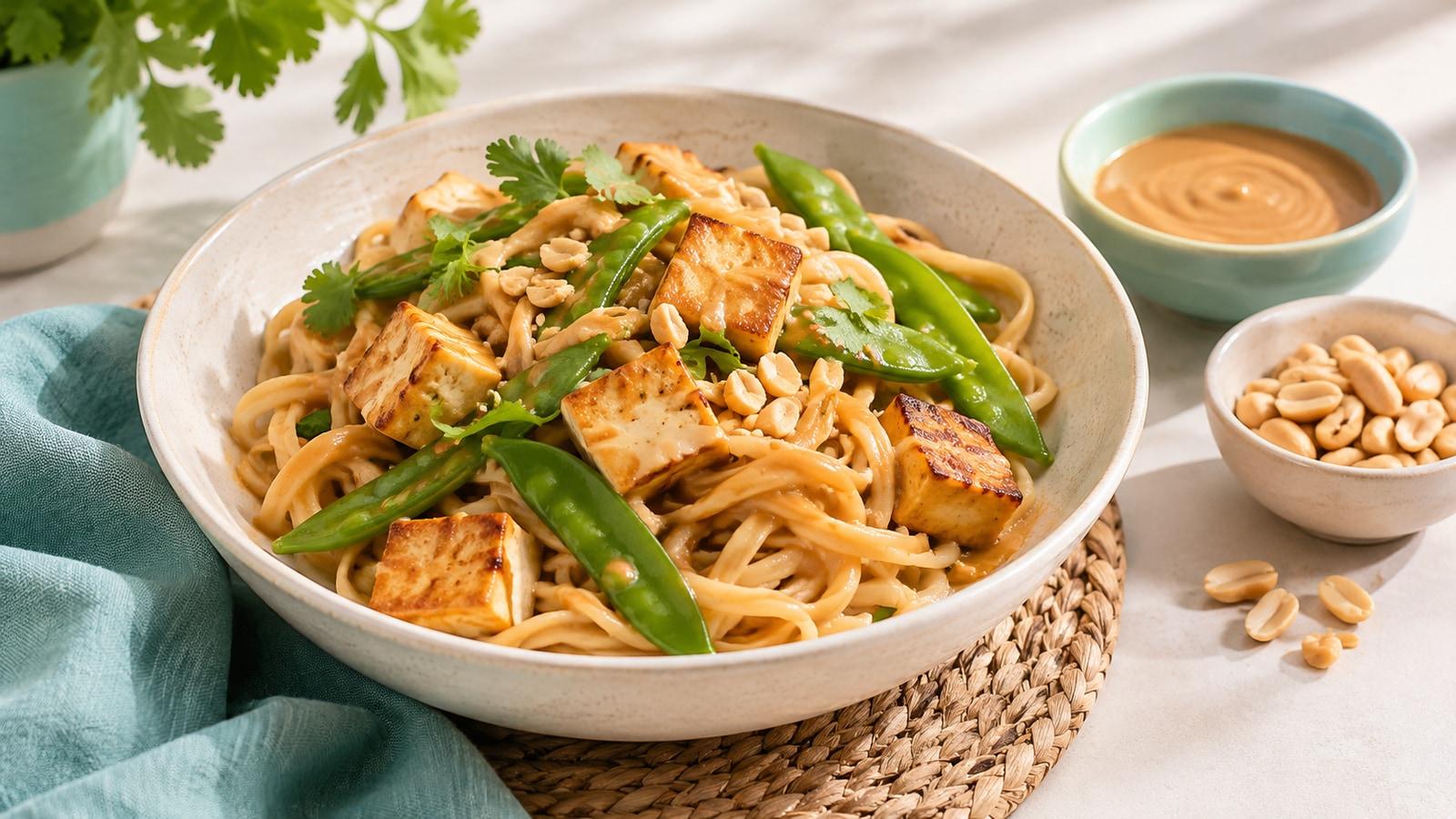
Peanut noodles can be as simple or as elaborate as you want. This version combines noodles, tofu, and snap peas with a sauce you stir together in a bowl. The sauce goes on a little at a time, so you can make it light and loose or give the noodles a thicker coating.
This version serves the noodles warm with snap peas cooked to the texture you like. Get the sauce ready while the noodles cook, then toss everything just before serving.
Ingredients
Makes: about 4 servings
Prep: about 15 minutes
Cook: about 15 minutes
- 8 ounces dry whole-grain noodles or rice noodles
- 1 package (14–16 ounces) firm tofu, drained and cubed
- 1 tablespoon neutral oil
- 3 cups sugar snap peas, trimmed
- 1 medium carrot, cut into thin matchsticks
- 3 tablespoons smooth peanut butter
- 1 tablespoon lower-sodium soy sauce
- 1 tablespoon lime juice
- 1 teaspoon grated fresh ginger
- 3–5 tablespoons warm water, as needed
- Chopped scallions or cilantro, optional
Peanut butter varies in thickness and saltiness. Start with the smaller amount of water for the sauce, then add more until it pours easily. If yours is already sweetened, taste before adding anything sweet; there’s no need to add sugar automatically.
Make the bowl
- Wash your hands and rinse the snap peas, carrot, and any garnish under running water. Cut the vegetables before you start cooking.
- Prepare the noodles according to their package directions. Drain and rinse only if the package calls for it.
- Blot the tofu with a clean towel. Warm the oil in a wide skillet over medium heat and cook the tofu, turning the cubes, until lightly browned. Follow any additional package cooking directions.
- Add the snap peas and carrot to the skillet with a splash of water. Cook for a few minutes until the vegetables reach your preferred tenderness. You can cook them separately if your pan is crowded.
- In a small bowl, whisk peanut butter, soy sauce, lime juice, ginger, and 3 tablespoons warm water. Add more water a spoonful at a time until the sauce is pourable.
- Toss the noodles with some sauce, then add the tofu and vegetables. Serve the remaining sauce at the table and finish with scallions or cilantro if you like.
The sauce is adjustable
The first time you mix peanut butter with liquid, it may look stiff or uneven. Keep stirring and add warm water gradually; it should loosen into a sauce. If it becomes too thin, whisk in a little more peanut butter. If it feels too rich, use less sauce on each portion and add a splash of water or lime.
Soy sauce adds salt, so taste before adding more. Lime brings acidity, while ginger adds warmth. A pinch of chili flakes can go on individual bowls for anyone who wants heat. You could also serve the sauce separately as a dip rather than coating all the noodles at once.
Peanuts and soy are common allergens. If either is a concern, choose a filling and sauce that are suitable for the person eating. Sunflower seed butter may be an option for some households, but check labels for ingredients and cross-contact information. Sesame is another common allergen if you decide to add sesame oil or seeds.
Cook the vegetables to your liking
Snap peas can be crisp or tender; the choice is yours. Trim the stem ends and remove any tough strings. Cut larger pods in half if they’re awkward to eat with noodles. Thin carrot strips cook more quickly than thick slices, so aim for similar sizes.
If you prefer softer vegetables, cover the skillet with a splash of water for an extra minute or two. If you want more crunch, take them off the heat sooner. Broccoli, shredded cabbage, or bell pepper can replace some of the snap peas, though each needs a different cooking time.
Firm tofu provides protein and holds its shape in cubes. If browning feels like an extra step, check the package and prepare it as directed, then add it to the warm noodles. Patting off surface moisture helps it brown, but there’s no need for a special press.
Noodles and gluten
Whole-grain wheat noodles have a nuttier flavor and provide fiber. Rice noodles offer a different texture. If you avoid gluten, choose noodles and sauce labeled for your needs; ordinary soy sauce can contain wheat. Follow the cooking instructions for the noodles you choose, because rice noodles can go from firm to soft quickly.
This recipe is easy to serve with the parts separate. Put noodles in bowls, add tofu and vegetables, and let everyone choose how much sauce they want. That’s helpful if one person prefers a milder or less saucy meal.
Pack a portion safely
Cool the noodles, tofu, and vegetables in shallow containers and refrigerate within one hour. Keep the fridge at 40°F or below; use leftovers within three to four days. As an extra precaution with rice noodles, use them within 24 hours and reheat no more than once. To serve leftovers warm, reheat to 165°F, stirring so the center heats evenly. Add fresh herbs just before eating.
The noodles may absorb sauce in the fridge. A spoonful of water can loosen them, or you can reserve a little sauce in a separate container. Add fresh lime just before eating if you want a brighter flavor.