










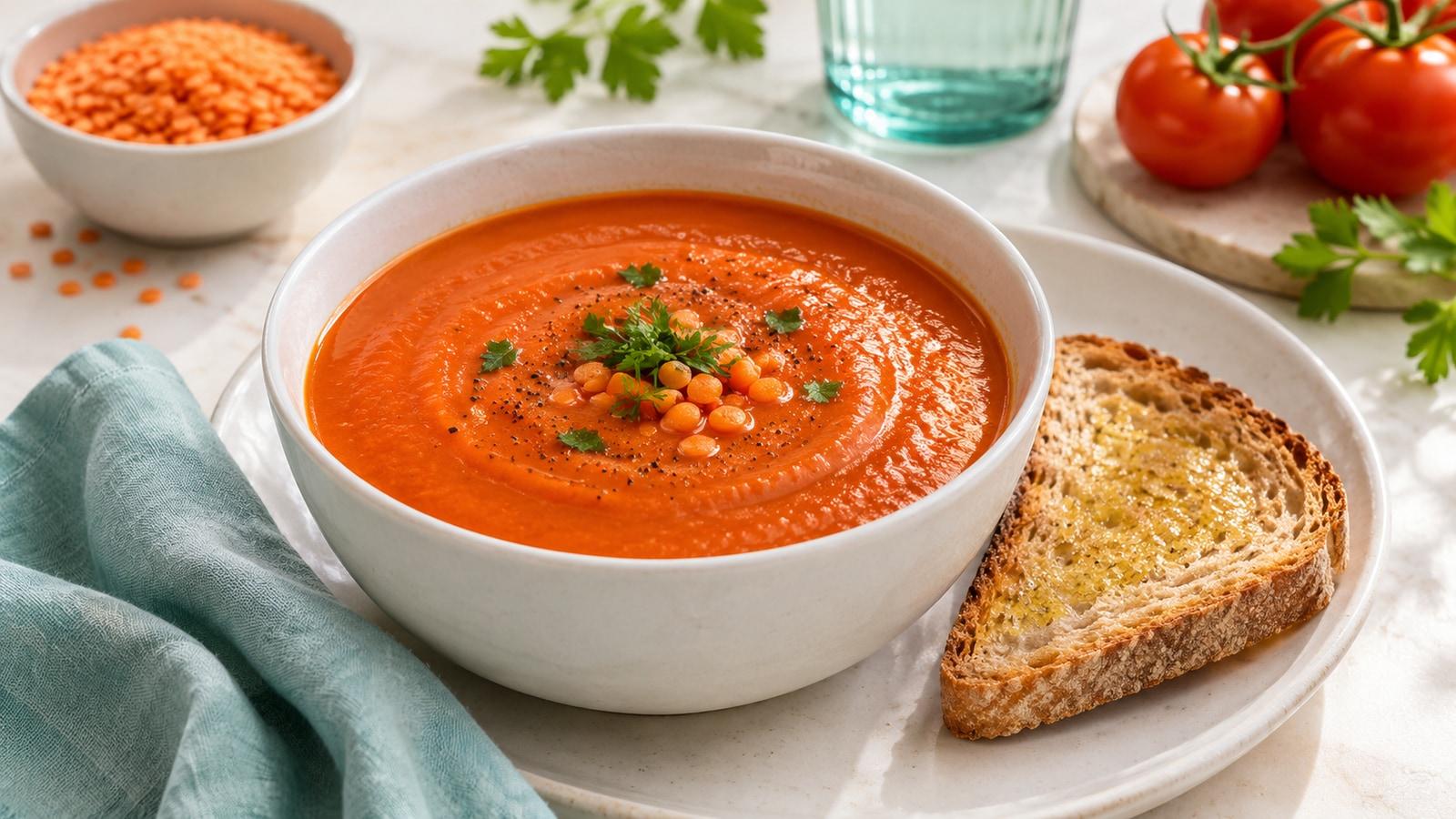
Tomato soup has a way of making lunch feel easy. Warm a bowl, add a piece of toast, and you’re most of the way there. This version blends red lentils into the tomatoes for a thicker texture and a little more staying power, without turning the soup into a complicated project.
The lentils cook until soft, so there’s no need to keep their shape. Blend the whole pot for a smooth soup or leave some texture if that’s what you like. The recipe makes enough for several bowls, which is handy when you want lunch ready for another day.
What you'll need
Makes: about 4 servings
Prep: about 10 minutes
Cook: about 30–40 minutes
- 1 tablespoon olive oil
- 1 small onion, chopped
- 1 small carrot, chopped
- 1 garlic clove, minced, or a pinch of garlic powder
- ¾ cup dry red lentils, picked over and rinsed
- 1 can (28 ounces) crushed tomatoes
- 3 cups lower-sodium vegetable broth, plus more as needed
- ½ teaspoon dried basil or oregano
- Black pepper to taste
- Optional: plain yogurt, chopped basil, or grated cheese for serving
The serving size is flexible. If a large bowl feels like too much, start with a smaller one and keep the rest chilled for later. A slice of toast, a sandwich, or another side can turn it into a bigger meal when you want one.
Make the soup
- Wash your hands and rinse the carrot under running water before chopping it. Pick through the lentils for any debris and rinse them in a fine-mesh strainer.
- Warm the oil in a soup pot over medium heat. Add the onion and carrot and cook, stirring occasionally, until the onion softens. Add the garlic and stir briefly.
- Add the lentils, tomatoes, broth, and dried herb. Bring to a boil, then reduce to a gentle simmer. Cover partly and stir occasionally so the lentils don’t stick to the bottom.
- Cook until the lentils and carrot are very soft. Start checking around 25 minutes, though the timing can vary. Add a splash of broth or water if the soup thickens more than you’d like.
- Turn off the heat. For a smooth soup, use an immersion blender carefully in the pot, keeping the blade submerged. If using a countertop blender, let the mixture cool somewhat and blend in small batches according to the blender’s directions for hot liquids; hot soup can build pressure. Never tightly seal a blender full of hot soup.
- Return the soup to the pot if needed, warm it through, and taste. Add black pepper and any toppings at the table.
If you don’t own a blender, a potato masher will produce a more rustic result. Red lentils soften as they cook, so the soup can still be thick without becoming perfectly smooth.
Why use red lentils?
Red lentils are a convenient pantry ingredient for a blended soup. They soften and break down as they cook, which helps thicken the pot. They also contribute plant protein and fiber. There’s no need to calculate a perfect amount of either for one meal; the useful idea is that a familiar bowl of tomato soup can include ingredients from more than one food group.
Lentils can be a change if you don’t usually eat beans or other high-fiber foods. A smaller bowl is a reasonable place to start, with water or another drink you enjoy. You can also serve the soup alongside foods you already know sit comfortably with you.
Tomato products differ in acidity and salt. Taste after cooking before adding salt, especially if the broth is already seasoned. If tomato-rich meals tend to bother your stomach, choose a different soup or discuss recurring symptoms with your care team rather than forcing a food that doesn’t suit you.
Make it yours
For a softer, sweeter vegetable flavor, let the carrot cook until tender before blending. Prefer more herbs? Add fresh basil at the end. A spoonful of plain yogurt adds a tangy finish; swirl it into the bowl rather than the whole pot if you plan to freeze some. Check the yogurt label if you need to avoid dairy.
For a simple lunch, pair the soup with toast and sliced cucumber or a small cheese sandwich. If your appetite is lower than usual, serve a modest bowl first. You can always add another side later instead of making the portion feel like a challenge.
On a GLP-1 medication, food preferences can change from day to day. This soup is an option, not a treatment for nausea or a substitute for advice about persistent symptoms. If eating or drinking is difficult, contact your care team.
Keep leftovers safely
Ladle extra soup into shallow containers and refrigerate promptly, within two hours of cooking or one hour if it has been above 90°F. Keep the refrigerator at 40°F or below. Use refrigerated leftovers within three to four days or freeze them for later.
When reheating, bring the soup to a rolling boil, stirring so it heats evenly. Add a little water if it has thickened in the fridge. Keep toppings separate until serving, and reheat only the portion you plan to eat.
This is a forgiving soup to adjust: thin it for sipping, leave it thicker for a spoon, or add a favorite side. Once you know the version you like, the pantry ingredients are easy to keep on hand.