










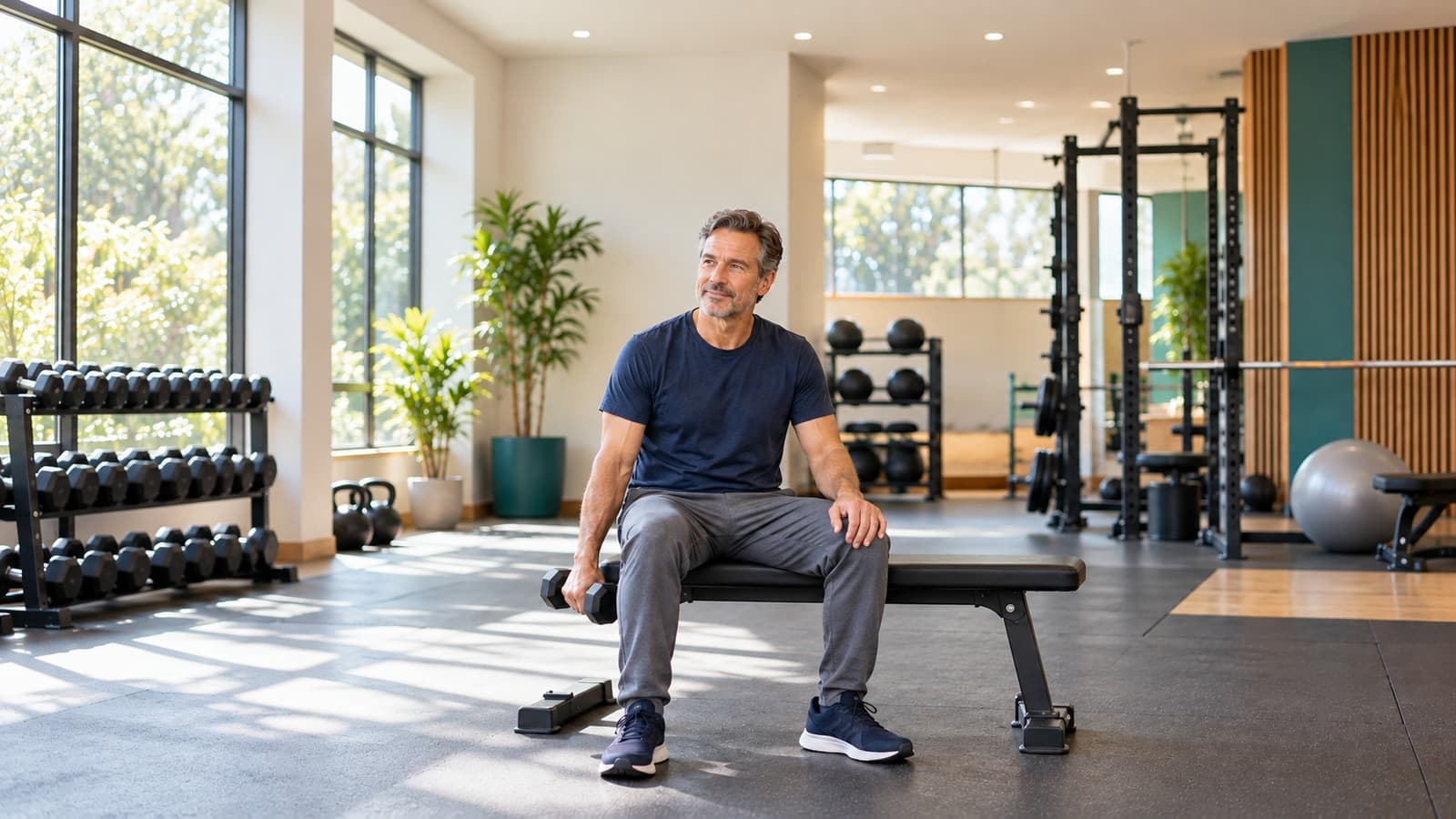
You carry your keys in one hand, reach for a shelf with one arm and step into a car one leg at a time. A strength exercise can work that way too.
You may hear the term “unilateral” training. It just means one side is doing the main movement at a time. Think of a gentle dumbbell curl with one arm, followed by the other. One side at a time is simply another way to practice. It doesn’t have to replace exercises that use both arms or legs together.
Pick a setup that feels steady
A one-arm exercise doesn’t have to be a balancing act. You could sit in a stable chair for a light curl, with both feet supported on the floor. Choose a weight you can lower and put down safely. Then switch hands after a rest, if that exercise is appropriate for you.
Some lower-body movements can also emphasize one leg at a time, but they may ask more of your balance. A supported step-up at a low stair is one example. Keep a secure handrail within reach and ask for individual guidance if stairs are difficult or you’re concerned about falling. Another exercise may be a better fit.
A trainer or physical therapist can help with the setup, especially after an injury or if you have a condition that affects movement. Having support available is a sensible choice, not an easier version you have to outgrow.
What if the two sides feel different?
Most people don’t use both hands in exactly the same way throughout the day. During a workout, you may notice that one arm tires sooner or that a movement feels less familiar on one side. A small difference is not automatically evidence that something is wrong.
Keep the load manageable for both sides and pay attention to how each movement feels. If one side needs a shorter set or a different setup, a professional can help you make that choice. You don’t need to force extra repetitions through discomfort to make the numbers match.
Record the context before drawing conclusions. Did your grip slip? Was the chair positioned differently? Had you already carried heavy bags on one side? A note about the setup can be more useful than declaring one side your “weak side” after a single attempt.
Know when a difference needs attention
New pain, a growing difference in strength or a change that makes everyday tasks harder deserves a conversation with your care team. If you’re recovering from an injury or surgery, follow the plan you were given instead of using a general comparison between sides.
Sudden weakness or numbness, especially on one side, can be a sign of a stroke. Call 911 immediately if that happens, even if the symptom seems to improve. Don’t try to work it out with another exercise set.
Fit it into the rest of your routine
You can add a single-side movement to a session that also includes exercises using both sides. There’s no rule that every exercise must be performed one arm or one leg at a time. Consider the time needed to set up, rest and repeat the movement on the other side.
If the second side feels rushed, allow a longer break or plan fewer exercises. You can put the equipment down between sides.
During GLP-1 treatment, strength work belongs alongside eating enough and recovery. If nausea, dizziness or trouble drinking leaves you unwell, address that with your care team before a workout. Stop for pain or concerning symptoms.
Our guide to progressing strength training can help you think about the next adjustment. Choose the version you can do steadily, and let your own notes guide the conversation.