










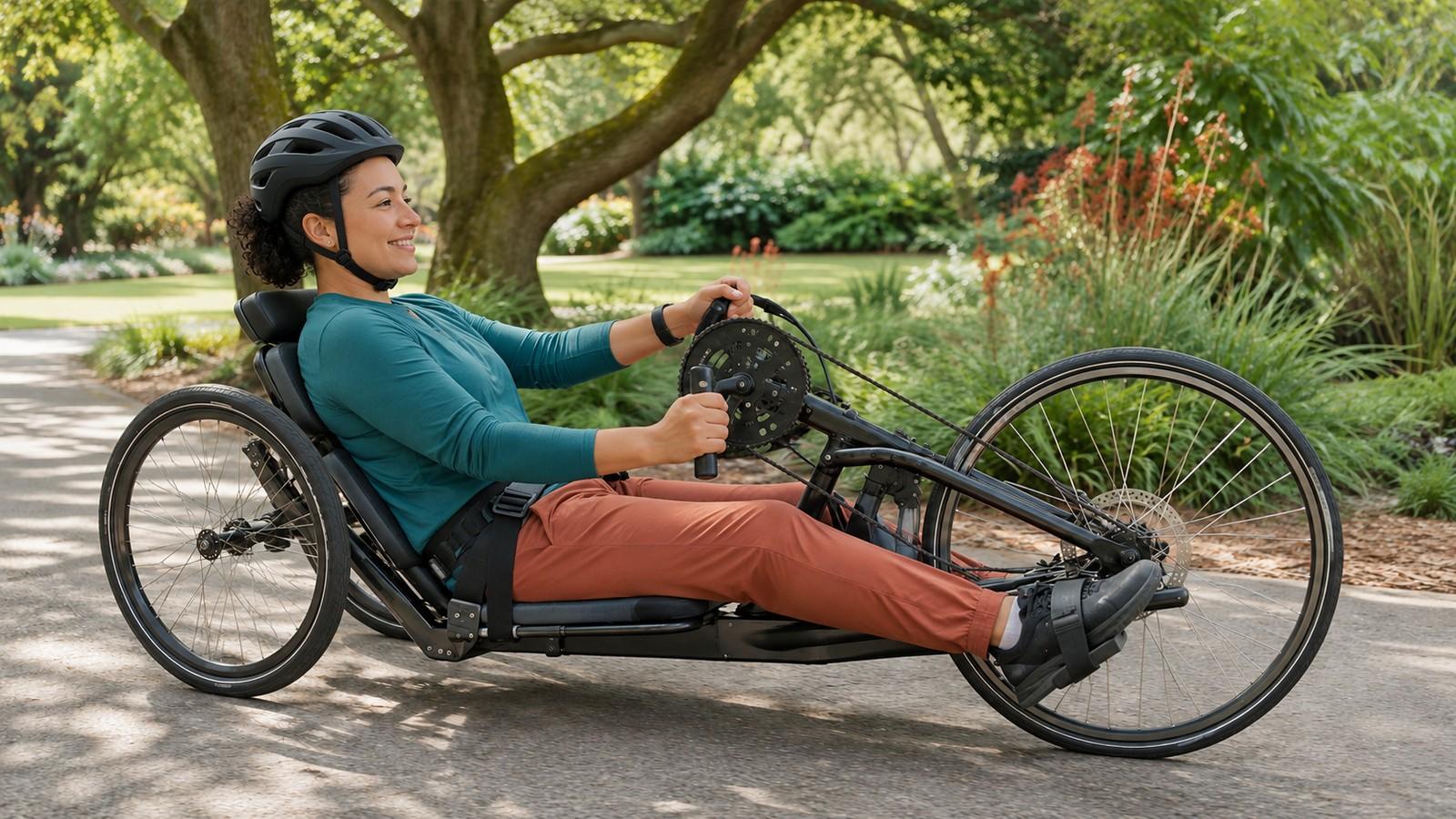
Maybe you miss riding with friends, want to explore a local trail, or are curious about a different way to move outdoors. An adaptive cycle can make cycling possible for people with a wide range of mobility needs. The choices can also be confusing: handcycles, recumbent cycles, tricycles, attachments, and other designs don't all work the same way.
You don't need to decide which one to buy before you try. An adaptive sports program, rehabilitation professional, or knowledgeable cycle fitter can help you explore what feels comfortable and works for the riding you have in mind.
Start with the ride you want
Picture where you'd like to go. Are you interested in a paved park loop, riding beside family members, using a stationary setup, or eventually trying a group event? The answer helps narrow the equipment and support you'll need.
Also think about how you'll get to the starting point. A cycle that feels good once you're on it may still be difficult to transport, store, or transfer into. Mention your vehicle, available storage, and whether someone can assist. These are part of the fit, not afterthoughts.
If you use a wheelchair or another mobility aid, ask how it will be handled during the ride and what options are available if you need to stop. A program should be willing to talk through the practical details before your first session.
What is a handcycle?
A handcycle uses arm-powered cranks rather than conventional foot pedals. Designs vary: some are separate cycles with a reclined or seated position, while others attach to a compatible wheelchair. Other adaptive cycles may use different seating, leg pedals, electric assistance, or controls. A handcycle is one option, not a requirement or the right choice for every person.
Ask to see how the brakes, steering, gears, and any assistance controls work. Can you reach and operate them comfortably? How is the cycle adjusted? Does the setup leave room for any positioning supports you use? A fitter can help you explore the details, but your own comfort and goals should guide the conversation.
If the first cycle doesn't fit, that doesn't mean cycling isn't for you. Another seat, crank position, control, or type of cycle may make a meaningful difference.
Make the first fitting a conversation
Before the trial, tell the instructor or therapist about the movement and support you use in daily life. Mention any areas of reduced sensation, pain, fatigue, or skin concerns that affect equipment fit. You can also describe how you normally transfer and what kind of help you do or don't want.
Ask the person fitting the cycle to explain each adjustment and check it with you. You might need a different position for your shoulders, hands, back, legs, or feet. If something feels unstable, causes pain, or puts pressure somewhere you can't comfortably monitor, pause and ask for an adjustment. Don't assume discomfort is a necessary part of learning.
Depending on your health history, your clinician or rehabilitation team may have specific advice before you begin. Ask them how to recognize a problem and what to do if symptoms occur. This is particularly useful if you have changes in sensation or a medical condition that affects your response to activity.
Learn the controls somewhere predictable
For the first ride, choose an accessible area with a smooth surface, enough turning space, and limited traffic. An instructor can show you how to start, steer, slow down, stop, and manage the equipment before you head onto a shared path. Check the brakes and any attachments as directed for that cycle.
Wear a properly fitted helmet and ask the program about any other equipment appropriate to the route. Discuss visibility, path users, slopes, and what to do if you need assistance. If you'll be riding on public roads or trails, the local program can help you understand the route and conditions.
Take a break when you need one. Your first outing can be short and exploratory; there is no need to match another rider's speed or distance. Pay attention to how your body feels afterward, too, and share that with the person helping you adjust the setup.
Ask before spending money
Adaptive equipment can be expensive, and availability varies. Before buying, ask whether a local program lends equipment, offers demonstrations, or can connect you with a fitting. Some rehabilitation centers and adaptive sports organizations have ways to try different setups.
Questions worth asking include:
- Can I try this cycle in a setting similar to where I want to ride?
- What adjustments are available, and who can make them?
- How will I transport and store it?
- What maintenance does it need, and where can it be serviced?
- Is there a different setup I should compare before deciding?
If cost or transportation makes participation difficult, say so. A program may know about local resources or an alternative you haven't considered.
Let enjoyment lead
Cycling can be part of a broader weight-care or activity plan, but the first ride doesn't need to be measured in calories. It might be a way to spend time with someone, visit a park, or find out whether the movement feels good to you.
After trying it, notice what worked and what didn't. Bring those observations back to the fitter or your care team.