










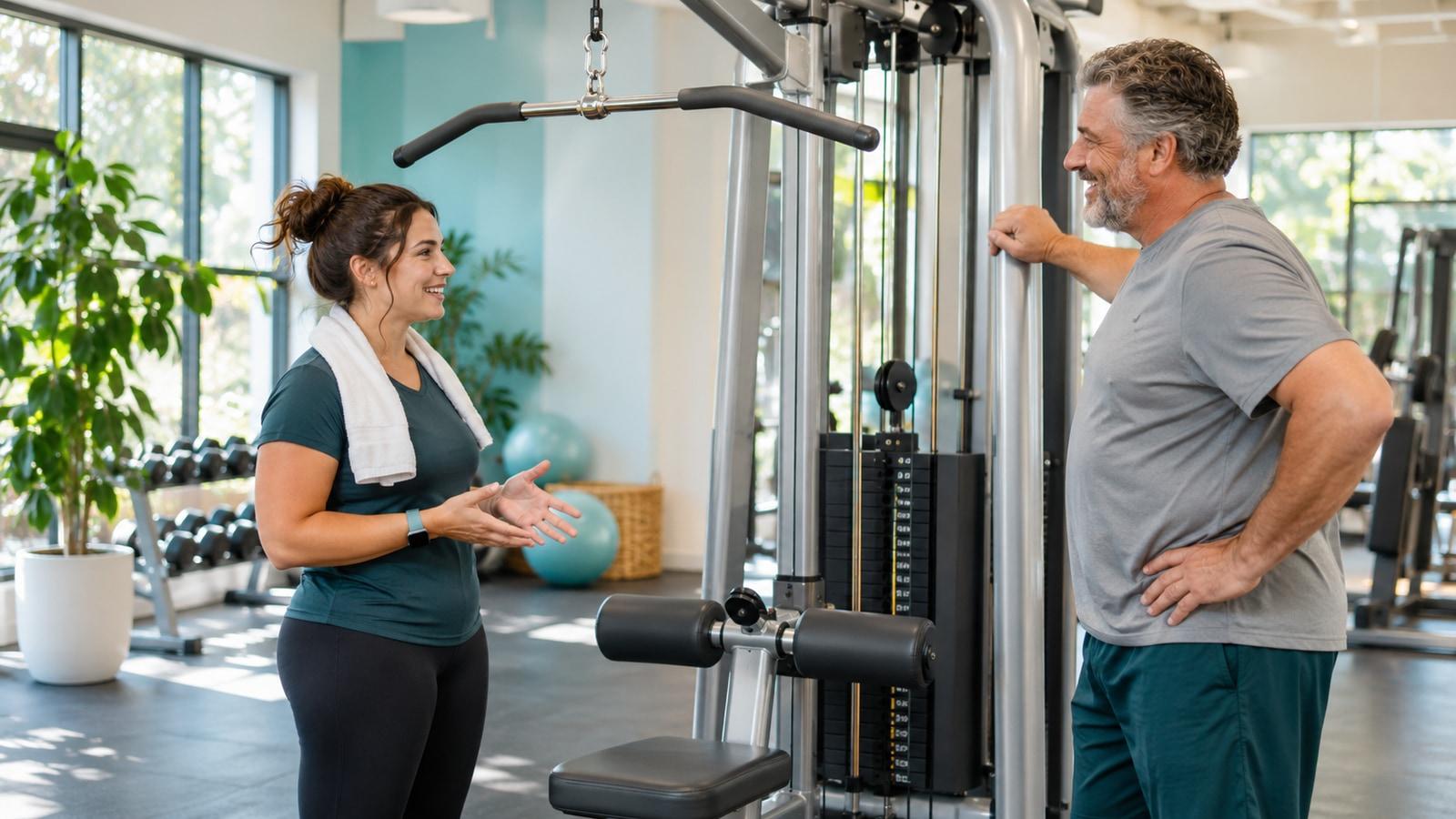
You’ve found the lat-pulldown machine, but the bar is overhead, the seat has a mysterious pad, and somebody has left the weight stack set much higher than you’d like. Take a breath. You can adjust the machine before you do a single repetition, and starting light is exactly what you want when you’re learning.
The lat pulldown is a seated pulling exercise. You draw a handle toward the front of your upper chest and return it overhead with control. It works muscles in your back along with your arms. Here’s how to make the first try feel less like a guessing game.
Find the adjustments
Machines vary, but many have a seat, a padded support for your thighs, a cable and handle, and a stack of weights with a pin. Some have different handles or adjustable seats. Read the machine’s instructions or ask a staff member to show you the controls if anything is unfamiliar.
Set a light resistance. You should be able to guide the handle down and back up without jerking, holding your breath, or feeling pulled out of position. If you’re not sure which number to choose, begin lower than you think you need. You can change it after a few practice repetitions.
Sit so you can reach the handle without straining. Place your feet securely on the floor or the machine’s foot supports, and adjust the thigh pad so it holds your legs comfortably. It should help you stay seated, not squeeze painfully. If the handle is too high to reach safely, ask for help rather than climbing onto the seat.
Try the movement slowly
Hold the bar with both hands at a comfortable width. A grip a little wider than your shoulders may work well, but you don’t need the widest possible grip. Keep your wrists in a comfortable, relatively straight position.
Sit tall, allow a small natural lean if needed, and draw the handle down toward the front of your upper chest. Think of bringing your elbows down rather than yanking with your hands. Breathe out as you pull. Then let the handle return upward slowly, keeping enough control that the weight stack doesn’t crash.
Keep the bar in front of your body. You don’t need to pull it behind your head. There’s also no requirement to touch your chest if doing so makes your shoulders uncomfortable. A comfortable, controlled range is more useful than forcing the handle farther down.
Try several easy repetitions, then pause. Notice whether you can keep your seat and torso steady. If you have to swing backward to start the pull, the resistance may be too heavy. Reduce it and try again. If the movement causes pain, stop rather than pushing through and ask a qualified professional for help with the setup or an alternative.
What should you feel?
You may notice work around your upper back and the sides of your back, as well as in your arms and grip. At first, concentrating on the motion can be more helpful than trying to isolate one exact muscle. The machine supports the path, but you’re still learning how much effort to use and where the handle feels comfortable.
It’s normal for the first few attempts to feel awkward. If your hands tire before your back does, check whether you’re gripping the bar so hard that your wrists tense up. If the handle pulls your shoulders into an uncomfortable overhead position, stop and ask whether a different handle, adjustment, or exercise would fit you better.
Some people have shoulder, neck, or back conditions that call for a different approach. If you’ve been given restrictions after an injury or procedure, follow those instructions and discuss this exercise with your clinician or physical therapist before trying it.
Make it part of a manageable routine
You don’t need a complicated plan for your first visit. After a few practice pulls, you might do one comfortable set, rest, and decide whether you’d like another. Leave enough energy to maintain the same controlled movement on the last repetition as on the first.
Strength work can sit alongside the activities you already enjoy, whether that’s a walk, swimming, gardening, or another kind of movement. If you’re working on weight management or taking a GLP-1 medication, a routine you can repeat matters more than choosing the heaviest setting on day one. Your care team can help you adapt activity to your health and how you’re feeling.
Make a quick note of the seat setting, handle, and weight that worked. The number on one machine may not feel the same on another, but your note can make the next visit easier. It also gives you a starting point if someone else has changed the setup.
Before you leave the machine
Return the handle with control, let the weights settle, and release your grip only when it’s safe to do so. Wipe down the equipment according to the gym’s routine. If the cable or adjustment seems damaged, let staff know.
The goal of the first session is simple: find a setup that feels comfortable and learn the movement. Once that’s familiar, you can decide how it fits into the rest of your week.