










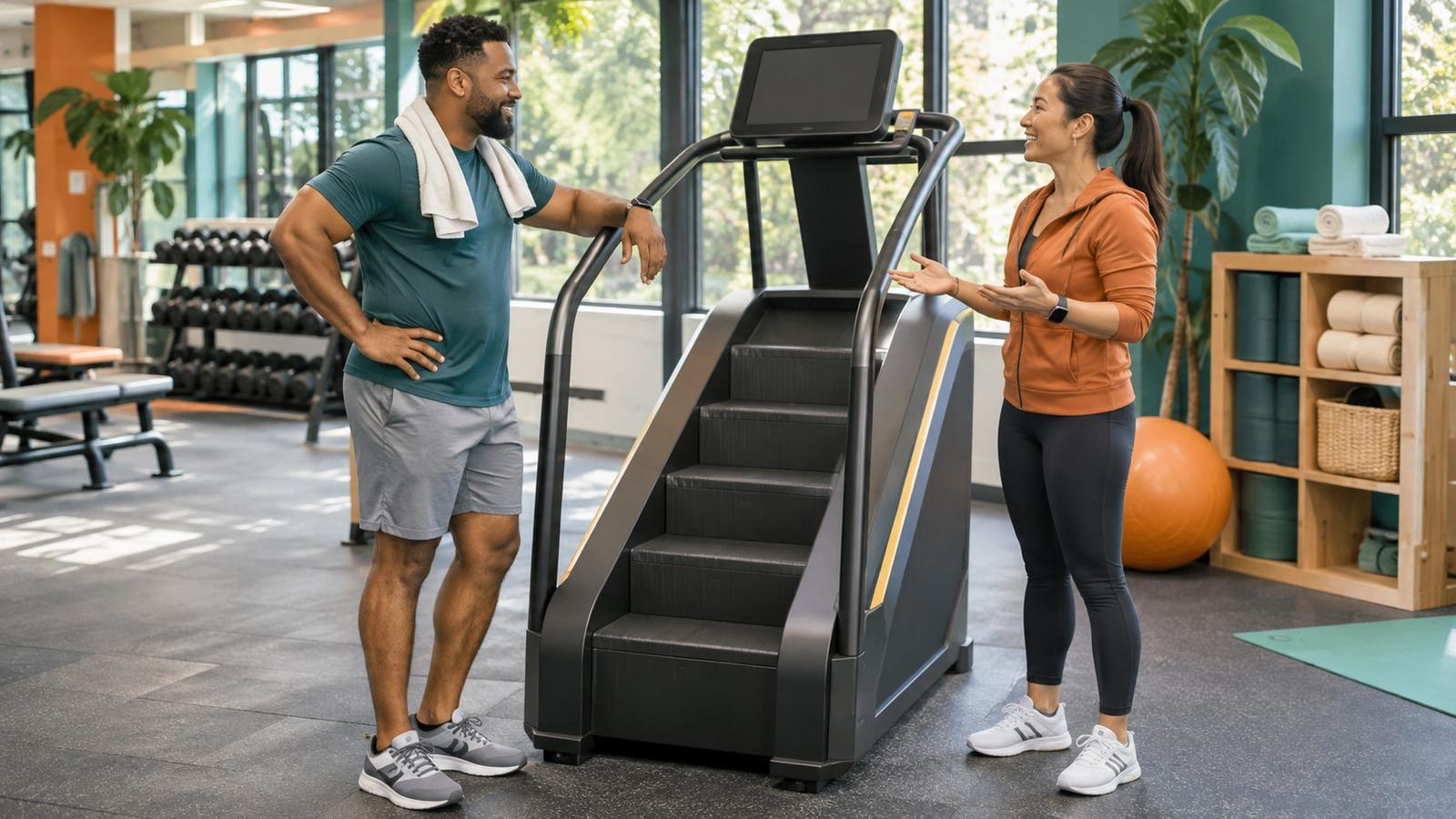
The stair-climbing machine can look intimidating from across the gym, especially when someone is moving quickly on it. Your first session doesn't need to resemble theirs. The useful first step is learning the controls and finding a pace that feels manageable.
Machines differ. Some have moving stairs; others use pedals. Ask a staff member for a demonstration of the exact machine, including how to start, slow down and stop it safely.
Look before you step on
Check where the handrails, foot surfaces and controls are. Ask how the steps or pedals move when the machine starts and whether there's an emergency stop. If the display is hard to read or reach, tell the staff member and ask for help with the setup.
Wear footwear that feels secure and keep laces tied. Make sure there is a clear area around the machine. If getting on or off feels uncertain, ask for assistance or choose a different activity rather than trying to solve it while the steps are moving.
If you have balance concerns, a joint condition, heart or breathing symptoms, or another reason you're unsure about the machine, talk with your clinician or physical therapist before trying it. They can help you decide whether it fits your situation and suggest alternatives.
Start at a pace you can control
Begin with the lowest appropriate setting the staff member recommends and take time to feel the rhythm. Place your feet securely on the steps or pedals and hold the handrails as needed for balance. You don't need to remove your hands to prove the session counts.
Try to stand comfortably rather than hanging your weight from the rails. If you have to grip tightly to keep up, the pace may be too fast or the machine may not be the right fit. Slow down or stop and ask for help. A secure handhold can still be useful; balance needs differ.
You might only try a short interval on the first visit. That's enough time to learn the controls. You can step off, rest and decide whether you'd like to try again another day.
Pay attention to effort, not the person beside you
Stair-climbing machines can feel demanding quickly. Notice your breathing and how your legs feel, and choose a pace that fits your current ability. A conversation test can be a useful way to describe effort to your care team, but follow any individualized guidance you've been given.
The calorie number on the display is an estimate based on the information available to the machine. It isn't a precise measure of what happened in your body or a requirement you need to meet. Focus on whether you can move with control and recover comfortably afterward.
If you take medicine that affects heart rate, ask your clinician how to interpret the machine's heart-rate targets. A default setting may not reflect your personal plan.
Practice stopping before you're tired
Learn the normal stop sequence while the pace is easy. When you're ready to finish, slow down as the machine instructions direct, keep a secure handhold and wait until the moving parts have stopped before stepping off. Ask staff to show you the safest way to exit your model.
Don't jump off a moving machine or keep going because you're embarrassed to stop. Everyone had a first session, and the controls are there to be used. Stand nearby for a moment if you need to regain your bearings, keeping the walkway clear.
If you feel dizzy, faint or otherwise unwell, stop and seek help. Severe chest pain, significant trouble breathing or fainting can be an emergency; call 911 when appropriate.
Decide whether you want it in your routine
Afterward, consider how you felt during the session and later that day. Did the movement feel comfortable? Were the controls accessible? Did you enjoy it enough to try again? A machine doesn't have to become part of your routine just because it is popular.
If you do return, make changes gradually and one at a time. Add a little time or adjust the pace only when it fits your care plan and feels manageable. Rest and other forms of activity can be part of the week too.
If the machine bothers your knees or doesn't feel stable, tell a qualified professional and explore alternatives. A stationary bike, a walk or another accessible activity may be a better fit for you.
Ask for a quick demonstration
A useful request is: “Can you show me how to start and stop this model and suggest a comfortable first setting?” You can also ask how to adjust the display or where to stand before the steps move.
The first visit is about learning the machine and deciding how it feels. Start slowly, use the support you need and let your own experience guide the next conversation.