










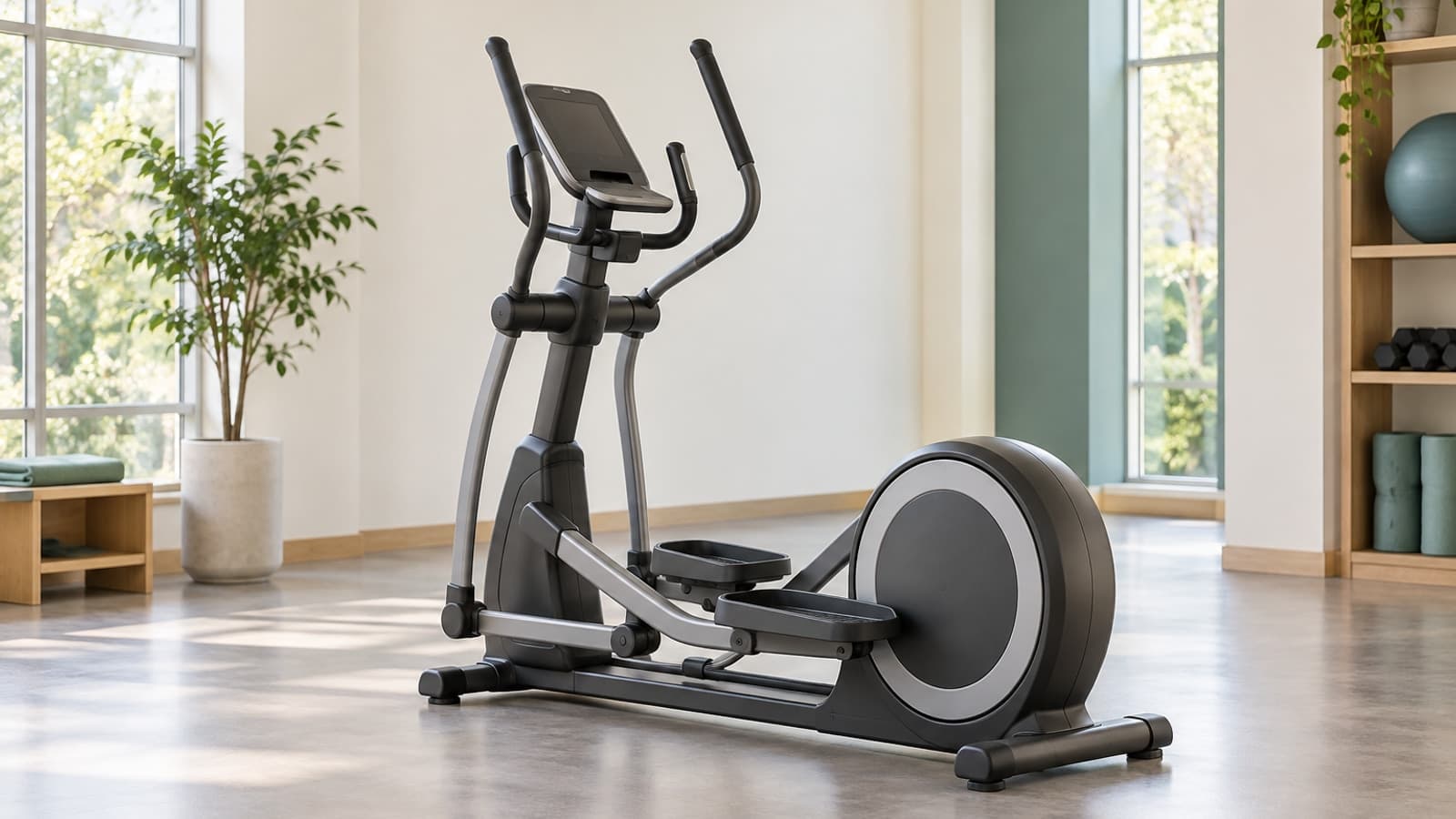
An elliptical can look straightforward until you step closer and notice that the pedals and handles move. If you’ve never used one, a short introduction is more useful than trying to keep up with the person on the machine next to you.
Learn how the machine stops before you start. Different models have different controls and entry instructions, so ask gym staff to show you the particular one you’re using.
Take a look before stepping on
Find the foot platforms, fixed handgrips and any moving handles. Ask which supports stay still while you get on, how the pedals move and where the controls are. Check that you have enough space around the machine and that your shoes and clothing won’t catch in a moving part.
Follow that machine’s instructions for getting on. Hold the appropriate stable grips and take your time. If the step up feels too high or you’re worried about balance, tell the staff member. A different machine or activity may be a more comfortable starting point.
You don’t have to use the moving handles just because they’re there. On models with fixed grips, those may feel more predictable while you learn the foot motion. Ask what is recommended for the equipment in front of you.
Before you begin, identify the buttons or controls for resistance and how to get help if the machine behaves unexpectedly. Keep a clear path beside it so stepping down doesn’t put you into another person’s space.
Begin with a gentle familiarization
Once you’re settled, start at an easy pace with light resistance. Keep your feet securely on the platforms and pay attention to whether the motion feels smooth and manageable. There’s no need to lean heavily forward or increase speed immediately.
Try a brief interval, then reassess. You can ask how to lower resistance or pause, and whether the machine requires you to slow gradually. A few comfortable minutes can be enough for a first encounter. Record the settings if you’d like to find them again.
Low impact describes the kind of movement, not a guarantee that it will suit every joint or every person. If you feel pain, strain or unsteadiness, stop and ask for help. Someone qualified can suggest a setup change or another way to move.
Make getting off part of the plan
Some ellipticals do not stop the instant you stop pushing. Slow down in a controlled way and wait for the pedals to come completely to rest. Use the stable handles and follow the model’s instructions for stepping off; guidance about which foot to move first can differ between machines.
Stay with the handles until you feel steady on the floor. If you’re unsure how to stop or dismount, ask staff to walk you through it before beginning the session. There’s nothing embarrassing about practicing the exit once while someone is nearby.
Decide whether to come back
Notice how you feel later that day as well as during the session. Did the movement feel comfortable? Was the equipment easy to reach? Would a shorter visit, a stationary bike or a walk fit better? You can try an elliptical without making it your permanent cardio choice.
If you enjoy the movement, return to a familiar setting next time and change the duration or resistance gradually. You can keep the pace gentle while you learn; there is no need to change both settings at once.
If you take a GLP-1 and feel dizzy, are vomiting or are having trouble drinking, address that with your care team before exercising. Stop for pain, feeling faint or unusual breathlessness. If you have new or unexplained chest pain or other possible heart attack symptoms, call 911.
For more practical orientation ideas, read our first gym visit guide. Getting comfortable with the machine is a useful first goal, even if you leave the speed and resistance low.