










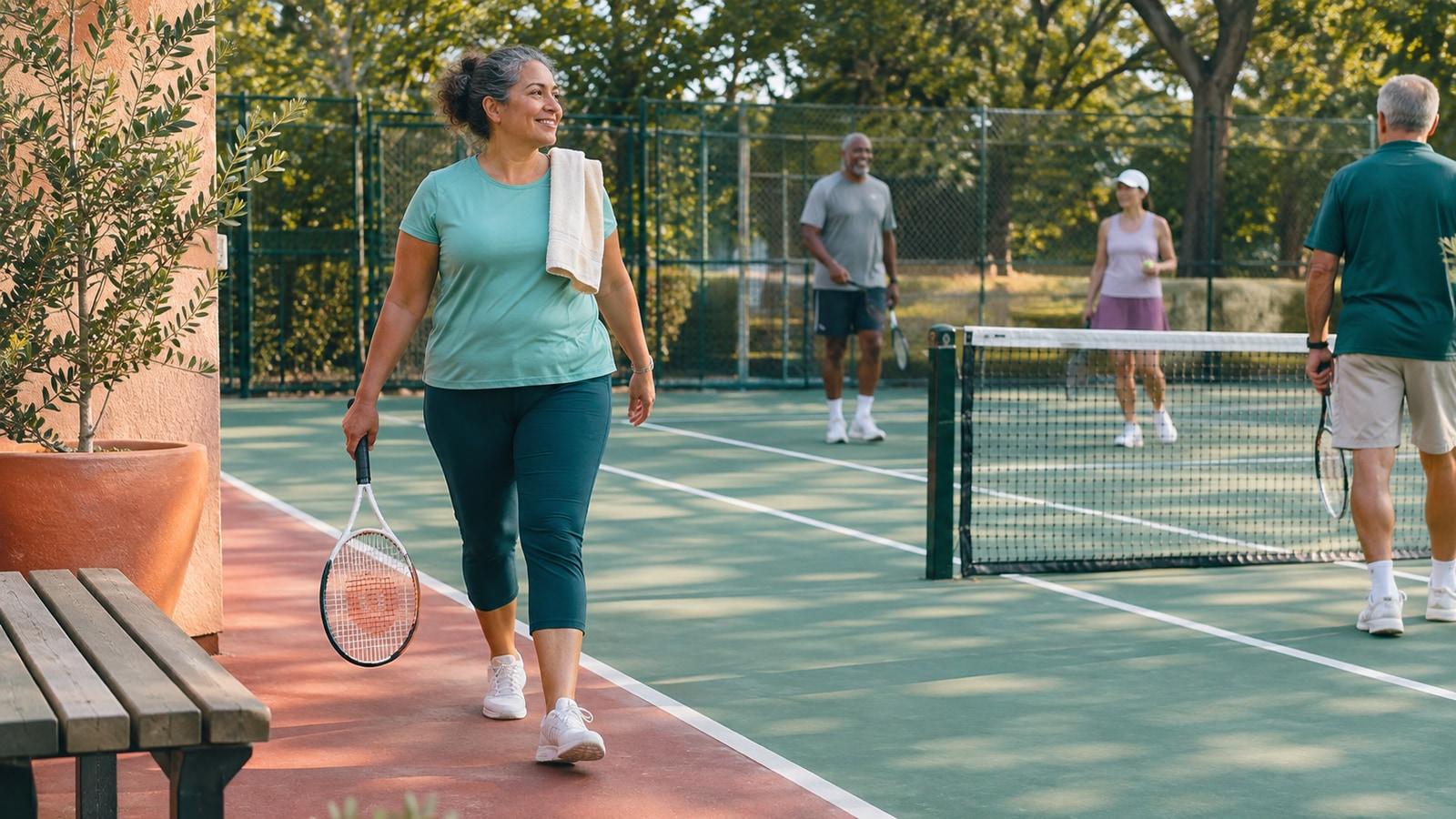
Your old racket is in the closet, a friend has invited you to a court, and you can still picture the way a good rally feels. What you may not remember is how much stopping, starting and reaching a game of tennis involves.
Coming back doesn't have to mean playing a full match on the first day. A relaxed session, a comfortable pace and a few practical checks can help you find out what you enjoy now.
Choose a first session that leaves room to learn
Ask a friend to hit gently, look for a returning-player clinic or book a lesson with an instructor who works with beginners and people coming back after time away. Explain how long it has been and what you want from the session.
You might spend time rallying from a shorter distance, practicing a comfortable serve or simply moving around the court. A score isn't necessary. If a full court or a long class sounds like too much, ask whether there is a shorter format or a way to take breaks.
It may help to tell the instructor whether you played casually, took lessons or competed in the past. That gives them a starting point without assuming your current comfort matches your old level.
Doubles can be a social option, but it has its own quick movements and communication demands. Choose it because you enjoy the format, not because you assume it requires no effort.
Check your shoes and racket
Shoes that were comfortable years ago may have worn soles or no longer fit well. Look for footwear suited to the court surface, with a secure fit and room for your toes. Ask a tennis shop or instructor if you're unsure what works for the court you plan to use.
Your racket doesn't have to be new. Check the grip and strings, and make sure it feels manageable in your hand. If you have hand, wrist, elbow or shoulder discomfort, tell the instructor; a professional can help you consider equipment and technique rather than asking you to force the old setup.
Bring water unless you have individual fluid instructions that say otherwise. Dress for the weather and the court. On a hot day, look for a cooler time and a place to rest; if you feel faint or weak, stop and move to a cool area.
Give yourself a warm-up
Arrive with enough time to move at an easy pace before chasing balls. Gentle walking and comfortable movements can help you transition into the session. An instructor can suggest a warm-up that fits your experience and the activity you're about to do.
Begin with controlled hits rather than trying to reproduce your hardest serve. Pay attention to how your feet and shoulders feel as the pace changes. You can take breaks between short rallies and decide whether you want to continue.
The aim is to leave with enough energy to enjoy another visit. A gradual return is often more useful than trying to match what you could do years ago in one afternoon.
Plan for the stops and starts
Tennis involves changing direction and reacting to a moving ball. If a court is wet, uneven or slippery, wait for safer conditions or choose another activity. Keep loose balls and bags out of the playing area to reduce tripping hazards.
Tell your partner if you want a gentle rally or need more time between points. A good partner can feed the ball within reach rather than turning the first session into a sprint. You can also ask a coach about a modified court or a different ball for practice.
Stop if you develop pain that feels wrong, severe dizziness, chest discomfort or another concerning symptom. Seek appropriate medical help for serious symptoms. If you have an injury, chronic condition or question about returning to more vigorous activity, ask your clinician what is suitable.
Consider how your day and treatment fit
If you're using a GLP-1 medicine and nausea or low appetite has made it difficult to eat or drink, tell your care team. Choose a time when you feel able to participate, and don't push through significant symptoms to finish a session.
If you have diabetes or take medicine that affects blood sugar, follow your individual activity and glucose plan. Ask the clinician managing your care what to do if your routine changes. Don't adjust medication from a general tennis article.
Decide what you want next
Afterward, notice what was fun and what felt difficult. Maybe you liked rallying but not serving, or the class was enjoyable but too long. Ask the instructor how to adjust the next session rather than assuming you have to repeat the same format.
You can play for conversation, skill, time outdoors or the satisfaction of a good shot. Weight doesn't have to be the scorecard. A comfortable return gives you the chance to decide whether tennis deserves a place in your routine again.