










Maybe you remember birthday parties at the rink, or maybe you’ve never put on a pair of skates. Either way, learning as an adult can be fun—and a little wobbly. You don’t need to glide around the room on your first visit. Getting comfortable standing, starting, and stopping with help is a perfectly good session.
The first step is choosing a setting where you can learn at your own pace, with equipment that fits and enough space to practice.
Find a beginner-friendly session
Call a rink or skating program and ask about adult beginner lessons. Find out whether the instructor teaches stopping and balance, whether rental skates are available, and how busy the practice area tends to be. A lesson or supervised beginner session offers a chance to ask questions before you’re sharing a crowded floor with faster skaters.
Ask about the surface, seating, and access to the rink if those details matter to you. If you use a mobility aid or need an adaptation, explain what you’d like to try and ask what support or equipment the program can provide. Don’t assume that a general invitation to beginners answers every access question.
You may prefer an indoor rink with a smooth, dry surface and no traffic. Outdoors, avoid slopes, wet pavement, gravel, and crowded paths while learning. Make sure you have room to slow down and stop without skating into people or obstacles.
Protect yourself before you roll
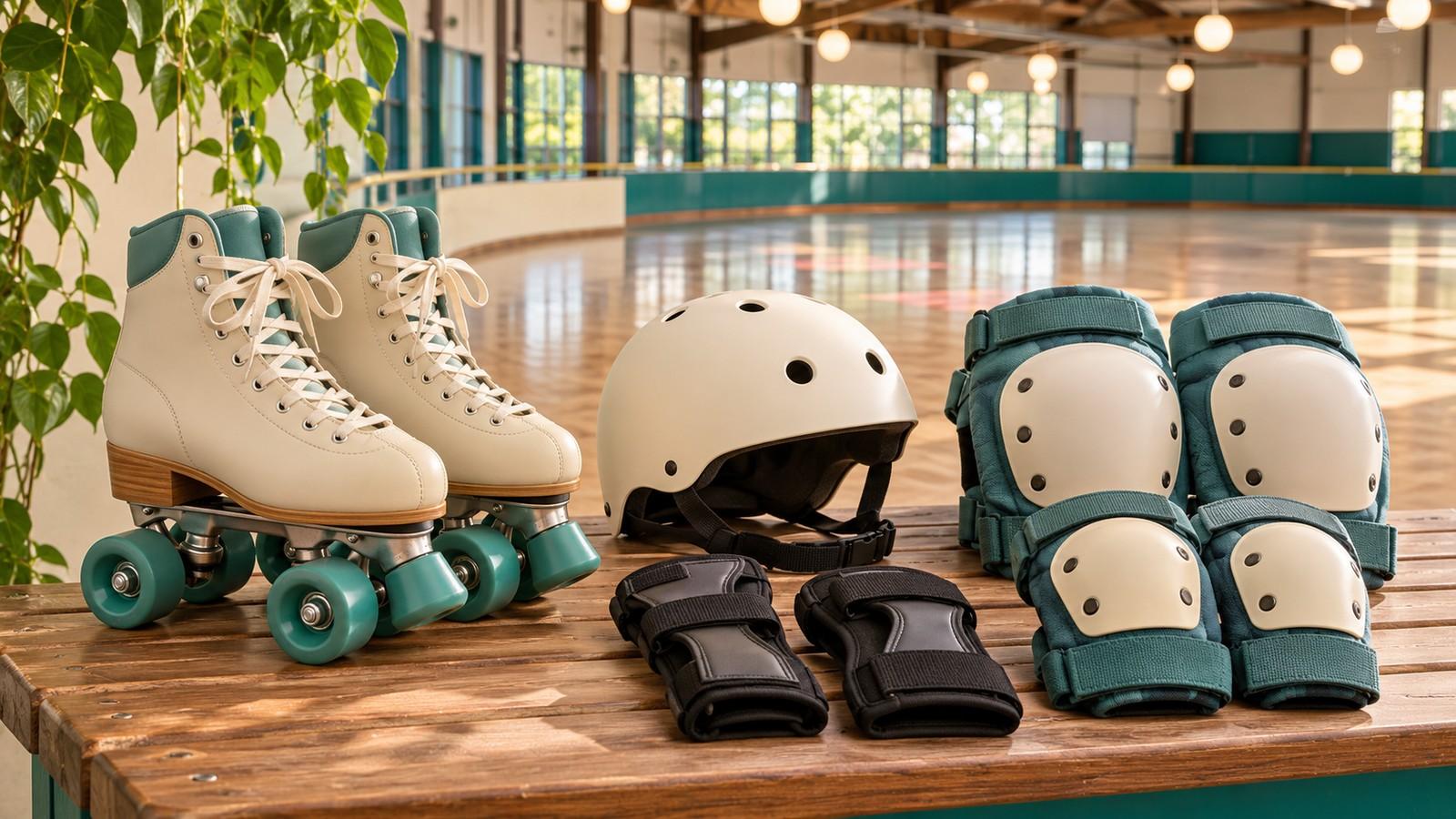
Wear a properly fitted helmet intended for recreational skating, with the chin strap fastened. Wrist guards, knee pads, and elbow pads are sensible protective equipment too. They don’t eliminate the chance of injury, but they offer protection if you fall. Ask the instructor or rink staff for help checking fit if you’re unsure.
Rental skates should feel secure without pinching. Check that the closures are fastened and tell staff if a wheel, brake, or boot seems damaged. Quad skates and inline skates use different equipment and may stop differently, so ask for instruction on the pair you’re wearing rather than assuming every brake works the same way.
Wear comfortable clothes that allow you to bend and move, plus socks appropriate for the skates. Leave long or loose items that might catch at home. A small bag and a place to sit while putting on your gear make the start less hurried.
Learn the basics slowly
Start with the instructor’s directions for standing and finding your balance. It may help to practice near a stable support under their guidance before moving into open space. Ask how to slow down and stop on your particular skates before you try to go faster.
Take short, controlled attempts and leave plenty of room around you. You can step off the rink and rest whenever you need to. If a class moves faster than feels comfortable, tell the instructor; they may be able to give you a separate practice area or a simpler exercise.
Falling is possible, which is one reason a clear space, protective gear, and instruction matter. Don’t attempt tricks or use a hill to gain speed while learning. If balance is a concern or you have a health condition that makes a fall particularly risky, talk with your clinician or physical therapist before deciding whether skating is right for you.
Make the first visit manageable
You might plan to attend the beginner portion, practice for a short time, and then take stock. How do your feet feel? Are the skates secure? Can you follow the stopping instruction? It’s fine if the answer to one of those questions means adjusting your gear or ending the session.
Bring a friend if you’d enjoy company, but make sure they’re comfortable letting you learn at your own pace. Holding on to another inexperienced skater isn’t a substitute for instruction or a stable support. A coach can show you how the rink handles beginner assistance.
If you experience sharp pain, dizziness, chest discomfort, or unusual shortness of breath, stop and get appropriate help. Seek urgent medical care for severe symptoms or a serious injury. You can decide later whether you want to try again.
Decide what you liked
Some people love the music and social atmosphere; others prefer a quieter practice time. You might enjoy learning a new skill even if you never want to skate quickly. Ask about future lessons, accessible sessions, or rental options before investing in your own equipment.
If movement is part of your weight-management plan, skating is one possible activity, not a requirement. If you take a GLP-1 medication and feel unwell, choose another day and speak with your care team about persistent symptoms or difficulty eating and drinking.
The best first session is one that helps you feel more familiar with the skates and the space. A few careful laps—or a few minutes practicing at the edge—can be a solid start.