










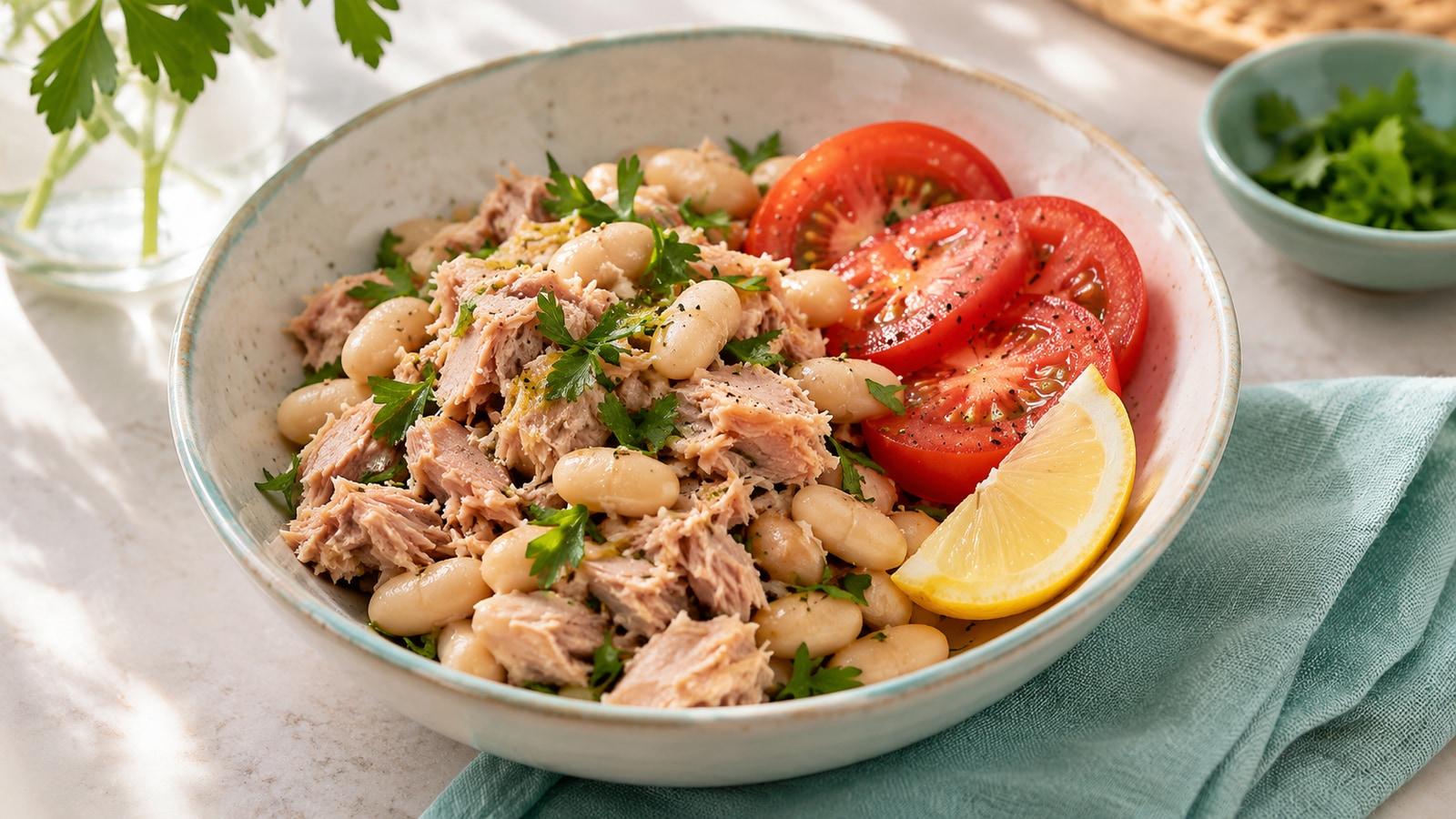
This is the kind of lunch you can make from two cans and a handful of fresh ingredients. White beans give it a soft, creamy bite; tuna adds a savory note; lemon and parsley keep it bright. You don't need to turn on the stove.
It's also easy to put together in stages. Mix the beans and dressing first, add the tuna gently, and decide at the end whether you want more lemon, herbs, or a little crunch. Serve it over greens or alongside sliced tomatoes.
What you'll need
For approximately two servings, depending on appetite:
- 1 can (about 15 ounces) white beans, such as cannellini or great northern, drained and rinsed
- 1 can (about 5 ounces) ready-to-eat tuna, drained
- 2 tablespoons chopped fresh parsley
- 1 tablespoon lemon juice, plus more to taste
- 1 tablespoon olive oil
- 2 tablespoons finely chopped red onion, optional
- Black pepper, to taste
- A small pinch of salt, if needed
You'll also need a colander, a bowl, and a fork or spoon. If chopping is a nuisance, look for pre-chopped onion and use kitchen scissors to snip the washed parsley, provided you can use them comfortably and safely.
Put it together
- Wash your hands and clean the work surface. Rinse the parsley and lemon under running water, then dry them. Rinse the onion before cutting if you're using it.
- Drain the beans in a colander and rinse them under cool running water. Let the excess water drain while you prepare the other ingredients.
- In a bowl, stir together the lemon juice, olive oil, parsley, and optional onion. Add the beans and toss gently.
- Drain the tuna and add it to the bowl. Break it into pieces with a fork and fold it through the beans. Mix lightly if you prefer larger pieces of tuna; stir a little more if you like a softer mixture.
- Taste with a clean spoon. Add pepper, more lemon, or a small pinch of salt if you want it. Canned beans and tuna vary, so you may not need extra salt.
Serve immediately, or cover and refrigerate until you're ready to eat. This recipe uses canned tuna intended to be eaten without further cooking; check the package directions for the product you buy.
Choose the texture you like
Cannellini beans are soft enough to mash against the side of the bowl. If a smoother salad sounds appealing, mash a few spoonfuls of beans into the lemon and oil before adding the rest. Leave more beans whole for a chunkier bite.
For crunch, add a little diced cucumber or celery just before serving. Rinse the produce first. If raw onion feels too sharp, leave it out; the parsley and lemon can still give the salad plenty of character. You can also serve the onion on the side so each person decides how much to add.
Texture preferences aren't a test. If your care team has given you a specific swallowing or texture-modified diet, follow those instructions and ask a dietitian how to adapt the meal safely.
A few ways to serve it
Spoon the salad into a shallow bowl and add sliced cucumber or tomatoes. Washed greens can go underneath, or you can serve the beans and tuna alongside a baked potato. Leave the larger pieces of tuna intact if you like a chunkier salad.
You don't have to use the entire batch at one meal. If you're taking a GLP-1 and your appetite varies, put the amount you want on a plate and refrigerate the rest promptly. You can always have more later if you're hungry and the food has been stored safely.
For a household with different appetites, set out the salad and a few accompaniments separately. One person might add tomatoes while another prefers cucumber or a smaller bowl. The same base can work for both without requiring two separate lunches.
Picking the cans
White beans come in several varieties. Cannellini are larger and soft; great northern beans also work. Check the label if sodium matters to you, and pick a version that fits your preferences. Draining and rinsing makes it easier to control the texture and flavor, but don't assume an exact change in sodium without information for the product and preparation.
Canned tuna varies, too. Water-packed and oil-packed versions taste different, and you may want less added oil if you choose the latter. Fish is an allergen, so choose a different meal if you need to avoid it. If you're pregnant, breastfeeding, or choosing fish for a child, ask your healthcare professional about fish choices and frequency; different types of tuna contain different amounts of mercury.
Saving the rest
Refrigerate leftovers in a covered container at 40°F or below within two hours of preparation, or within one hour if the food has been exposed to temperatures above 90°F. Properly handled tuna salad can generally be refrigerated for three to four days. If it was left out too long, discard it rather than relying on its smell.
Keep crisp greens and cut vegetables separate until serving so they retain their texture. A little extra lemon and parsley added at the table can freshen the next portion. The simplest version—the beans, tuna, and dressing in a bowl—is enough to get lunch started.