










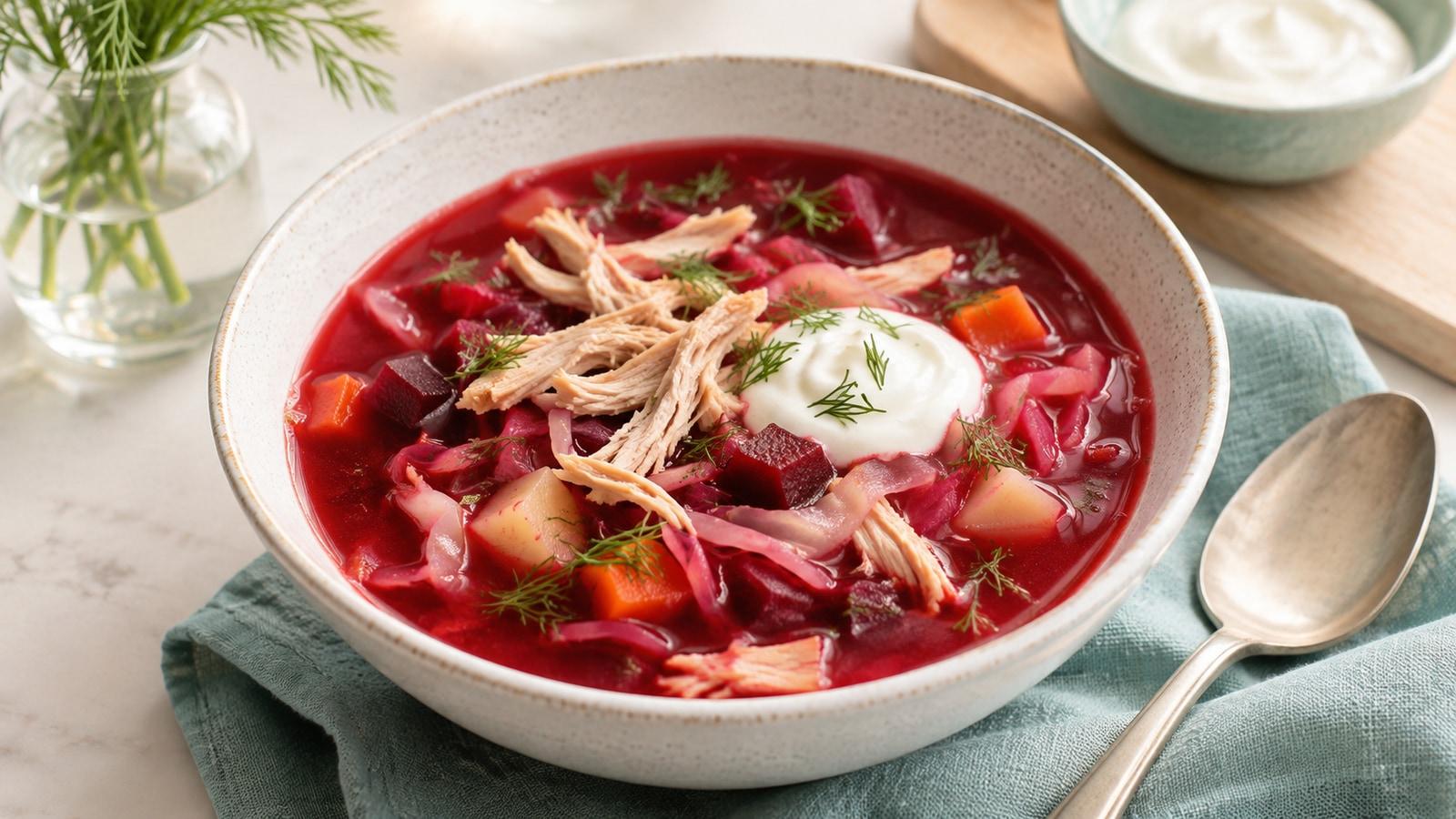
Beets give this soup its deep color, cabbage adds texture, and cooked turkey turns it into a substantial bowl. It’s a home-style variation inspired by borscht, a dish with many regional and family traditions. This particular pot uses ingredients that are easy to find and a spoonful of yogurt if you like a cool topping.
You can make the vegetable base ahead and add safely cooked turkey when you’re ready to finish the soup. Keep the turkey chilled until then.
Ingredients
Makes: about 4 servings
Prep: about 20 minutes
Cook: about 35–45 minutes
- 1 tablespoon olive oil
- 1 small onion, diced
- 2 medium beets, scrubbed and diced small
- 1 carrot, diced
- 2 cups shredded cabbage
- 1 can (14–15 ounces) diced tomatoes
- 4 cups lower-sodium vegetable or turkey broth
- 2 cups cooked turkey, diced or shredded
- 1 tablespoon lemon juice or vinegar, to taste
- Optional: plain yogurt and chopped dill
Beets can stain a cutting board and kitchen towels. A washable board and an apron make cleanup easier. Cutting the beet pieces small helps them become tender in the soup without a separate roasting step.
Make the soup
- Wash your hands. Scrub the beets under running water and rinse the carrot and cabbage before cutting. Peel the beets if you prefer.
- Heat the oil in a soup pot. Add the onion and cook until it softens.
- Add the beets, carrot, tomatoes, and broth. Bring to a boil, then simmer until the beet pieces begin to soften.
- Add the cabbage and continue simmering until the vegetables are tender. Add the cooked turkey and return the soup to a rolling boil, checking that the turkey reaches 165°F.
- Stir in a little lemon juice or vinegar. Taste and add more if you like. Serve with yogurt and dill as optional toppings.
If you’re starting with raw turkey, cook it to 165°F using a food thermometer before adding it to the soup. Keep raw poultry and its juices away from vegetables and cooked food, and clean hands, boards, and utensils after handling it.
A few ways to adjust the vegetables
Beet size affects cooking time. Dice them into small, even pieces and check for tenderness with a fork. If you have safely stored cooked beets, you can add them later in the simmer; the texture and timing will differ.
Cabbage can be sliced thinly for a softer soup or left in slightly wider strips for more bite. Add it after the beets have had a head start so it doesn’t disappear before the roots are tender. If you prefer very soft cabbage, give it more time.
The lemon or vinegar balances the sweetness of the beets. Start with less, then add more to individual bowls. Some people like a pronounced tang; others prefer a milder broth. A yogurt topping brings another kind of acidity and can be left off for a dairy-free bowl.
You can also add diced potato if you want a heartier soup. Put it in with the beets and check that it is tender before adding the turkey. A potato will absorb some broth, so add a little water if the pot becomes thicker than you intended.
Using leftover turkey
This soup is a practical way to use a safely refrigerated turkey portion. Check when it was originally cooked and how it was stored. Adding it to a new pot doesn’t restart the usual storage window. If you’re unsure whether the turkey was chilled promptly or how old it is, prepare a fresh portion instead.
Turkey contributes protein, while beets, cabbage, and carrots give the soup different textures. Serve it with bread or a cooked grain if you want a larger meal. A cup can also be a side to lunch rather than the whole plate.
If your appetite is smaller, dish out a modest bowl and save the rest promptly. You can add more after you’ve eaten the first portion. A recipe’s serving count is a planning estimate, not an instruction to finish a particular amount.
Store the pot in portions
Divide leftovers into shallow containers and refrigerate within two hours, or within one hour if exposed to temperatures above 90°F. Keep the refrigerator at 40°F or below. Use the soup within three to four days, taking the age of the turkey into account, or freeze it sooner.
Bring leftover soup to a rolling boil and check that the turkey reaches 165°F. Add yogurt after reheating. If packing the soup for lunch, keep it cold in an insulated bag with ice packs until it can be refrigerated or reheated.
Beets may color the broth and nearby ingredients, so a stained spoon or container doesn’t mean the recipe has gone wrong. Taste the finished soup for the balance you like: more tang, more dill, or simply a warm bowl as it is.