










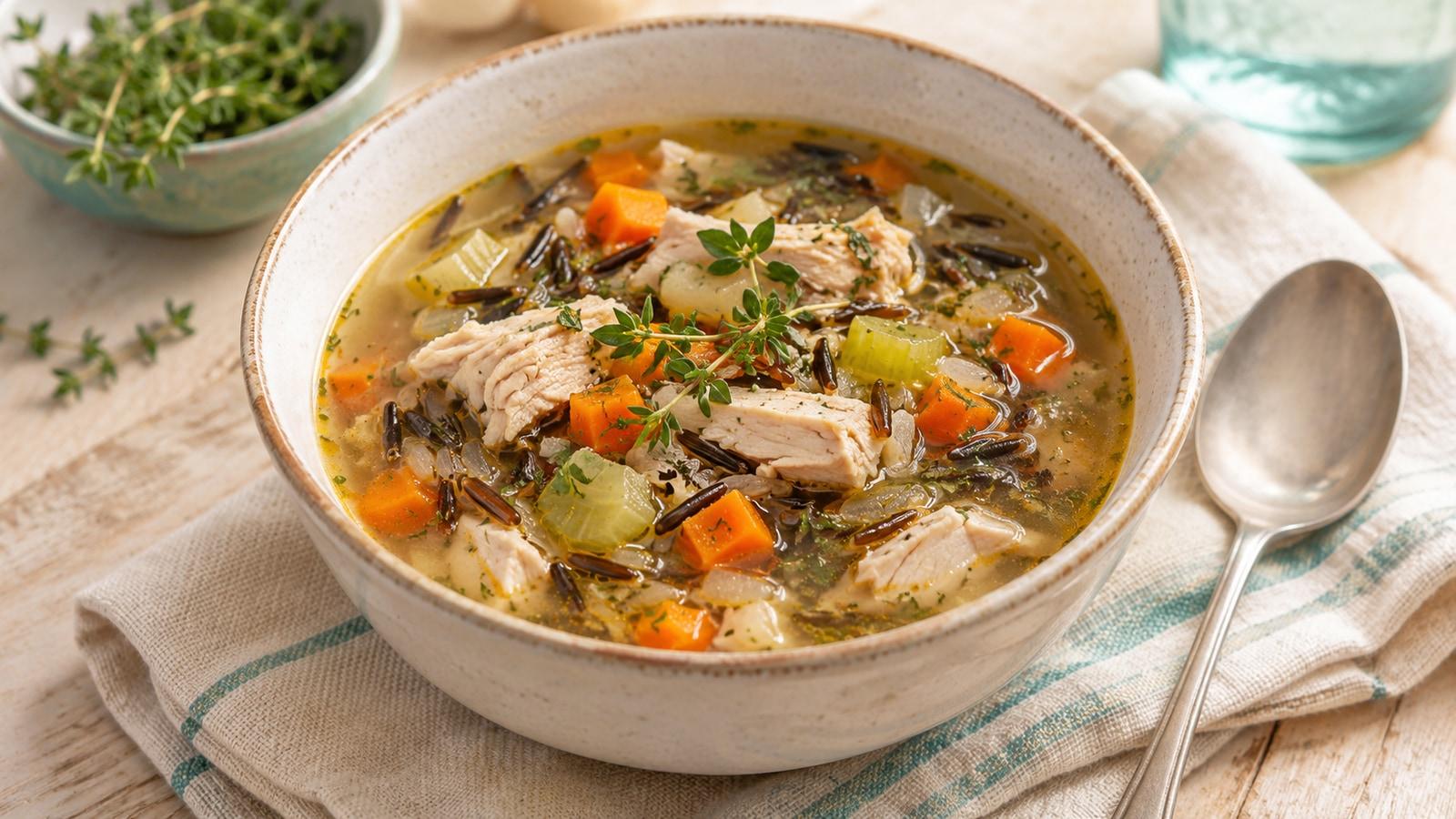
Leftover turkey doesn’t have to become another sandwich. A pot of wild rice soup gives small pieces of cooked turkey a new job, along with vegetables and herbs you may already have. It’s especially handy when there isn’t enough turkey left for another full plate but there is enough to add to several bowls.
The plan works best when you know when the turkey and rice were cooked. Keep those ingredients chilled until you add them, and use leftovers that have been handled and stored safely.
Ingredients
Makes: about 4 servings
Prep: about 15 minutes
Cook: about 25 minutes, using cooked wild rice
- 1 tablespoon olive oil
- 1 small onion, diced
- 2 carrots, diced
- 2 celery stalks, diced
- 5 cups lower-sodium turkey or chicken broth
- 1½ cups cooked wild rice or a wild-rice blend
- 2 cups cooked turkey, diced or shredded
- ½ teaspoon dried thyme
- Black pepper to taste
- Optional: chopped parsley or a spoonful of plain yogurt
Wild rice and wild-rice blends have different cooking times. Cook the grain according to its package before making this soup. If using refrigerated rice from an earlier meal, follow the rice-specific storage advice below and add it only to portions you'll eat now.
Make the soup
- Wash your hands. Rinse the carrots and celery under running water, then chop them into small pieces.
- Warm the oil in a soup pot over medium heat. Add the onion, carrots, and celery and cook, stirring occasionally, until the onion softens.
- Pour in the broth and add the thyme. Bring to a boil, then simmer until the vegetables are tender.
- Add the turkey and, if freshly cooked, the rice. Bring the soup to a rolling boil, stirring to heat the ingredients evenly. Check that the turkey reaches 165°F with a food thermometer. If using refrigerated rice, heat only the rice for the bowls you plan to eat now and add it to those portions.
- Taste before adding salt, since the broth and turkey may already be seasoned. Add pepper and parsley, or put a spoonful of yogurt into individual bowls.
If the soup thickens as it sits, add a splash of broth or water. If you prefer the rice to keep more of its texture, divide it among bowls and ladle the reheated soup over it; make sure the rice and turkey are heated through to 165°F.
Start with leftovers you can account for
Cooked turkey and cooked rice both need prompt refrigeration, with extra care for rice. Cool and refrigerate rice within one hour of cooking, eat refrigerated rice within 24 hours and reheat it only once. Discard turkey left out for more than two hours—or more than one hour in temperatures above 90°F. Smell and taste aren’t reliable ways to decide whether food is safe.
Making soup doesn’t give older turkey a fresh three-to-four-day clock. If you use refrigerated rice, reheat only the rice you plan to eat now and don't save that reheated rice for another meal. For soup you plan to save, start with freshly cooked rice instead. If you’re unsure how either ingredient was stored, use fresh ingredients instead.
Have raw turkey? Cook it to 165°F and keep raw poultry and its juices separate from ready-to-eat ingredients. Clean hands, boards, and utensils after handling it. You can cook a separate piece for the soup or use safely prepared turkey from a previous meal.
Choose the texture you like
Wild rice has a chewy texture, while blends can include grains that soften at different rates. If you want a more uniform bowl, cook the blend according to its package and taste the grains for tenderness before adding them. If a softer soup is easier for you to eat, cook the vegetables until tender and chop the turkey into smaller pieces.
For a creamy finish, add plain yogurt to each bowl after the soup has been served. That keeps the rest of the pot flexible for people who prefer a clear broth or avoid dairy. You can also leave the yogurt out and add a squeeze of lemon or extra herbs at the table.
Turkey provides protein, and the rice makes the soup more substantial. Serve a smaller bowl with toast or fruit, or have a larger bowl on its own. Portion needs differ; there’s no requirement to finish a particular amount.
Plan a second meal
If your appetite is smaller on a GLP-1 medication, portion the soup into containers before serving so a later meal is easy to heat. This isn’t a treatment for nausea. Contact your care team if symptoms persist or you’re having trouble eating or drinking.
For lunch away from home, keep the soup cold in an insulated bag with ice packs until you can refrigerate or reheat it. A wide, shallow container helps a hot portion cool more quickly before storage. Don’t seal a large pot and leave it on the counter for the afternoon.
If saving soup made with freshly cooked rice, cool and refrigerate it within one hour of cooking the rice. Keep the refrigerator at 40°F or below, eat refrigerated portions within 24 hours and reheat them only once. Consider the age of the turkey too. Reheat soup to a rolling boil and check the turkey reaches 165°F.
This pot is less about using every last scrap and more about making a meal you’ll enjoy. A little turkey, a grain with texture, and vegetables in a flavorful broth can be enough to make leftovers feel like a fresh lunch.