










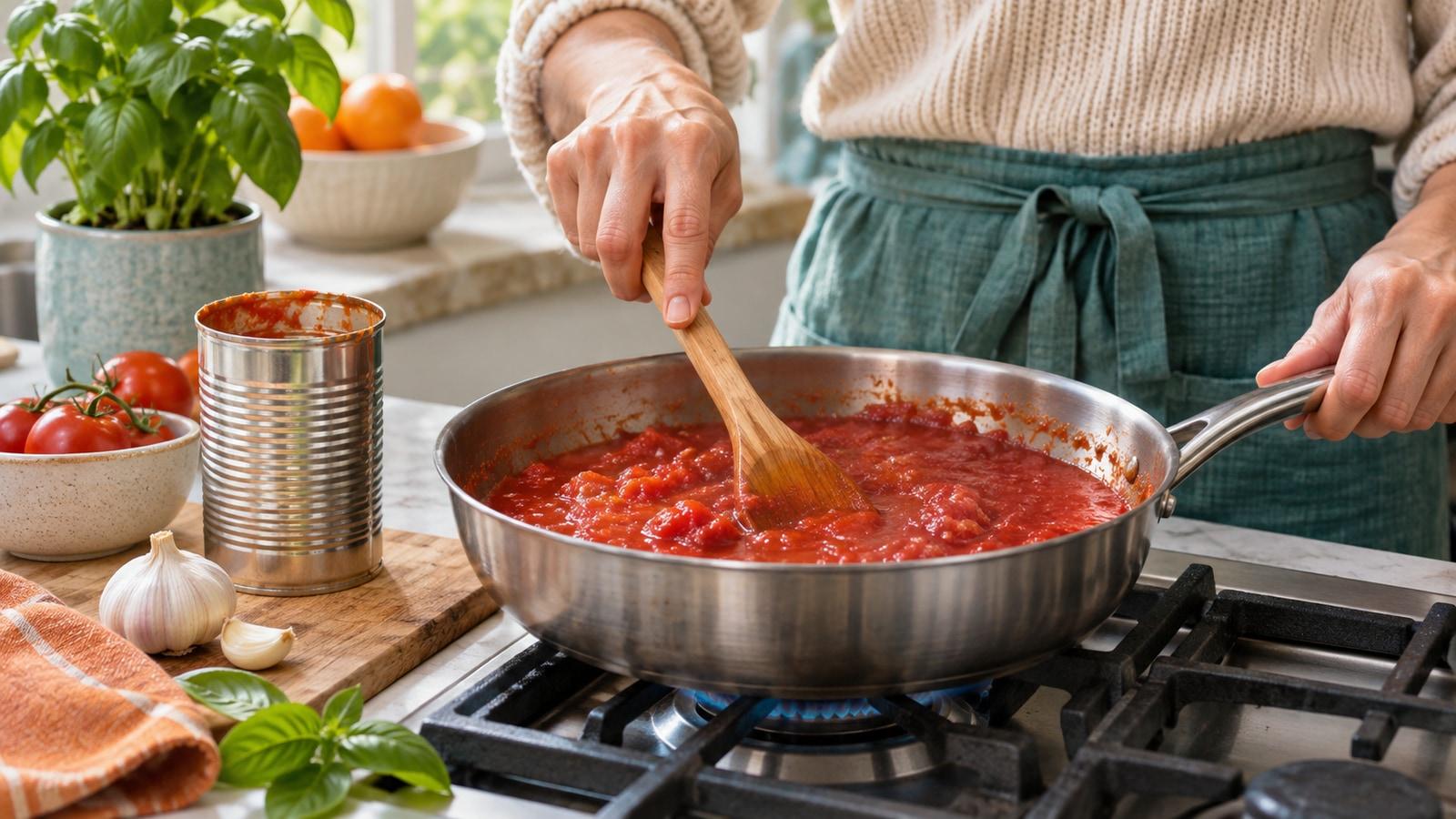
A can of tomatoes won't tell you what to make for dinner, but it can take you a long way toward an answer. Add a few ingredients and it becomes a sauce for pasta, a base for beans or the beginning of a brothy skillet. The useful part is that you can change direction depending on what is already in the kitchen.
These are loose starting points rather than strict recipes. Use the flavors you like, adjust the thickness as you go and make enough for the people you're feeding. If tomatoes don't sit comfortably with you, there's no reason to force them; a broth-based meal can be just as useful.
Choose the can that suits the meal
Crushed tomatoes are convenient when you want a smoother sauce. Diced tomatoes leave more distinct pieces, while whole peeled tomatoes can be broken up with a spoon as they cook. Canned tomato sauce is already smooth and may contain seasonings, so taste before adding more.
Check the label if sodium is something you're watching. Unsalted or lower-sodium products let you decide how much salt to add, while a seasoned can may bring enough flavor on its own. No single can is required for these ideas; the texture will simply vary.
You'll also want a pan, a spoon and a little liquid nearby. Water or broth can loosen a sauce that's thicker than you like. Simmer gently and stir occasionally so the bottom doesn't catch. If the mixture tastes sharp, a little extra cooking time or a spoonful of olive oil may round out the flavor; there's no need to add sugar automatically.
1. Make a simple pasta sauce
Warm a little olive oil in a saucepan and soften some chopped onion or minced garlic over moderate heat. Add crushed tomatoes, a pinch of dried oregano or basil and a splash of water. Let the mixture simmer while you cook pasta, stirring when needed.
Add cooked mushrooms or a handful of spinach near the end if you like vegetables in the sauce. Toss it with pasta and a little pasta-cooking water, then finish with grated cheese if you like.
Keep cheese or chopped herbs separate if the people eating want different things. If your appetite is smaller, start with a portion that feels manageable and save the rest rather than trying to make the bowl look a particular way.
2. Change the texture without starting again
If diced or whole tomatoes are chunkier than you want, break them up with a spoon as they simmer. A potato masher works for a sauce with some pieces left; crushed tomatoes are convenient when you want a smoother result from the start.
If the base is too loose, simmer it uncovered and stir occasionally so liquid can cook away. If it gets too thick, add water or broth a little at a time. Tomato paste can add a more concentrated tomato flavor and thicken a mixture, so start with a small spoonful and taste.
Different cans have different amounts of liquid. Give the sauce a few minutes after each adjustment before deciding it needs more. Keep any hot pan on a stable surface and use a clean spoon each time you taste.
3. Turn it into a brothy vegetable base
For something lighter in texture, combine tomatoes with broth or water in a pot. Add chopped carrots or zucchini, along with herbs such as thyme or parsley. Simmer until the vegetables are tender. Stir in cooked chicken, canned chickpeas or another protein you enjoy, and heat it thoroughly.
Serve as a soup, ladle over a little cooked rice, or add cooked small pasta just before eating. Keeping the pasta separate is handy if you're saving portions for later, since it can absorb liquid in the refrigerator. Add more broth when reheating if the mixture has thickened.
Adjust for the person at your table
Tomatoes can be acidic and may bother some people, particularly if reflux is an issue. A smaller portion, a different meal base or a conversation with a clinician may be more useful than trying to fix the flavor with lots of add-ins. If nausea is making rich or spicy foods unappealing, choose mild seasonings and a consistency that feels comfortable.
These combinations are flexible, not a promise that one ingredient will suit everyone. Add familiar foods that make the meal satisfying, and keep any medically necessary dietary instructions in mind.
Save the extra safely
Refrigerate perishable leftovers promptly in a covered, shallow container; don't leave them at room temperature for more than two hours, or one hour when it's above 90°F. Keep the refrigerator at 40°F or colder. Most cooked leftovers are best used within three to four days, or frozen for later. Reheat leftovers to 165°F, stirring so they heat evenly.
Labeling a container with the date makes it easier to choose tomorrow's lunch. One open can can become two different meals without requiring an elaborate plan—and that is often enough.