










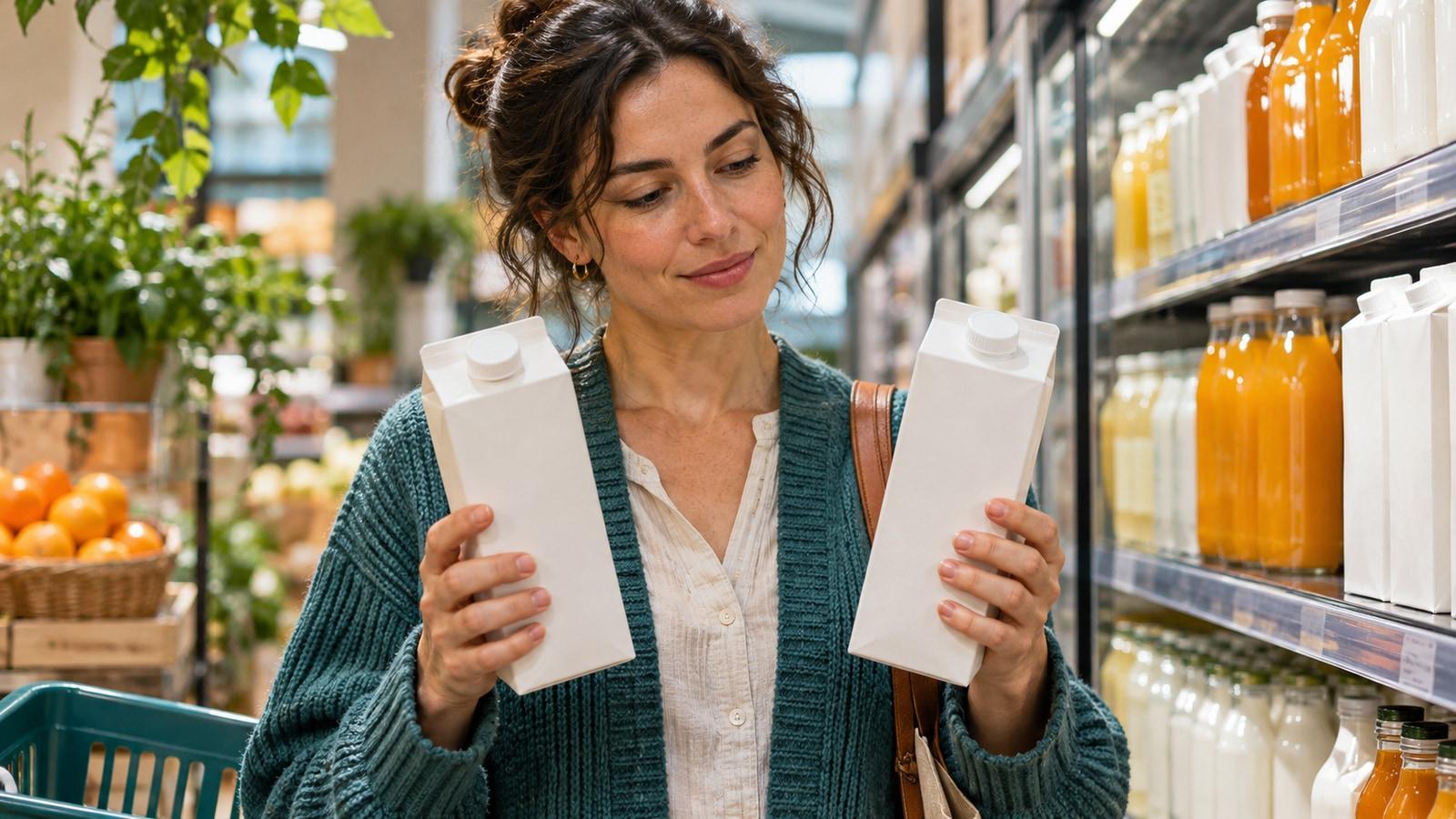
You're standing in front of a refrigerator case, deciding between two drinks. One says “unsweetened.” The other says “no added sugar.” Both sound straightforward—until you turn them around and see different numbers on their labels.
Those phrases give you a starting point, but neither tells you everything in the bottle. The type of drink, the ingredients, and the amount you actually pour all matter. Here's how to compare them without turning a grocery trip into a research project.
Start with what's in the drink
“No added sugar” tells you that sugar wasn't added as a sweetener. It doesn't necessarily mean the drink contains no sugar. A drink made with fruit or milk can contain naturally occurring sugars from those ingredients.
“Unsweetened” generally tells you the product hasn't been sweetened. It doesn't automatically tell you whether the base ingredient contains sugar or carbohydrate. Unsweetened iced tea and unsweetened milk, for example, aren't nutritionally identical drinks.
Those naturally occurring sugars are part of the food or drink; they aren't something you have to treat with alarm. The distinction helps you understand why the total sugar number can be higher than the added sugar number.
Find the two sugar lines
On the Nutrition Facts panel, look for total sugars and the line underneath for added sugars. Added sugars are included in the total. You don't add the two numbers together.
Imagine a drink with 12 grams of total sugars and 4 grams of added sugars per serving. The 4 grams are already part of the 12. The remaining 8 grams are naturally occurring in the ingredients. A different drink might list 12 grams of total sugars and no added sugars because its sugar comes from the ingredients themselves.
Neither example tells you everything about the rest of the drink. One could contain protein, another could be mostly juice, and they may taste very different. Check the details that matter to you rather than choosing on the front phrase alone.
Check the serving size before comparing
This part is easy to miss: the numbers are for the serving size shown on the label, which may not be the whole container. If one bottle lists one serving and another lists two, compare the amounts you expect to drink.
For instance, if a label lists 6 grams of sugar per serving and the bottle contains two servings, drinking the whole bottle would provide 12 grams based on that label. Some packages show both a per-serving column and a per-container column, which makes the comparison quicker.
You don't need to measure every drink. The point is to avoid comparing half of one bottle with all of another without realizing it.
What if it tastes sweet?
A drink can taste sweet for different reasons. Fruit and milk have natural sugars. Other products use sweetening ingredients that contribute few or no calories. If you're curious about a particular flavor or ingredient, the ingredient list gives you more information than the word “sugar” on the front.
You might see names such as sucralose or stevia-derived sweeteners in some drinks. Whether you like the taste is a perfectly reasonable part of the decision. If a particular ingredient doesn't agree with you, keep a note of the product and discuss recurring symptoms with a healthcare professional rather than assuming every drink with a similar label will have the same effect.
Don't assume that a sugar-free or no-added-sugar claim means a drink is calorie-free, either. Look at the calorie and total carbohydrate lines if they're relevant to your goals or your diabetes care plan.
A few real-world comparisons
Say you want something to put in your coffee. An unsweetened milk or plant-based drink may taste less sweet than a flavored version, but its protein, carbohydrate, and texture will depend on the product. Read both cartons if those details matter to you.
Or perhaps you like juice with breakfast. A no-added-sugar juice can still contain sugar from fruit. If you enjoy it, the label can help you understand what is in the amount you usually pour. You don't have to label it a “good” or “bad” choice to make an informed one.
For an afternoon drink, you might compare plain sparkling water with a flavored drink. Check the ingredients for the flavor and sweetener, if any, and choose the one you actually like. Price and availability count too.
If you're managing blood sugar or taking a GLP-1
If you monitor carbohydrate as part of diabetes care, look at total carbohydrate as well as the sugar lines. Your care team can help you understand how drinks fit into your individual plan.
If a GLP-1 has changed your appetite or made drinking less appealing, pay attention to what you're able to tolerate and discuss persistent trouble drinking with your care team. You don't need to pick a drink solely because its label uses a reassuring phrase.
The quick version: read the front, then check the serving size, total and added sugars, and ingredients. In a few seconds you'll know much more than either phrase can tell you on its own.