










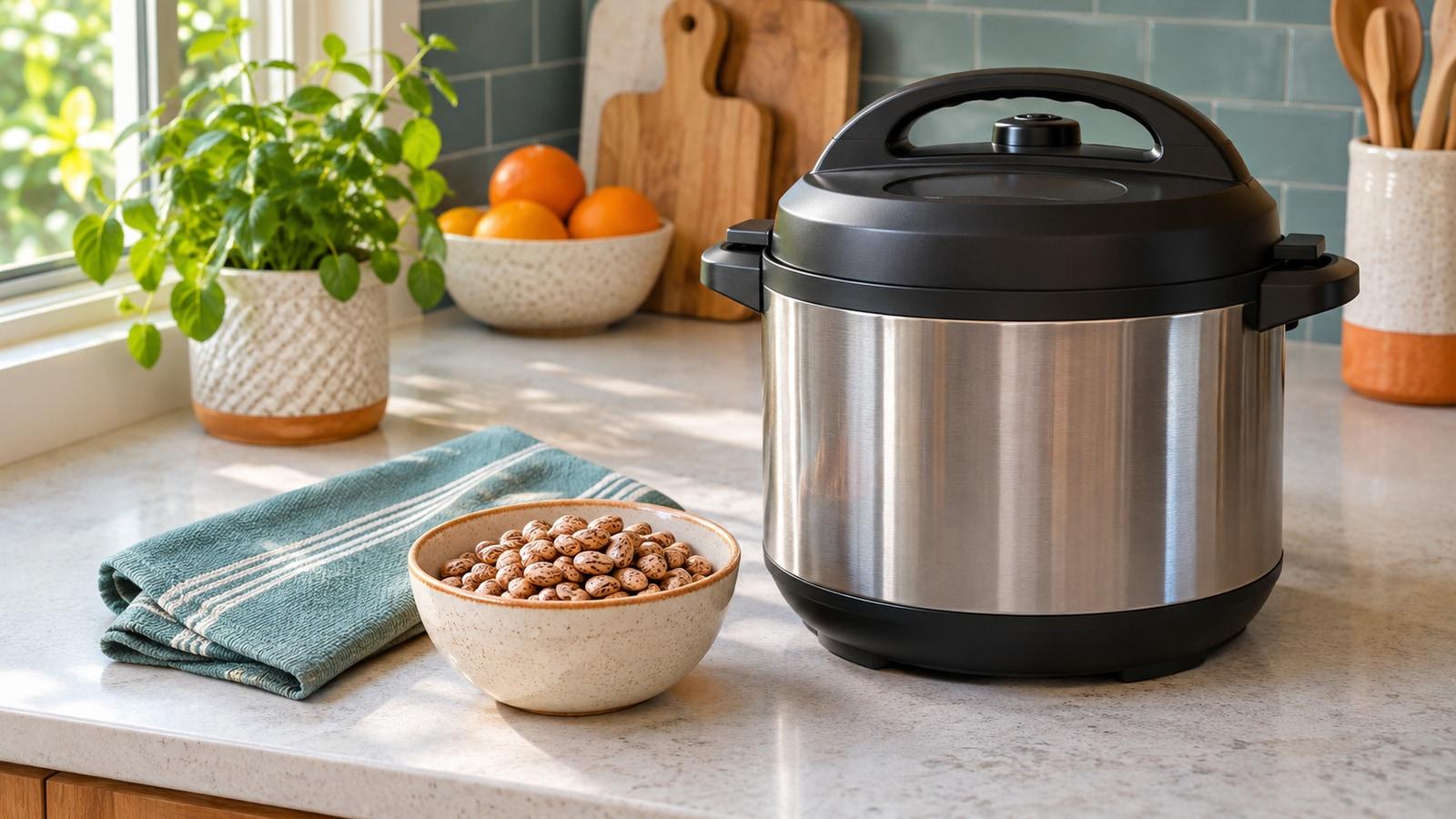
Dry beans can be inexpensive, flexible and useful to have on hand. A pressure cooker may make preparing some varieties more convenient, but the first attempt can bring a surprising number of questions: Should the beans be soaked? How much water goes in? When is it safe to open the lid?
The short answer is to start with your particular appliance's instructions and a reliable recipe for the type of bean you're cooking. Pressure cookers differ, and beans vary in size, age and how they behave. This checklist will help you prepare without pretending that one timing works for every pot.
1. Read the manual before adding anything
Check the manufacturer's directions for cooking beans, including the maximum fill line, minimum liquid, appropriate setting and pressure-release method. Beans can foam and expand, so don't assume the general fill line for soup is the right limit for legumes. Use the more restrictive bean-specific instruction if the manual gives one.
Look over the sealing ring, lid and steam-release parts as described in the manual. Place the cooker on a stable surface with space around the steam outlet, away from your hands and face. Never force the lid open. Follow the manufacturer's directions and wait for the pressure indicator to show that it is safe to open.
If the manual is missing, find the instructions for the exact model before using it. An electric multicooker and a stovetop pressure cooker can operate differently, even if both make beans.
2. Sort, rinse and choose a bean
Spread the dry beans on a tray or plate and remove any small stones or damaged pieces. Rinse them under running water. Then check whether the recipe calls for soaking that particular bean and how to handle the soaking water.
Some recipes use soaked beans while others use dry, unsoaked beans. Don't swap one for the other and keep the same cooking time without checking a reliable recipe. Older beans may also take longer to become tender. Follow the recipe and appliance guidance rather than relying on the package photo or a friend's setting.
For your first batch, choose one variety and a modest amount that stays comfortably within the appliance's bean-specific limits. Keeping the first attempt simple makes it easier to learn how your cooker behaves.
3. Take special care with red kidney beans
Raw and undercooked kidney beans contain a natural toxin that can cause illness. For dried kidney beans, food-safety guidance advises soaking for at least five hours, discarding the soaking water and boiling in fresh water for at least 30 minutes. Follow that guidance rather than assuming an unknown pressure-cooker setting has made them safe.
If you'd like to use your pressure cooker as part of a kidney-bean recipe, first complete those soaking and boiling steps, then follow the appliance's directions for any further cooking. Canned kidney beans are already cooked and offer a convenient alternative. A slow-cooker setting is not a substitute for properly boiling dried kidney beans.
Don't taste raw or undercooked beans to judge doneness. If you are uncertain whether a batch has been safely prepared, don't serve it. Choose a known safe option and revisit the instructions before trying again.
4. Follow the recipe's liquid and release directions
Use the quantity of water specified for the bean and cooker, staying above the appliance's minimum liquid and below its appropriate fill limit. More water is not a fix for an overfilled pot. The cooking time and the way pressure is released both matter, so follow the tested instructions together rather than mixing pieces from different recipes.
Once the lid can be opened safely, check the beans as the recipe directs. They should be fully cooked and tender, but tenderness alone is not a substitute for the kidney-bean precautions above. If a batch needs additional cooking, follow the appliance manual for closing, heating and releasing pressure again.
Wait until the beans are ready before deciding how to season them. You can add herbs, spices or a sauce that suits the meal, keeping any dietary instructions in mind. A plain batch can become part of several different dishes.
5. Cool and store the extras
Divide cooked beans into shallow containers and refrigerate promptly. Don't leave them out for more than two hours, or one hour when the temperature is above 90°F. Keep the refrigerator at 40°F or colder and use cooked leftovers within three to four days, or freeze them for later. Reheat leftovers to 165°F.
Label containers with the date and portion them in amounts you'll realistically use. A small container can become a soup addition or a quick side without requiring you to thaw a whole batch.
If this sounds like more work than your week allows, canned beans are a perfectly useful pantry staple. The best method is the one you can follow safely and comfortably, whether that means a pressure cooker, another well-tested method or opening a can.