










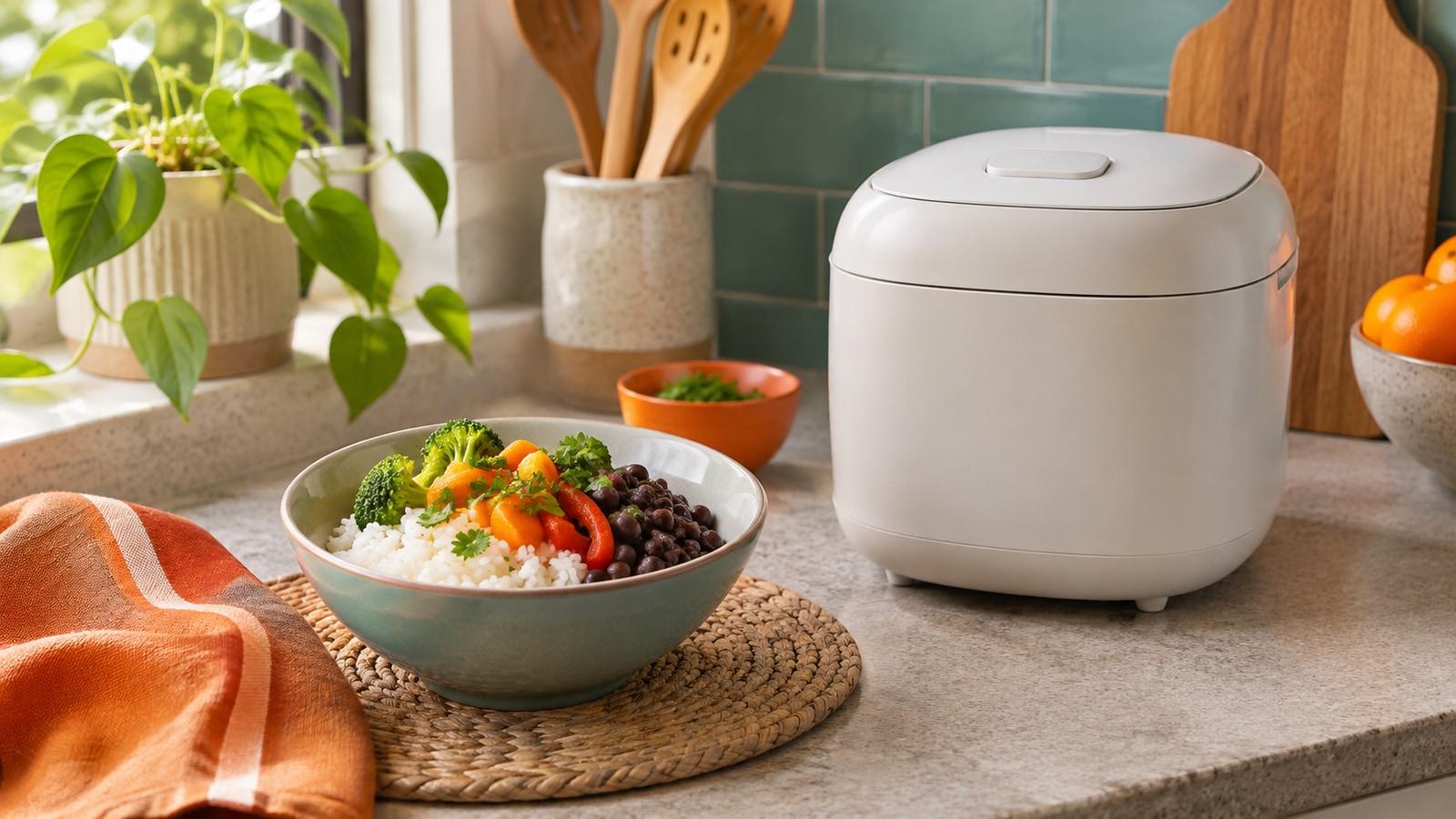
If your rice cooker usually produces one pot of plain rice and then goes back into the cabinet, it may have more to offer. Depending on the model, it might cook other grains or steam vegetables while you prepare the rest of a meal.
The important phrase is “depending on the model.” Rice cookers have different settings, capacities and accessories. Start with your appliance manual and use recipes designed for that cooker rather than assuming every ingredient can go into the pot together.
Get to know the settings
Look for the instructions for white rice, brown rice, other grains and any steaming basket. Check the minimum and maximum quantities, the measuring cup the manufacturer expects you to use and how much water each setting needs. A cup supplied with the cooker may not be the same size as a standard measuring cup.
If the manual says the cooker is designed only for certain foods, stay within that guidance. Some models have settings for porridge or grains; others do not. Don't cover vents, overfill the pot or open a pressure-style lid against the manufacturer's instructions.
Keep the cooker on a stable, heat-safe surface with space around the steam outlet. Use the supplied utensils or tools recommended for the pot so you don't damage its surface.
Make the rice the base, then add variety
One easy approach doesn't require cooking everything together. Prepare rice according to the manual, then build a bowl with ingredients cooked or prepared separately. For example, add warmed black beans and cooked peppers, or cooked chicken and a vegetable you enjoy.
This keeps cooking times and safety checks clearer. Cook raw poultry separately to 165°F, and reheat previously cooked meat or other leftovers to 165°F before adding them. Don't assume the rice cycle has safely cooked raw meat placed on top unless you are following a suitable, tested recipe for your exact appliance and can verify the food's safe temperature.
Finish with herbs, a small amount of sauce or a topping at the table. That lets people choose different flavors from the same pot of rice.
Use a steaming basket if the model supports it
Some cookers include a basket for vegetables. Follow the manual for water, timing and placement, since the steam cycle may differ from the rice cycle. Cut vegetables into similar-sized pieces and check them for the tenderness you prefer.
If the vegetables finish before the rice, remove them carefully using the method recommended for your cooker and keep them safe until serving. Steam can burn, so open the lid away from your face and protect your hands.
For a first attempt, use one familiar vegetable and write down what worked with your model. Once you know the setting, you can add it to a meal without guessing each time.
Explore other grains thoughtfully
If the manual includes instructions for quinoa, barley or another grain, follow the specified setting and liquid. Different grains absorb water and cook at different rates, and some expand or foam. Stay within the appliance's fill limits and don't substitute a grain into a rice recipe without checking the instructions.
A small test batch can help you learn the texture your cooker produces. Serve the cooked grain with a protein and vegetables prepared safely, then adjust seasonings at the table. A spoonful of yogurt, herbs or a favorite dressing can give the bowl a different direction.
If you need to avoid gluten, remember that barley contains gluten and some grains can have cross-contact. Choose products that fit your needs and keep preparation surfaces clean.
Don't leave cooked rice sitting out
Rice and other cooked foods need safe temperature control. Serve them promptly, keep them hot according to food-safety guidance or divide leftovers into shallow containers and refrigerate them as soon as possible. Don't assume a “warm” setting is safe indefinitely; consult the appliance instructions and check the food temperature when holding food hot.
For rice you plan to save, divide it into smaller portions, cool it quickly, and refrigerate it within one hour. Keep the refrigerator at 40°F or colder, eat refrigerated rice within 24 hours, and reheat it only once. When reheating, check that it reaches 165°F throughout. You can also freeze promptly cooled portions for later.
Other perishable leftovers should be refrigerated promptly, generally within two hours or within one hour if the surrounding temperature is above 90°F. Check the storage guidance for the particular food rather than assuming every ingredient keeps for the same length of time.
If rice was left out beyond the safe window, discard it rather than relying on smell or planning to reheat it. Safe cooling and storage matter as much as the cooking cycle.
Clean and plan for the next meal
Unplug the cooker and let it cool before cleaning. Wash the removable pot and accessories as the manufacturer directs, and keep electrical parts away from water. A clean, dry cooker is easier to use the next time.
Start with a reliable base and one addition your model supports. A rice cooker doesn't need to do every step to make dinner easier; it can handle the grain while you prepare the rest of the meal your way.