










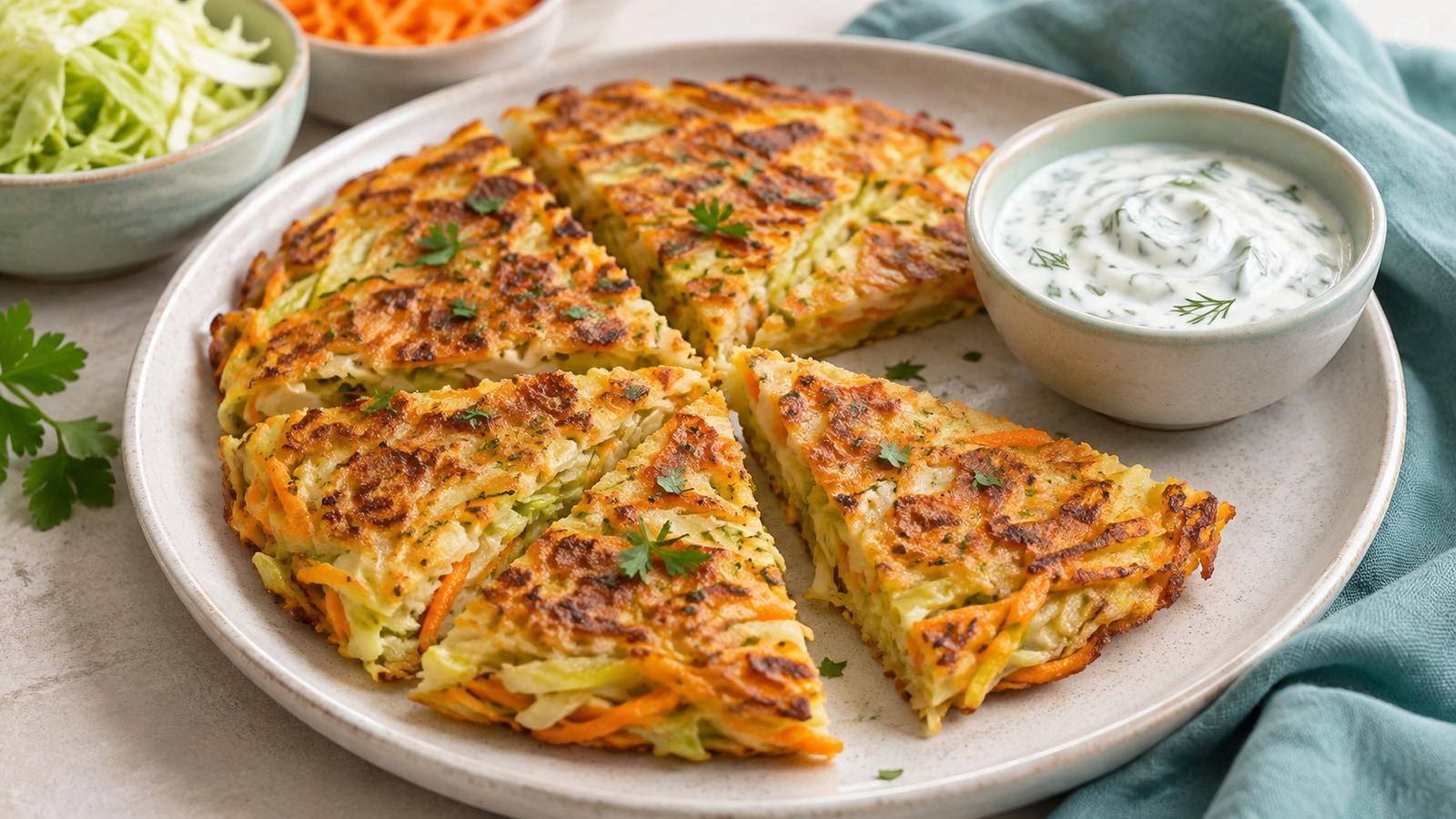
Okonomiyaki is a savory Japanese pancake with regional and household variations. This vegetable-focused home adaptation folds cabbage and carrot into an egg-and-flour batter, cooks one skillet-sized round, then cuts it into wedges to share.
The yogurt sauce is a convenient alternative for this version, not a traditional requirement. A little prepared okonomiyaki-style sauce can be added separately if you enjoy it. The egg-containing batter needs to cook all the way through.
Ingredients
Makes: one pancake, about 4 servings
Prep: about 15 minutes
Cook: about 15–20 minutes
- 3 cups finely shredded cabbage
- 1 small carrot, grated
- ½ cup all-purpose flour
- 2 large eggs
- ¼ cup water or lower-sodium broth, plus more if needed
- 1 tablespoon neutral oil, divided
- ½ cup plain yogurt made from pasteurized milk
- 1 teaspoon lemon juice
- Chopped scallion, optional
- A little soy sauce, optional
Some broths and prepared sauces contain fish, shellfish, soy, or wheat. Check the labels for ingredients relevant to the people eating. Keep the yogurt refrigerated until you’re ready to make the sauce.
Mix the sauce and batter
- Wash your hands and rinse the cabbage, carrot, lemon, and scallion under running water. Shred the cabbage finely and grate the carrot.
- Stir yogurt and lemon juice together in a small bowl. Cover and refrigerate while you cook the pancakes.
- In another bowl, beat the eggs with water or broth. Add flour and stir until combined, then fold in the cabbage and carrot. The vegetables should be lightly coated rather than swimming in batter.
Don’t taste the raw batter. Wash your hands and utensils after handling raw flour and egg, and use a clean plate for the cooked pancakes.
Cook and cut into wedges
Warm the oil in a wide skillet over medium-low heat. Spread the mixture into one even round, pressing gently without packing the cabbage too tightly. Cook until the underside is set and lightly browned.
To turn it, slide the pancake onto a plate, cover with the skillet and carefully invert it back into the pan. Protect your hands from the hot skillet. Continue cooking until the vegetables are tender and the center reaches 160°F on a food thermometer. If the outside browns before the center is ready, lower the heat and cover the pan briefly.
Slide the cooked pancake onto a clean plate and cut into wedges. Serve with the cold yogurt sauce, scallion, and a little soy sauce or prepared okonomiyaki-style sauce if you like.
Keep the center from staying raw
Keep the round fairly thin and give the first side time to set before turning it. If handling one large pancake feels awkward, divide the batter into two smaller rounds instead. A break isn't a problem: press the pieces together gently and keep cooking until they reach the safe temperature.
The cabbage should be finely shredded so it can soften as the batter cooks. A lid can help retain heat, but check the center with a thermometer rather than assuming it is done because the outside is brown.
If the batter looks dry and won’t coat the vegetables, add water a teaspoon at a time. If it is very loose, the pancake may spread and be difficult to turn. Letting a mixed batter sit too long can also change its texture as the vegetables release moisture.
A sauce and topping you can adjust
Plain yogurt and lemon make a cool, tangy sauce. Use less lemon for a milder flavor, or add chopped herbs. The sauce isn’t meant to imitate every topping served with okonomiyaki; it’s one option for this adaptation.
Prepared okonomiyaki-style sauces vary in sweetness and ingredients. Some contain fish, shellfish, soy, or wheat, so check the label if anyone has an allergy. Keep sauce on the side so each person can choose how much to add.
Egg, milk, soy, and wheat can be allergens, and wheat contains gluten. Choose suitable alternatives if needed, and test any flour or egg replacement separately because it can change how the pancake sets.
Build a meal
Eggs provide protein, while cabbage and carrot add vegetables. Serve a wedge with rice, tofu, or another side if you want a larger meal. Cut the round into pieces that work for the people at your table rather than treating one wedge as a fixed portion.
For a softer texture, cook the cabbage until tender and serve the yogurt sauce alongside. For more crunch, add fresh cucumber after the pancake is cooked. Keep any cool vegetables away from raw batter and utensils.
Leftovers
Refrigerate cooked wedges and yogurt sauce separately within two hours, or within one hour above 90°F. If serving rice, cool and refrigerate it within one hour, use it within 24 hours, and reheat it only once. Reheat the wedges to 165°F, checking the center, and keep the sauce cold until serving.
An oven or covered skillet can warm the wedges, though the outside may soften after refrigeration. Add fresh scallions at the end. Use clean equipment and don’t return cooked food to a plate that held raw batter.
Finely cut vegetables, gentle heat, and a sauce added to taste make this a practical way to try the adaptation at home.