










When a smaller appetite makes your usual meals feel like too much, it's natural to wonder whether you're missing nutrients. Vitamin E is one of many nutrients your body uses, but you don't need to chase a special product or add a large pill just because you're eating differently.
The useful question is whether your overall eating pattern is meeting your needs. A clinician or dietitian can help if you're struggling to eat enough. Meanwhile, knowing where vitamin E appears in familiar foods can give you a few ideas for meals you already enjoy.
What vitamin E does
Vitamin E is a fat-soluble nutrient. It acts as an antioxidant, helping protect cells from certain kinds of damage, and supports the immune system and other normal body functions. It isn't a stimulant or a guaranteed way to increase energy.
“Fat-soluble” means the body handles it differently from some other vitamins. It doesn't mean you have to add a particular amount of oil to every meal or eat a high-fat diet. If you have a condition that affects digestion or a prescribed eating plan, ask your care team how to meet your needs.
Vitamin E is one part of nutrition, alongside protein, other vitamins and minerals, carbohydrates, fats, and fluids. Focusing on a single nutrient can't tell you whether a whole eating pattern is adequate.
Look at foods you already use
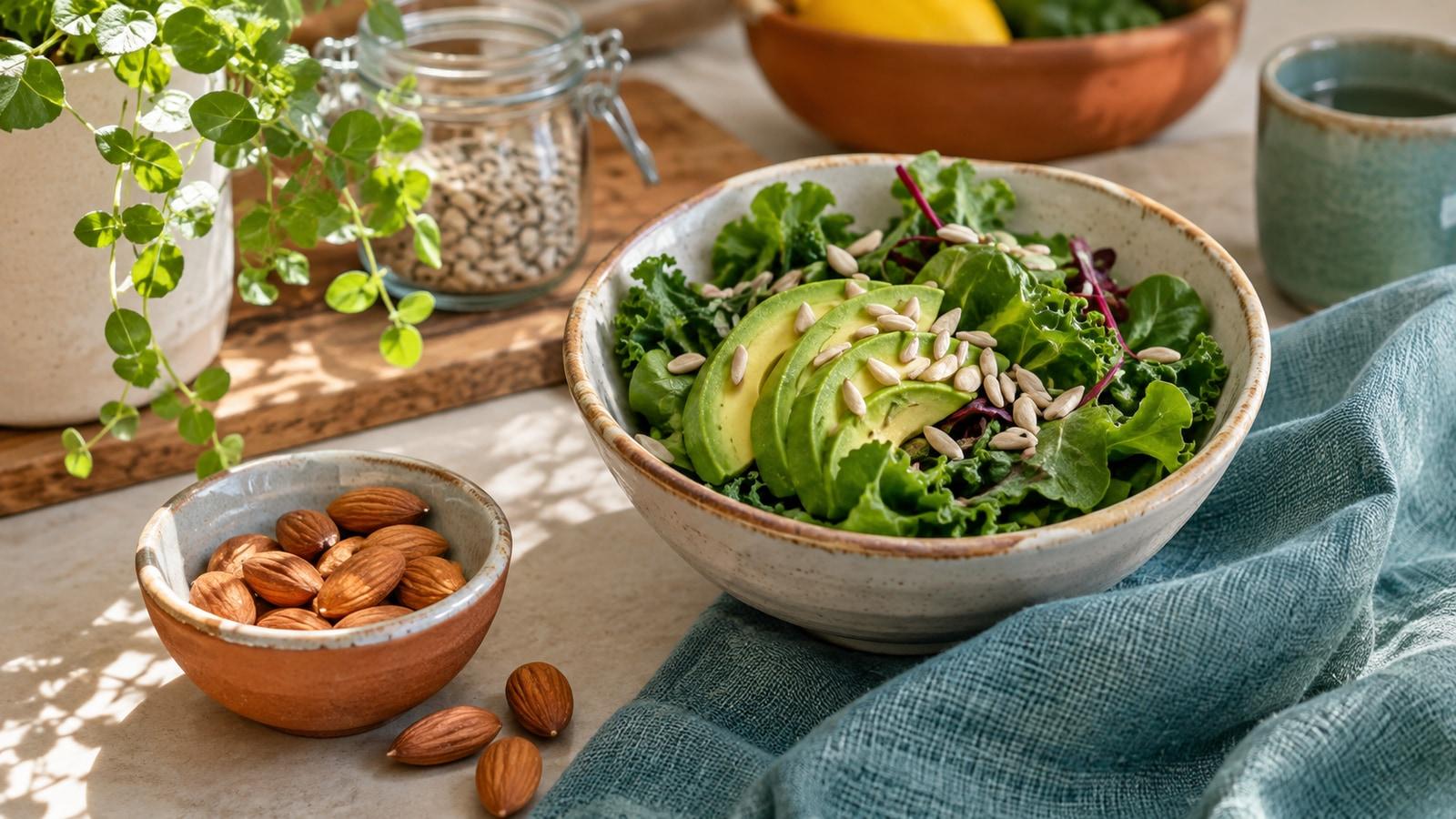
Nuts and seeds are familiar sources. Almonds, hazelnuts, peanuts, and sunflower seeds all contain vitamin E. Some vegetable oils, including sunflower and safflower oils, are sources as well. Spinach and broccoli provide some, and certain packaged foods have vitamin E added.
You might already have one of these foods in your kitchen. A spoonful of a nut or seed butter with toast, a few seeds on a dish, or a vegetable you like alongside dinner can add variety without requiring a separate “vitamin E meal.” Choose forms that fit any allergies, chewing needs, and medical instructions.
If nuts aren't suitable for you, you don't have to force them into your diet. Ask a dietitian about other options. Oils, vegetables, and fortified foods may fit different preferences and needs.
Smaller portions can still be thoughtful
If you're taking a GLP-1 medicine and feel full sooner, you may prefer a smaller serving. Try thinking about what makes that serving appealing and manageable rather than trying to squeeze every nutrient into one plate.
For example, you might add a topping you enjoy to yogurt, include a vegetable in a sandwich, or use an oil you like when preparing a familiar dish. These are possibilities, not a prescription. Your appetite may vary, and it's okay to choose a simpler meal on a difficult day.
If nausea, vomiting, or persistent early fullness makes it hard to eat or drink enough, contact your prescriber. A dietitian can help you review the whole pattern and suggest options that fit your symptoms. A small appetite should not be treated as a problem to solve with more supplements alone.
When absorbing fat is difficult
Vitamin E is absorbed along with fat. A true deficiency is rare in otherwise healthy people, but certain conditions that make it difficult to digest or absorb fat can change the picture. If you have such a condition, tell the clinician or dietitian helping you plan meals.
That does not mean a smaller appetite automatically causes a vitamin E deficiency, or that a particular symptom proves you have one. It means your health history may affect the questions worth asking. Bring up any digestive conditions, previous procedures, or changes in what you can eat.
You might ask, “Does my condition affect how I absorb fat-soluble vitamins?” and “Is there anything we should assess?” Your care team can explain whether a supplement or a different follow-up makes sense in your situation. You don't need to add oil to a meal that makes you uncomfortable in order to answer those questions.
Why a high-dose supplement needs a conversation
Vitamin E from ordinary foods is different from taking a concentrated supplement. High doses in supplement form can increase bleeding risk and may interact with medicines, including blood thinners. More is not automatically better.
Before adding a vitamin E capsule, show your clinician or pharmacist the label. Include any multivitamin or other product you already use, since the same nutrient may appear in more than one bottle. Ask whether there's a reason you need the supplement and how it fits your medicines.
If a clinician has prescribed a supplement for a specific reason, follow their individual advice and bring questions to them. Don't stop or add a product solely because of a general article.
When to ask for more help
Consider asking for a nutrition review if your appetite has stayed much smaller, you've stopped eating several food groups, or your energy and strength have changed. These signs don't prove a vitamin E problem, but they can help your care team understand whether your overall intake needs attention.
Bring a few examples of what you eat on a typical day, including a difficult day. The goal is to find meals you can manage and enjoy, with enough variety for your circumstances. Vitamin E can be part of that picture without becoming another rule you have to remember at every meal.