










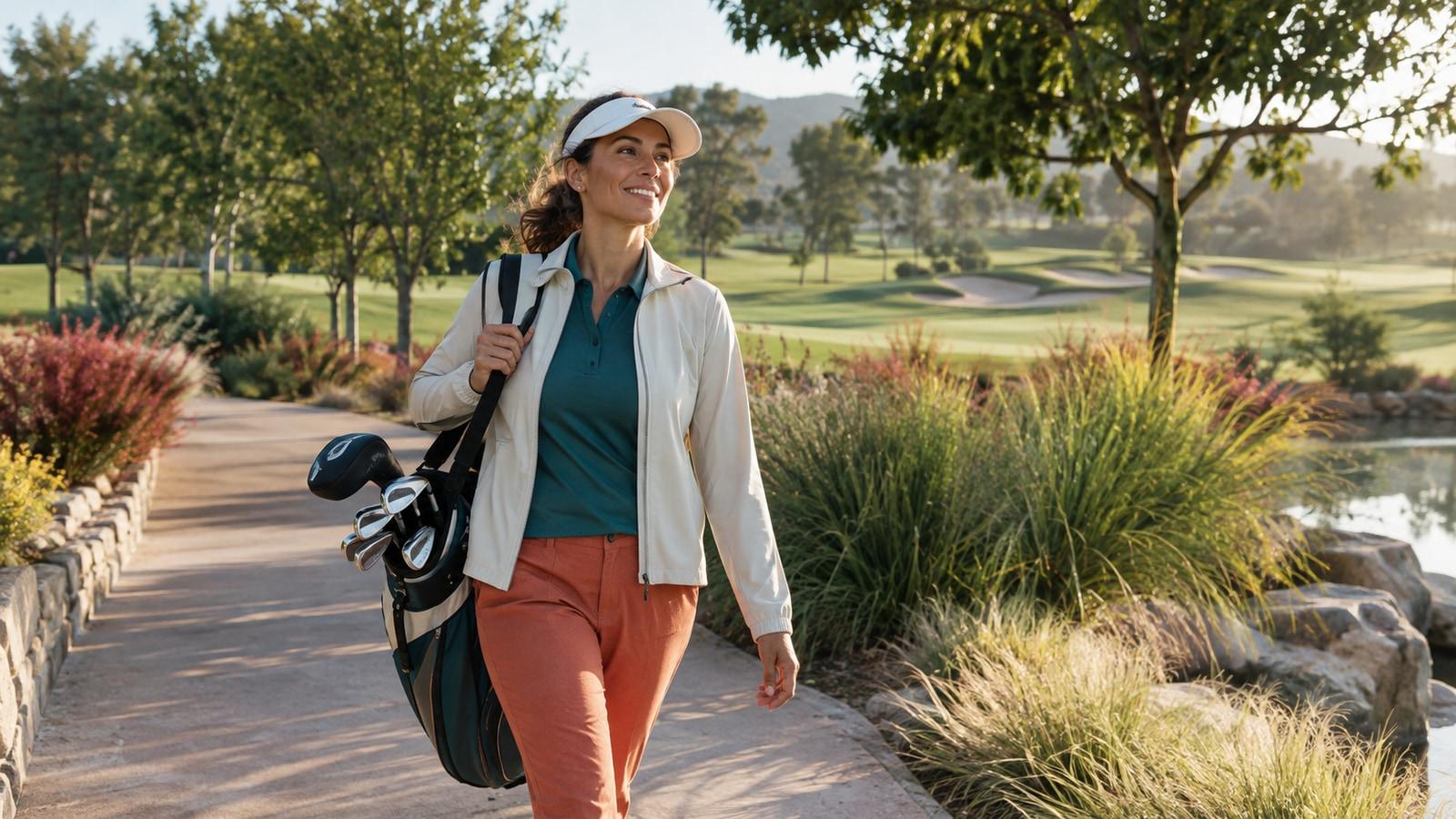
Golf doesn't have to be an all-or-nothing choice between walking eighteen holes and riding every yard. On a casual round, you may be able to mix the two: walk a few holes, ride when the distance or terrain calls for it, and keep the day enjoyable.
Before you make that plan, check the course's rules and consider your own mobility, health and the weather. A cart can be an important accessibility tool. Using one is not a lesser way to play.
Ask what the course allows
Courses differ. Some have long distances between holes, hills, cart-path rules or conditions that make walking a particular section impractical. Call the pro shop and ask whether a player can walk part of a casual round while sharing a cart, where the cart can go and how to keep pace with the group.
If you're playing in an organized event, check its specific transportation rules in advance. Don't assume that a casual-round arrangement applies to every competition.
Ask about accessible routes, restrooms and places to refill water if those details matter to you. If you use a mobility aid or need the cart close by, explain what would make the round workable and ask the staff about the course setup.
Pick a section, not a step target
Look at the layout and choose a manageable opportunity. You might walk one relatively flat hole while a partner brings the cart, or walk from your ball to the green and ride to the next tee. The exact arrangement depends on the course and your group.
Tell your playing partners what you plan to do so the cart and clubs are where you need them. If carrying a bag is uncomfortable, ask whether a push cart, shared cart or another setup is permitted. You don't have to carry clubs for the walk to be worthwhile.
Start with a section that leaves you feeling comfortable afterward. If you want to try more on a later round, you can; if you prefer the same mix, that's fine too. There is no need to chase an estimated calorie number from a watch.
Think about terrain and weather
A short hole can still have a steep slope, wet grass or uneven ground. Check the forecast and the course conditions, and wear footwear suited to the surface. If the ground is slippery or the route feels unsafe, use the cart or choose another day.
Heat changes the plan too. Bring water unless you have different instructions from your care team, and take breaks in a cooler or shaded place when available. If you feel faint or weak, stop, move to a cool place and seek help as needed.
Don't let the desire to finish a round override symptoms. Chest discomfort, severe dizziness, trouble breathing or another concerning change deserves prompt attention. Tell your playing partners what is happening rather than trying to hide it until the last hole.
Keep the cart useful and predictable
If you share a cart, agree on who is driving and where the next meeting point will be. Follow course signs and staff instructions about cart paths and restricted areas. Avoid leaving a partner without access to their clubs, medication or a way to rest.
A walking player can carry only what is comfortable, or have the equipment remain in the cart if the arrangement works for everyone. Consider where your water, phone and any prescribed supplies will be when you are away from it.
If you need the cart throughout the day because of pain, disability, fatigue or another reason, use it. The purpose is to make golf accessible and enjoyable, not to turn transportation into a measure of commitment.
Fit the round to your health
If you're returning to activity after an illness or injury, or have a condition that affects balance or endurance, ask your clinician what is appropriate. A physical therapist may be able to help you plan around a specific mobility concern.
If you take a GLP-1 medicine and nausea or low appetite is making it hard to eat or drink, discuss persistent symptoms with the prescriber. If you have diabetes or a prescribed fluid plan, follow your individual instructions during a long day on the course.
You can also plan a shorter outing: a practice green, a driving range session or fewer holes if the facility permits. Golf will still be there when you want another round.
Notice what made the day better
Maybe you enjoyed walking a flat section with a friend, or maybe riding let you finish without pain and spend more time playing. Both are useful observations. Adjust the next outing around your comfort, the course and the people you're with.
A little flexibility can make room for movement while preserving what brought you to the course in the first place: the game, the company and time outside.