










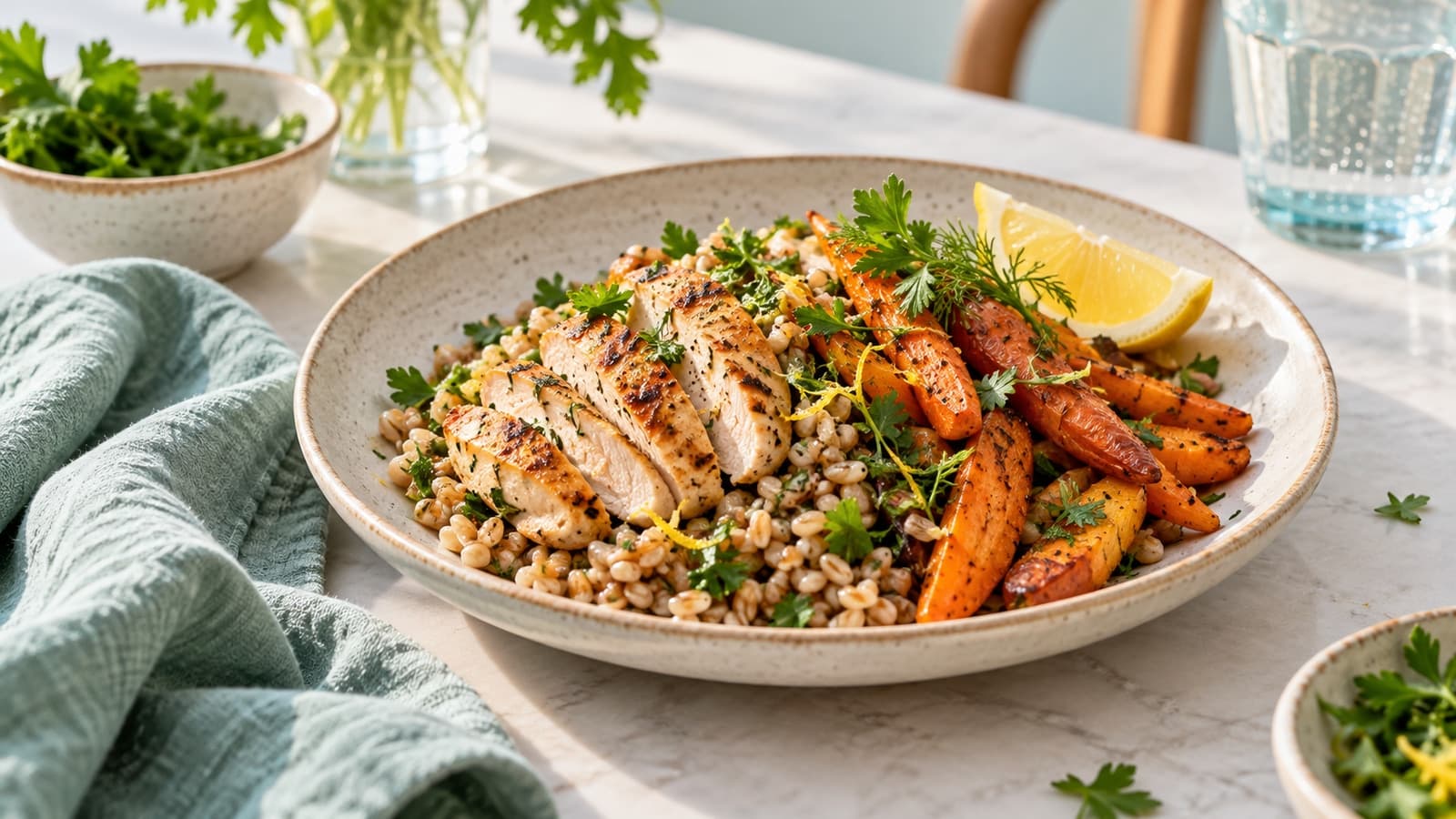
A warm grain salad can be a good lunch when a cold sandwich doesn’t sound appealing. Here, chewy farro meets roasted carrots and chicken, with lemon and herbs added at the end if you like them.
Each part can be made separately, which is handy if you’re feeding people with different appetites. Put the ingredients in bowls and let everyone make a plate that suits them.
Cook the grain
Farro comes in several forms, and the cooking time can differ. Read the package first, then cook the amount you need in water or broth according to its directions. Some types need more time than others. When it’s tender but still has a little chew, drain if your package directs you to.
Taste a few grains once they’ve cooled enough to eat. If you prefer a softer texture, follow your package guidance for cooking them longer and add liquid as needed. Farro has a distinct bite even after cooking; a different grain may be more enjoyable if you prefer something very soft.
Farro is a type of wheat and contains gluten. It isn’t suitable for someone with a wheat allergy or someone who needs to avoid gluten. A suitable grain such as quinoa can make a different bowl, but check its label and prevent cross-contact with wheat-containing ingredients and equipment.
Roast the carrots
Scrub carrots under running water and cut them into reasonably even pieces. Toss with a little oil and spread on a baking sheet. Roast until the pieces are tender, turning if needed. Thin pieces cook differently from thick ones, so check the carrots rather than assuming a fixed time will suit every pan.
If you already have safely stored cooked carrots, they can make the bowl quicker. Warm them with the other components when you’re ready to eat. Parsnips or another vegetable can be used instead, with their own preparation and cooking time.
Add the chicken
Cook chicken using your preferred method until the thickest part reaches 165°F on a food thermometer. Keep raw poultry away from the carrots and other ready-to-eat ingredients, and use a clean plate and utensils for cooked chicken. Slice or shred it after cooking.
Safely stored leftover chicken is another option. Reheat it to 165°F before serving warm. The amount you add depends on your appetite and what else is on the plate; there’s no single portion that fits everyone.
Combine the warm farro, carrots and chicken, or serve them side by side. A handful of cooked greens can fit alongside if you have some. For more everyday combinations, see our guide to workday lunches on a GLP-1.
Finish and pack
A squeeze of lemon and chopped parsley can brighten the bowl. Keep the lemon on the side if tart flavors aren’t appealing. A little olive oil or a favorite dressing can be added separately, and labels matter if you have allergies.
For lunch the next day, divide extras into shallow covered containers and refrigerate promptly. Perishable food should go into the refrigerator within two hours, or within one hour if the temperature is above 90°F. Keep the refrigerator at 40°F or below.
Transport lunch in an insulated bag with a cold source. When reheating, add a splash of water if the grains look dry, stir and heat the food to 165°F throughout. Check with a food thermometer rather than guessing from the steam.
On a day when your appetite is smaller, pack a portion that sounds comfortable and keep another snack available. On another day, add a little more of the chicken, grain or vegetables. The recipe is a starting point, not a required ratio.