










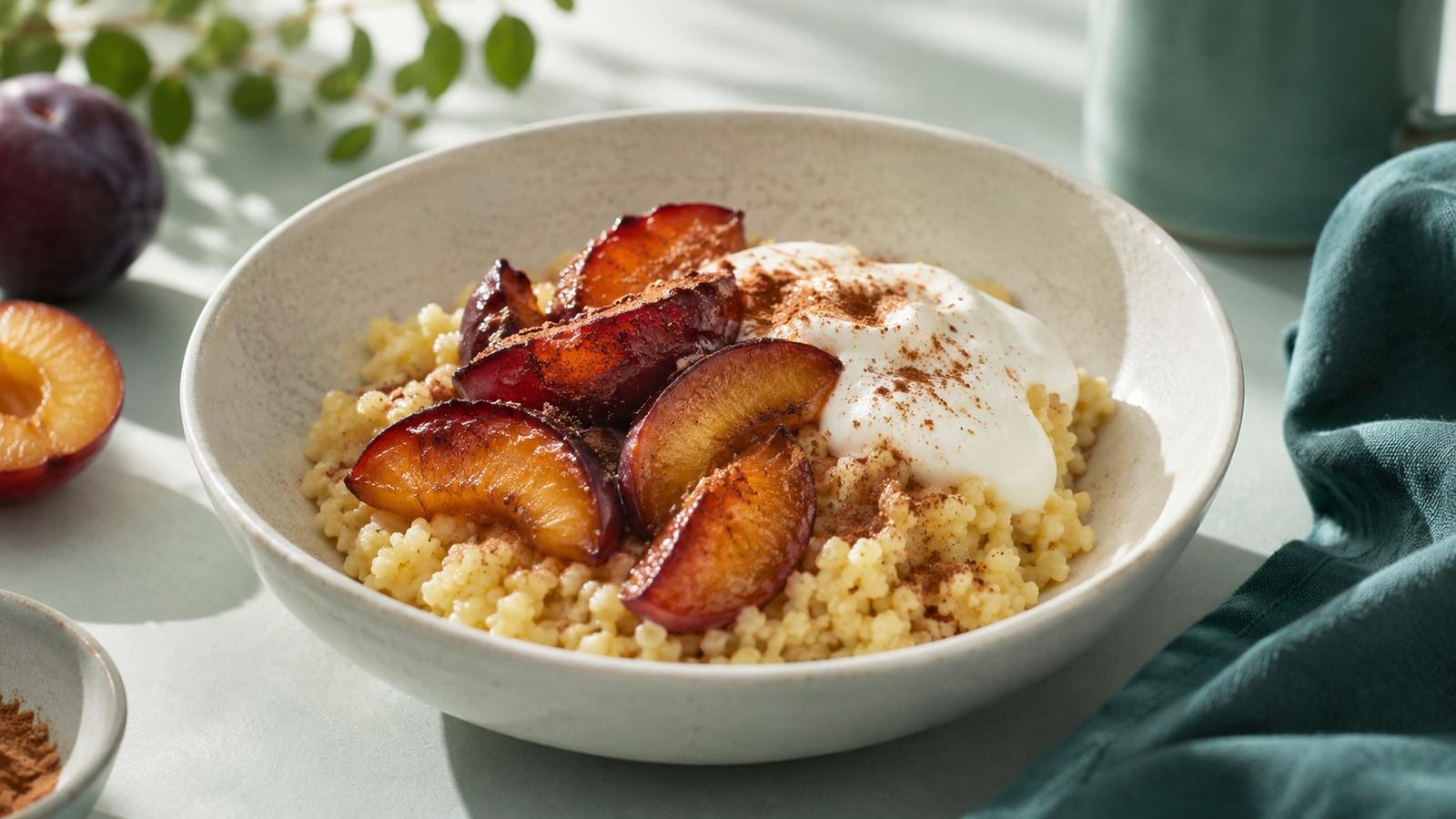
Warm grains and fruit make a breakfast that can be as simple or as dressed up as you want. Here, millet is cooked until tender, plums are roasted until soft, and a spoonful of yogurt goes on top just before serving.
If you haven't cooked millet before, check the package first. Cooking times and liquid amounts can vary, and those directions are the best starting point for the grain you bought.
What you'll need
For about two bowls:
- ½ cup dry millet
- Water for cooking, following the millet package
- 2 ripe plums
- ½ cup plain yogurt or a suitable alternative
- ½ teaspoon ground cinnamon
- 1 teaspoon olive oil or another neutral cooking oil
- A little vanilla or maple syrup, optional
- Chopped nuts or seeds for topping, optional
You'll need a saucepan with a lid, a small baking dish, and a baking sheet or oven-safe pan. Choose plums that are ripe but not damaged. If plums aren't available, another stone fruit or pear can be used, though cooking time and texture will differ.
Roast the fruit and cook the grain
- Heat the oven to 375°F. Wash your hands and clean the counter and equipment.
- Rinse the plums under running water, even though you'll remove the pits. Cut them in half, remove the pits, and slice into wedges. Place them in the baking dish and toss with the oil and half the cinnamon.
- Roast until the fruit is tender and releases some juice, checking after about 15 minutes. Firmer fruit may need longer. Let it cool enough to handle comfortably.
- Meanwhile, rinse and cook the millet according to its package directions. Use the stated amount of water and cooking time; don't rely on a different grain's instructions. Let it rest as directed, then fluff or stir.
- Divide the warm millet between bowls. Spoon the roasted plums and their juices over it. Add yogurt, the remaining cinnamon, and any optional topping at the table.
If the millet finishes first, cover it while you wait for the fruit. A splash of water can loosen it if you prefer a softer bowl. The yogurt can be added after the grain cools slightly so it stays distinct rather than disappearing into the hot millet.
A note on timing
This is a useful breakfast when the oven is already on, but it doesn't have to occupy the whole morning. You can cook the millet and roast the plums ahead, then assemble a bowl later. Keep the yogurt separate until serving.
Place cooked leftovers in shallow containers and refrigerate promptly, within two hours of cooking or within one hour when the surrounding temperature is above 90°F. Keep the refrigerator at 40°F or below. Label the containers so you know when they were prepared.
Use refrigerated leftovers within three to four days. When reheating cooked millet or fruit, heat leftovers to 165°F and check with a food thermometer. Add cold yogurt afterward. If a food has been left out too long or you aren't sure it was kept safely, discard it rather than tasting it to decide.
Adjust the bowl for the person eating it
Some people like the plums quite soft; others prefer wedges that hold their shape. Check them as they cook and remove the dish when the fruit is tender. Let it cool before eating, especially if you're serving someone who is sensitive to hot food.
The topping can change the texture. Chopped nuts or seeds add crunch, while leaving them out keeps the bowl softer. If chewing is uncomfortable or you follow a prescribed swallowing plan, ask your care team which textures are appropriate. Don't assume a grain bowl will fit every plan.
If you won't eat it all now, put the millet and plums in shallow containers and refrigerate them. Add yogurt when serving. If a reduced appetite or nausea makes it hard to eat enough, a prescriber or dietitian can help you consider the whole day rather than focusing on one bowl.
Flavor ideas without a long shopping list
Vanilla brings a mild sweetness; a little maple syrup can be added if the fruit is tart. You could also try ginger or cardamom instead of cinnamon. Begin with a small amount so the fruit remains the main flavor.
For a dairy-free version, choose a yogurt alternative that suits your needs and tastes good to you. Products vary in ingredients and texture, so check the label if you have an allergy or want to compare protein. There is no single substitute that works for everyone.
Serve the grain and fruit together or in separate containers if that's easier for your household. A person who likes extra yogurt can add it, and someone who doesn't want it can leave it off.
Warm millet, tender fruit, and a cool spoonful of yogurt offer a straightforward way to change the breakfast routine. Keep the parts you enjoy and use the package directions and food-safety steps to make the timing work for you.