










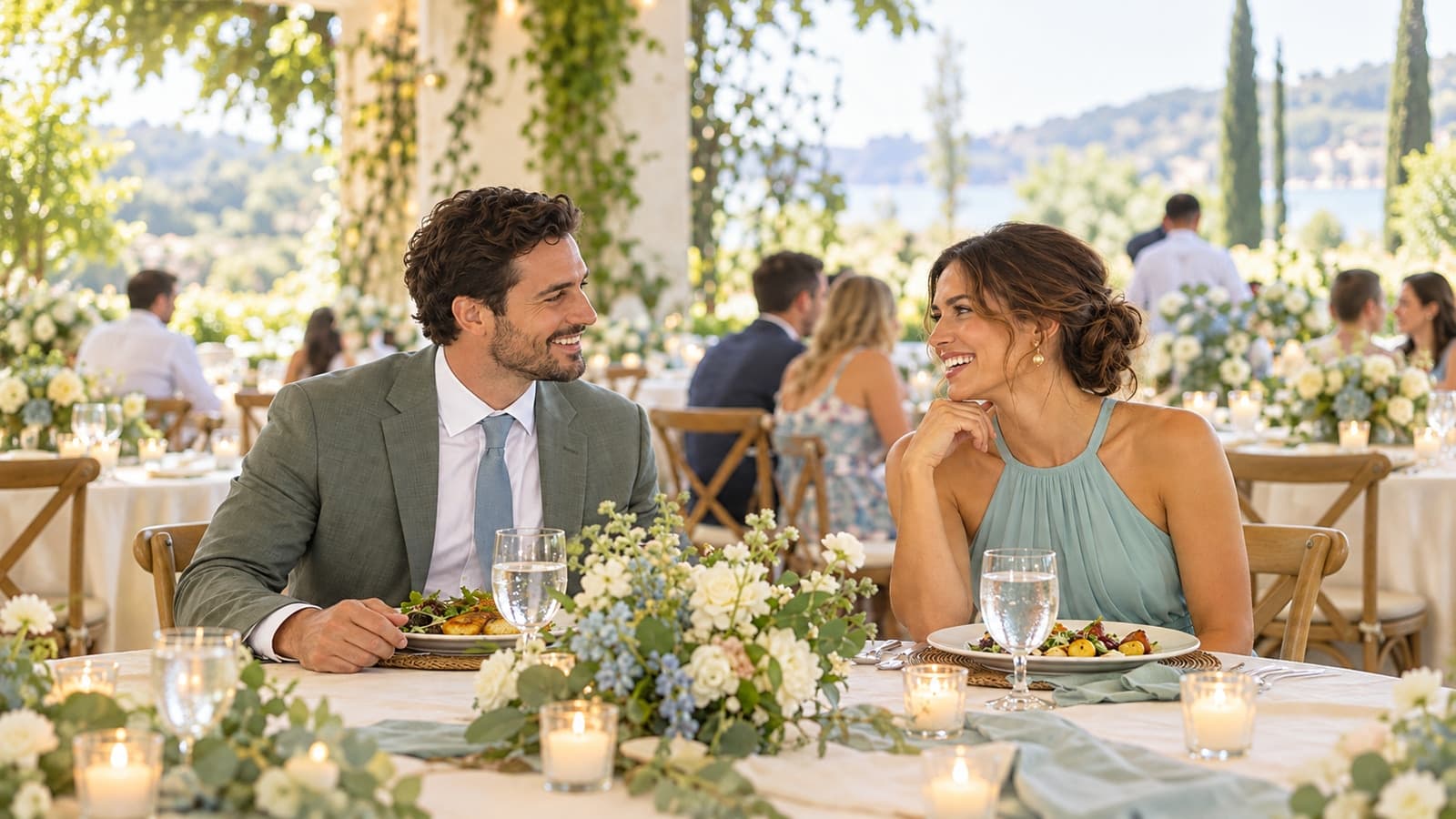
The invitation says the ceremony begins at four. Dinner, you discover later, won’t be served until seven—and the speeches run long. By the time a plate reaches the table, the evening has already had a few surprises.
A wedding dinner may start later than you think. If a GLP-1 has changed your appetite, a little preparation can help you enjoy the occasion without making the menu the main event.
Think about the hours before dinner
Look at the invitation and any information from the couple. Is there a cocktail hour with food? Will dinner be plated, served family-style or offered at stations? The answers may not be obvious, and it’s fine to ask someone organizing the event if you need to plan around an allergy or another food need.
Eat earlier in the day in a way that works for you. A familiar meal or snack before leaving can be helpful if there’s a long gap before the reception. There’s no need to arrive overly hungry just because a special dinner is coming.
If you’ll be away for many hours, a small shelf-stable snack in your bag can be a useful backup. Check the venue’s guidance about bringing food, especially if you have an allergy or medical need. Some events have long travel times as well as a long evening.
Work with the meal in front of you
For a plated dinner, you may not control the portion. You can begin with what sounds appealing, take a break for conversation and see how you feel. If you’re comfortably full, it’s okay to leave some food. If you’re hungry later, enjoy another opportunity to eat when one is available.
At a buffet, take a look at the options before serving yourself. Start with a combination you’d enjoy rather than trying to sample everything at once. A smaller first plate leaves you free to return if the buffet is still open and you want more.
If the meal is fixed and your allergy or dietary needs require an adjustment, contact the host or caterer ahead of time when possible. Ask about ingredients and cross-contact rather than relying on the dish’s name. A trusted backup can help if a suitable choice isn’t available.
Dessert and drinks can be your choice
Perhaps you want a slice of cake, a few bites, or none at all. Any of those choices can fit the occasion. If a relative offers you more, a friendly “That was lovely, thank you—I’m all set” is a complete response.
The same goes for drinks. You can raise a glass of water or another drink you enjoy for a toast. If you have questions about alcohol with your medicines or health conditions, ask your care team; individual circumstances differ. You don’t need to announce your treatment to explain what’s in your glass.
If someone keeps asking why your plate looks different, try changing the subject: “I’m good, thanks. How do you know the couple?” A trusted person at the table can also help redirect the conversation.
Know whether leftovers are realistic
Some venues allow guests to take food home; others don’t. If you’re offered leftovers, consider the trip back and whether you can refrigerate perishables promptly. Food carried around a dance floor or left in a warm car for hours isn’t a dependable plan for tomorrow.
If nausea or another symptom is repeatedly making it hard to eat or drink, bring that up with your care team. A celebration shouldn’t require you to push through ongoing discomfort.
For more ideas about gatherings, see holidays, meals and social pressure on a GLP-1. The couple invited you for your company, and there’s plenty of room for that between the courses.