










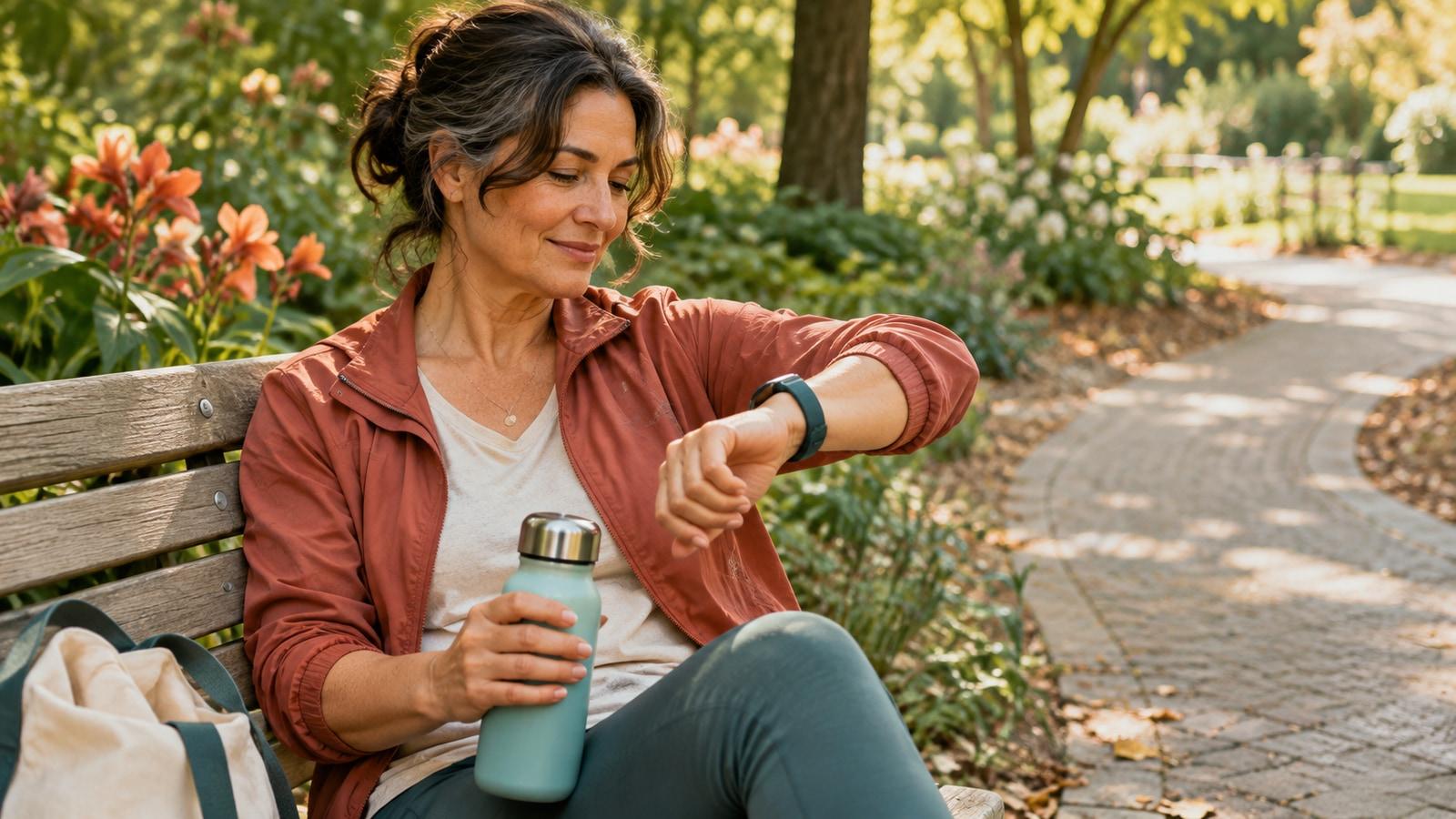
You finish a walk, glance at your watch, and see a number labeled “heart-rate recovery.” It might be followed by a chart, an arrow, or a message about fitness. If you didn't know the watch was tracking it, the result can feel more mysterious than useful.
Heart-rate recovery describes a change in your pulse after activity. It can be interesting information, but a single reading from a watch isn't a diagnosis or a reason to push through a workout that feels wrong.
First, what is being compared?
Your heart rate is the number of times your heart beats in a minute. It usually rises when activity asks your body to do more work, then falls as you recover. Heart-rate recovery looks at the difference between a reading near the end of exercise and one taken afterward.
For a simple example, imagine a reading of 120 beats per minute near the end of activity and 100 a minute later. The difference is 20 beats per minute. Those are made-up numbers to show the calculation, not a target or a test result.
Studies and devices don't always use the same timing or recovery conditions. One might compare a peak reading with a reading one minute later; another may use a different interval. Your watch's help page should explain what it records and when.
Recovery isn't the same as resting heart rate
A resting heart rate is measured when you're at rest. Recovery describes how the rate changes after a period of activity. Someone can be curious about both, but they answer different questions.
Nor does the recovery number tell you how many calories you burned or how much weight you will lose. A watch may estimate several things from the same workout, but each estimate has its own assumptions. Treat the recovery value as one observation about that session.
If you're also curious about your usual pulse between workouts, our resting heart-rate guide discusses what to bring up with your care team during GLP-1 treatment.
Why can the number change?
The activity itself is part of the context. A gentle walk and a hard hill session may end at different heart rates, and slowing down gradually is different from stopping in place. Heat, how you feel that day, illness, and your usual activity level can also make two sessions hard to compare.
Medicines matter, too. Beta blockers, for example, can slow the heart rate and change how a person uses pulse targets during exercise. Other health conditions and treatments may affect the interpretation. If you have a prescribed activity plan, ask the clinician who knows that plan what information is useful for you.
Don't change a medicine or skip a dose to produce a different watch reading. Bring your medication list and the actual readings to an appointment if you want help understanding them.
A watch has limits
A watch estimates pulse using its own sensors and software. Fit, movement, and the conditions of a reading can affect what appears on the screen. Check the manufacturer's instructions for wearing the device and for how its recovery feature works.
A missed or odd reading doesn't automatically mean something happened to your heart. It also shouldn't make you ignore symptoms. If a number looks unusual and you feel unwell, follow your care team's instructions or seek appropriate help; don't keep exercising just to get a cleaner chart.
If the device offers a colored score, ask what that score is based on. A clinical exercise test is performed under a particular protocol, while a watch is observing an everyday session. A threshold from one setting cannot automatically be applied to another.
Should you try to improve it?
You don't need to turn every walk into a heart-rate test. If you and your clinician find the feature useful, you might look at patterns from similar activities over time and note anything that made a session different. Record the type of activity and how you felt, not just the number.
There is no need to exercise as hard as possible to make the watch display a larger change. Follow the activity guidance appropriate for you, and allow time to slow down afterward. Stopping suddenly after exercise can leave some people lightheaded; a gradual cool-down lets your body move toward rest.
If you have heart disease, take a medicine that affects your pulse, or are returning to activity after an illness or procedure, ask your care team whether a recovery reading has a role in your plan. They may suggest a more useful way to gauge effort or tell you how to interpret data from a particular test.
Put symptoms ahead of the graph
Stop the activity if you feel dizzy, unusually breathless, or experience new discomfort. Contact your healthcare professional for concerning symptoms, and follow any instructions you already have for when to seek help.
Call 911 for possible heart attack symptoms, such as new chest discomfort or pressure, especially with shortness of breath, sweating, nausea, or discomfort in the arm, jaw, back, or upper body. Don't wait for a watch to confirm that something is wrong.
If the numbers themselves make you anxious, it's reasonable to hide the chart or stop checking it. A comfortable route, a manageable pace, and the ability to return to an activity you enjoy can be useful things to notice alongside any device data.