










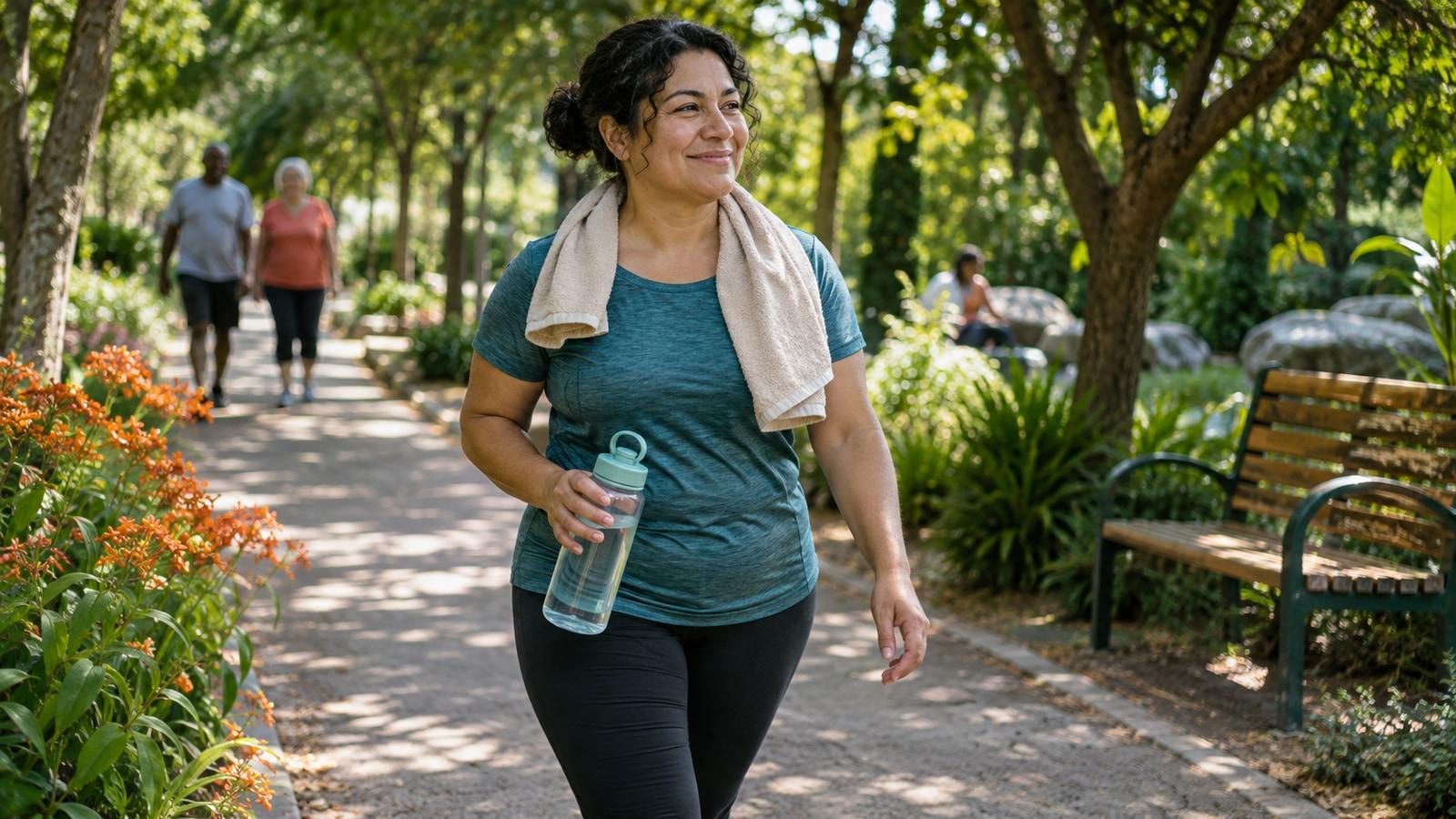
Your walk is almost over, the class music has stopped, or the last set of an exercise is done. It can be tempting to go straight from moving hard to sitting in the car. A cool-down is a gentler transition: you gradually reduce the effort before you finish.
It doesn't need to be complicated, and it doesn't have to include a long stretching routine. A few minutes of easier movement can fit many activities. Here's how to think about it.
What changes when you slow down?
During more demanding activity, your heart and breathing rates rise to meet your body's needs. When you finish, they don't instantly return to their resting patterns. Gradually reducing the intensity gives your body time to transition.
Stopping abruptly after vigorous movement can leave some people feeling light-headed. Slowing down rather than coming to an immediate halt may help with that transition. It's not a guarantee against dizziness, and a cool-down isn't a substitute for medical care if you feel unwell.
The details depend on the activity and the person. Someone finishing a brisk walk might simply walk more slowly. Someone in a rehabilitation program may have specific instructions about pace and duration. Follow the plan your care team has given you.
Try a gentler version of what you were doing
For a walk, begin easing your pace before you reach the door. On a stationary bike, reduce resistance and pedal more gently. After an exercise class, follow the instructor's lower-intensity movements if they are comfortable and appropriate for you.
Many general exercise resources suggest allowing roughly five to ten minutes to wind down after more demanding activity. That isn't a rigid rule for every workout. The point is to make the end noticeably easier than the main activity and give your breathing time to settle.
If you're using a wheelchair or another mobility aid, a cool-down can be adapted to the movement you've been doing and the space available. Ask an instructor or clinician for options that fit your equipment and abilities. You don't have to copy someone else's walking routine for it to count.
Does it have to include stretching?
No. Some people enjoy gentle stretches after activity, and stretching can be a separate way to work on flexibility. Others prefer to finish with slower movement and save stretching for another time. Choose what is comfortable and appropriate for your body.
If you do stretch, avoid forcing a position or bouncing into pain. Breathe normally, use a stable support if needed, and ask for guidance when a stretch doesn't feel right. A person with an injury, recent surgery, or another health condition may need modifications.
You may hear that stretching after a workout will definitely prevent all soreness or remove “lactic acid.” Those claims are too simple. A cool-down doesn't guarantee you won't feel sore tomorrow, and you don't need to stretch through discomfort to make exercise worthwhile.
After strength training
The end of a strength session may look different from the end of a run. Put equipment away safely, move at an easy pace if that feels comfortable, and let your breathing settle. Some people like a gentle walk around the room or a few comfortable movements of the arms and legs.
You don't need to add another demanding set. If you have a specific rehabilitation plan, ask the professional who designed it how to finish the session. If a particular movement causes pain, stop that movement and seek advice rather than trying to work through it.
Consider your surroundings, too. Leave enough time to get off equipment carefully, collect your belongings, and reach the exit without rushing. A transition that fits your actual schedule is more likely to become part of the routine.
Know when slowing down isn't enough
If you feel dizzy, faint, have chest pain, severe shortness of breath, or another concerning symptom, stop the activity and get appropriate help. Seek emergency care for severe or potentially urgent symptoms. Don't keep moving just because you planned to cool down.
If you repeatedly feel light-headed after exercise, tell your clinician. Several factors can contribute, and the right response depends on your health history and medicines. A generic internet tip can't determine the cause.
If you're taking a GLP-1 medicine and nausea or difficulty drinking has affected your day, mention that to your care team before pushing through a workout. Your activity plan should account for how you feel and any other conditions you manage.
Make room for the last few minutes
One simple way to remember is to build the cool-down into the session rather than adding it afterward. If your walk is usually 30 minutes, you could make the final stretch of the route an easier pace. In a class, stay for the instructor's transition if it works for you.
You can use the time to notice how you're feeling, but you don't have to analyze every sensation. Slow down, breathe normally, and finish in a way that feels steady and manageable.
A cool-down is a small closing routine, not a performance test. The best version is one that fits the activity you just did and the guidance you need.