










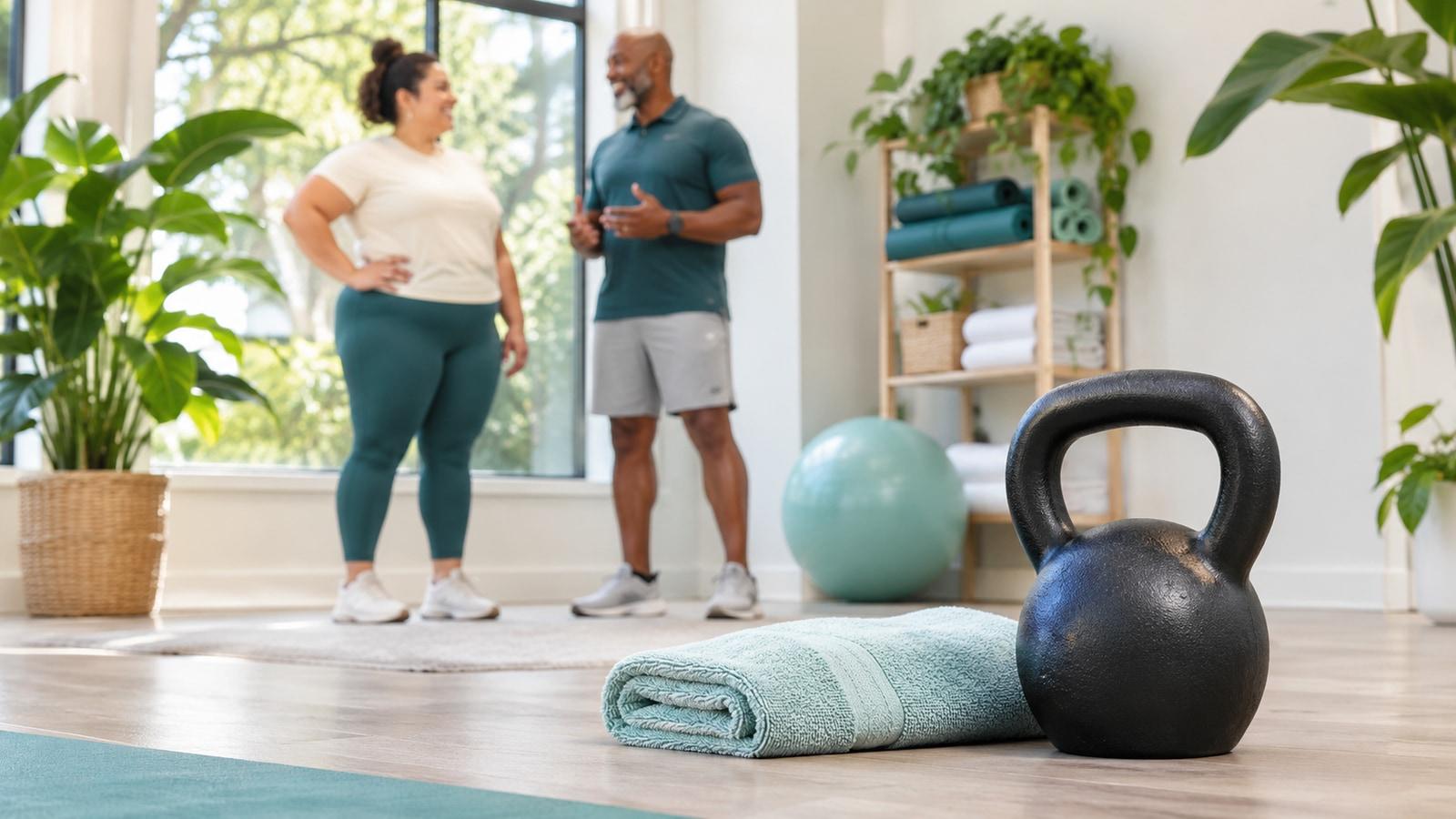
A kettlebell swing can look deceptively simple: the weight moves between the legs and then forward. In practice, it is a fast movement that depends on a controlled hip hinge, a secure grip and enough space around you.
If you're new to it, the best first session may be a lesson without swinging at all. Learn the setup and the slower hinge with a qualified instructor before adding speed or load.
Understand the movement first
The swing is driven largely by the hips moving back and then forward, rather than by lifting the kettlebell with the arms. That pattern starts with a hip hinge: bending at the hips while keeping the movement controlled, then returning to standing.
A hinge isn't the same as lowering into a deep squat. A trainer can show you the difference and help you find a comfortable range. Practice without a weight first, then ask whether a slow, loaded hinge is appropriate before attempting a swing.
You don't need to learn the movement in a single session. Some people need more time to feel the pattern, and others may prefer a different exercise. That is useful information, not a setback.
Ask whether it fits your health
If you have a back, hip, shoulder, wrist or pelvic-floor concern, recent surgery, balance difficulty or another condition that affects exercise, talk with your clinician or physical therapist before trying a swing. A fast loaded movement may not be the right choice for everyone.
Tell the instructor about any restrictions you're comfortable sharing and what you want from the session. You might say: “I'd like to learn the hinge first. Can you show me how to tell whether I'm ready to add a kettlebell?”
An online video can't see your movement or adjust for your history. In-person or individualized instruction can help you set up and stop safely.
Check the equipment and space
Use a kettlebell with a secure, comfortable handle and no obvious damage. Choose a weight with your instructor that allows a controlled practice movement; don't copy someone else's number. A weight that is too heavy to handle safely—or a setup that encourages you to pull it with your arms—isn't a good starting point.
Clear enough room in front, behind and beside you. Keep other people, pets, furniture and fragile objects outside the path of the weight. Use a stable, nonslip surface and footwear that lets you feel secure.
Ask the instructor where the kettlebell starts and how to set it down safely. Don't begin near the edge of a mat or on a surface that shifts under your feet.
Practice control before speed
Learn to hinge and return to standing smoothly without rounding or excessively arching your back. Keep breathing and stop if you feel pain or lose control of the position. Your instructor can help you decide whether a slower kettlebell deadlift or another exercise is a suitable next step.
Only move to the swing when you and the instructor are comfortable with the setup, hinge and load. The bell's movement should follow the hip action rather than a forceful shoulder raise. There are different coaching styles, so ask for a clear demonstration and feedback rather than combining pieces of several videos.
Start with a short practice and rest. Fatigue can make a fast movement harder to control. You don't need to chase a long set, a calorie estimate or a heavier bell to make the lesson useful.
Know when to stop
Sharp pain, numbness, dizziness, a slipping grip or a feeling that you can't control the weight are reasons to stop. Set the kettlebell down as your instructor has shown you and ask for guidance. Don't keep swinging to finish a target number.
Severe chest pain, significant breathing difficulty or fainting can require emergency care. For persistent or new discomfort, contact your clinician before returning to the movement.
If medication side effects or reduced food and fluid intake are affecting your energy, discuss activity with your care team. A rest day or a slower exercise may fit better when you're not feeling well.
Alternatives are legitimate choices
A supported chair rise, a glute bridge or a slow hinge may be more appropriate for your goals and current ability. A physical therapist or trainer can help you build a balanced strength routine without a swing.
You can enjoy kettlebell training later, or decide it isn't for you. There is no required piece of equipment for a worthwhile workout.
Ask for a first lesson
Before starting, ask: “Can you check my hinge, help me choose equipment and show me how to stop?” Make sure the instructor knows what feels uncomfortable and is willing to adjust the plan.
The swing is a skill worth learning at your own pace. Start with the slower pattern, a clear space and guidance you trust; let speed come only if it makes sense for you.