










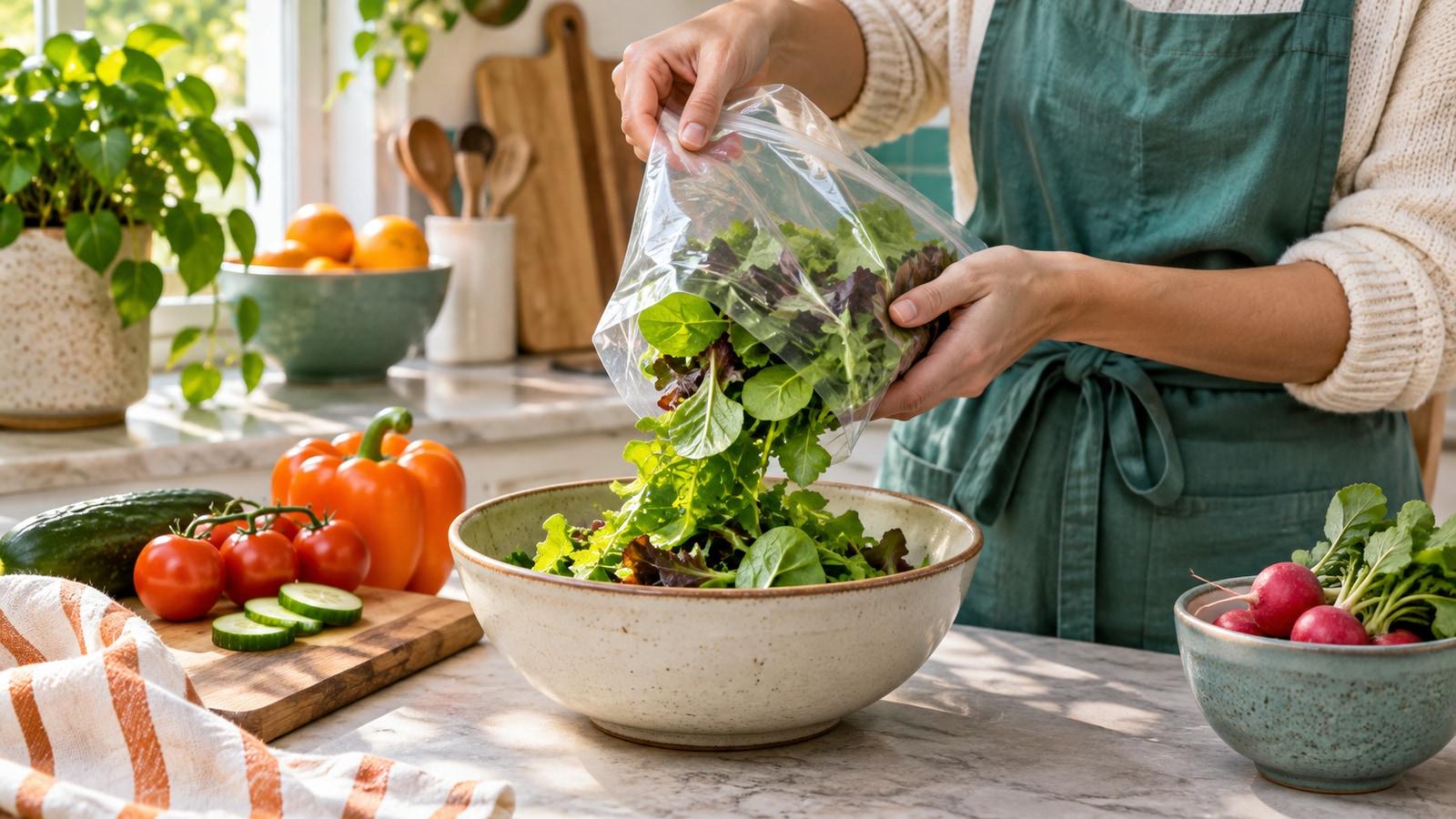
A salad kit can turn an empty lunch plan into a meal with very little chopping. Open the bag, add the toppings, and you're most of the way there. But the front of the package doesn't always tell you how many bowls it makes, what's in the dressing, or whether the kit will be enough lunch for you.
A quick look at the back can help you pick one you'll enjoy and use before it gets forgotten in the fridge.
Start with what is actually inside
Some kits are mostly leafy greens with a small packet of dressing. Others include cabbage, grains, seeds, cheese, dried fruit, or crunchy toppings. Look at the ingredient list or the package description so you know whether the mix sounds appealing.
If a kit contains something you don't like, check whether it comes in a separate packet. A person who loves the greens but dislikes a particular topping might be able to leave the packet out. If the ingredient is mixed throughout, a different kit may be less wasteful.
Read the allergen information on the exact package if you need to avoid an ingredient. Dressings and toppings can contain milk, eggs, wheat, nuts, soy, or other ingredients that may not be obvious from the salad's name. When in doubt, check with the manufacturer before eating it.
How many servings are in the bag?
The Nutrition Facts panel lists values for a stated serving. Some bags make several servings; your bowl may be more or less than one of them. If you plan to eat half a bag, compare that with the number of servings listed before interpreting the protein or sodium figures.
Some labels describe the kit as packaged, while others explain values for a prepared serving. Read the wording to see whether the dressing and toppings are included in the numbers. If the label doesn't make that clear, don't assume you can calculate the exact change from using half the dressing packet.
The listed serving size is information for reading the label, not a rule for how much you should eat. Start with a bowl that feels comfortable and keep the rest safely refrigerated if you want it later.
Consider the dressing separately
The dressing may be the part of the kit you like most. It can add flavor and help the greens feel like a meal, so you don't have to leave it out. You can also start with a little, toss the salad, and add more if you want.
Check the ingredients if you're managing an allergy or have a sodium plan. A kit with a creamy dressing and cheese may have a different nutrient profile from one with a vinaigrette and seeds. Neither description alone tells you whether the entire meal fits your needs; the amount you use and what you add matter.
If you prefer your own dressing, keep the unopened packet only according to its storage directions. Don't assume it can sit at room temperature just because it was sealed inside the bag.
Decide what would make it a satisfying meal
A kit can be a side or the beginning of lunch. If the package is mainly greens and a small topping packet, you might want to add something more substantial: beans, a hard-cooked egg, tofu, cooked chicken, or another food you enjoy. Bread, crackers, rice, or a piece of fruit can also fit alongside it.
Choose additions that suit your preferences, allergies, and any medical instructions. If you're taking a GLP-1 and your appetite is smaller, you might prepare a modest bowl and keep the remaining components separate for later. If a raw salad is uncomfortable on a particular day, another meal may work better; persistent digestive symptoms are worth discussing with your care team.
Convenience counts. A kit plus a familiar ready-to-eat protein may be more realistic on a busy day than a recipe with a long list of steps. Check that any added food is ready to eat or cook it according to its instructions.
Keep the greens cold
Choose refrigerated salad kits at the store and get them into the refrigerator promptly. Follow the package's storage and use instructions. If the greens are labeled “ready to eat” or “triple washed,” they don't need another wash. Produce you add that isn't labeled ready to eat should be rinsed under running water before preparation.
Use clean hands, utensils, and a clean bowl. Keep the salad away from raw meat or poultry and the surfaces those foods have touched. If a kit is recalled, follow the recall instructions even if the contents look normal.
For leftovers, refrigerate the components promptly and follow their individual storage directions. Keeping dressing and crunchy toppings separate can also make the next bowl more pleasant.
Check cost per meal, not just per bag
A larger kit may look like a better deal, but only if you can use it while it's fresh. A smaller bag or a kit shared by the household might be more practical. Consider the cost of anything you plan to add as well.