










You finish a walk, put your shoes away and realize you're ready for lunch. Maybe that surprises you because your appetite has been quieter since starting a GLP-1. Does it mean the medicine has stopped working?
Not necessarily. Feeling hungry after movement does not tell you whether a medicine is working. Appetite varies, and what you ate earlier, the activity, the time of day and many other details may be part of the picture. Rather than drawing a conclusion from one walk, make a plan for the food and fluids you need.
Look at the whole day
Think back to the last time you ate. Was your walk before breakfast, between lunch and dinner, or after a meal that ended up smaller than usual? If food has been limited for several hours, wanting something afterward may be a useful cue to consider.
Whether you eat doesn't depend on an exercise calorie estimate. Equally, a short walk doesn't require a special sports product. An ordinary meal or snack can be appropriate, depending on your plans and needs.
If you're not hungry right away, that's okay too. Some people notice a quieter appetite around exercise. Keep the next eating opportunity in mind, especially if a reduced appetite has made it hard to eat enough through the day.
Make the next meal easy to reach
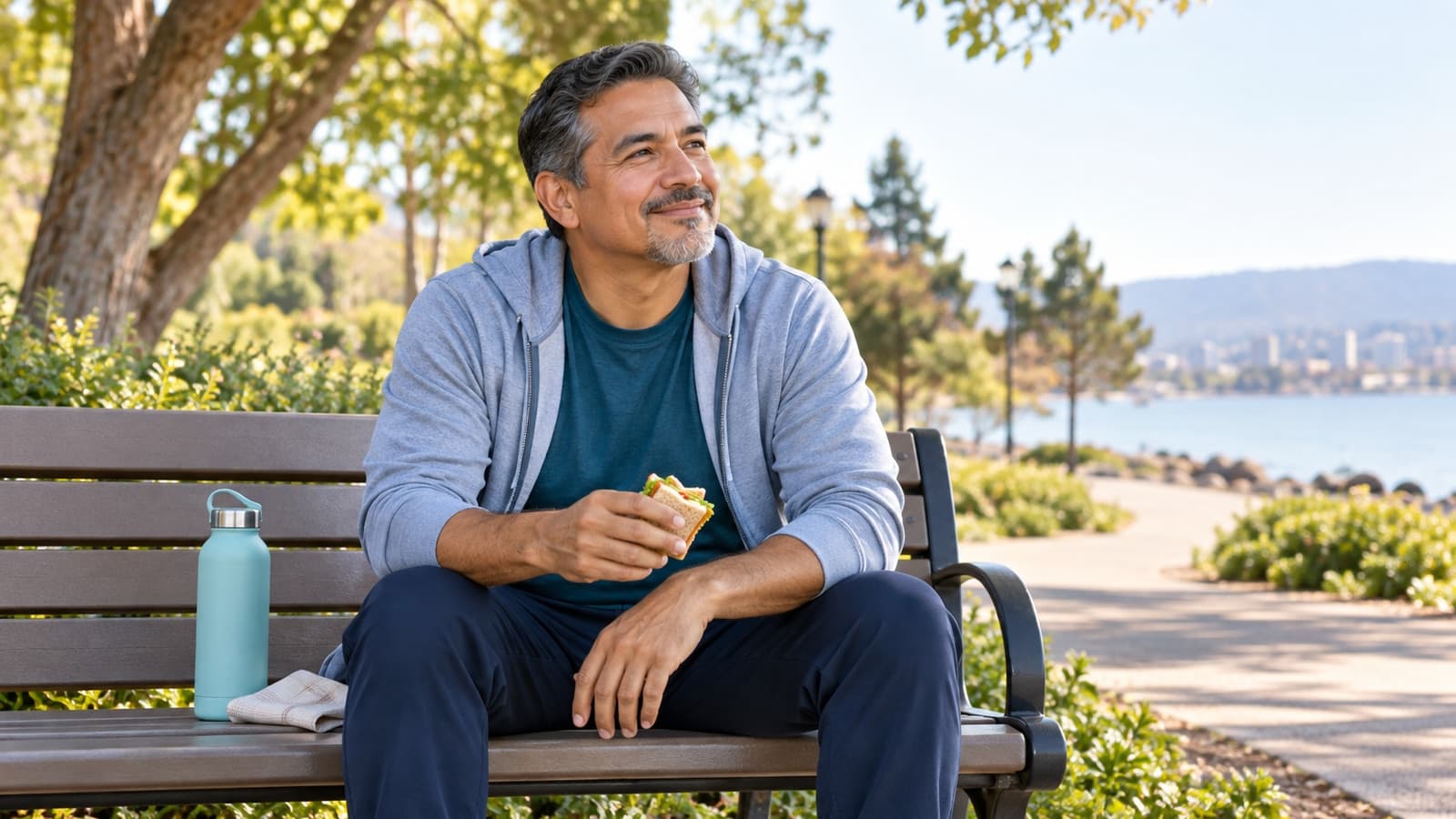
If you'll be out for a while, bring an option that can be stored safely and that you enjoy. At home, leftovers, a sandwich, yogurt and fruit, or eggs and toast may be convenient. These are examples rather than a required menu.
Your needs can differ with the duration and intensity of activity, your health history and the rest of your eating pattern. A dietitian can help if you're unsure how to support regular movement while portions are small.
You can split food into two smaller occasions if that's more comfortable. Try eating what sounds manageable, saving the rest safely, and checking in again later.
Bring a drink, with your own needs in mind
Keep a suitable drink available before, during and after activity. Weather, how much you move and your individual health affect fluid needs. If your care team has given you a fluid restriction or another specific plan, follow it rather than a generic bottle target.
You don't automatically need an electrolyte drink after an ordinary walk. Ask your care team when one would be appropriate, particularly if you have a condition or take medicines that affect fluid balance.
Pay attention to more than hunger
Stop exercising and call 911 for new or unexplained chest pain or pressure, fainting, or severe trouble breathing. For dizziness, unusual weakness or other concerning symptoms, stop and seek medical advice promptly.
If you have diabetes or use medicines that can lower blood sugar, ask your care team how activity fits into your glucose-monitoring and treatment plan. Shakiness, sweating and confusion can have several causes, including low blood sugar. Follow your individualized instructions and seek help promptly when needed; severe confusion, loss of consciousness or inability to swallow requires emergency help.
Persistent difficulty eating, repeated vomiting or inability to keep fluids down also deserves medical attention. Don't try to solve those problems by simply adding more exercise.
Notice the pattern, not one workout
If appetite returns at a similar time after activity, plan around it. You might schedule lunch after your walk or pack a snack before heading to the gym. If it changes from day to day, a flexible plan may suit you better.
Bring your observations to a follow-up if you're worried about treatment or nutrition. Include what the activity involved, what you ate and how you felt, without trying to prove that you followed a perfect routine.
Our guide to exercising on low-appetite days has ideas for the opposite situation. The useful goal is movement and nourishment that work together in your real life.