










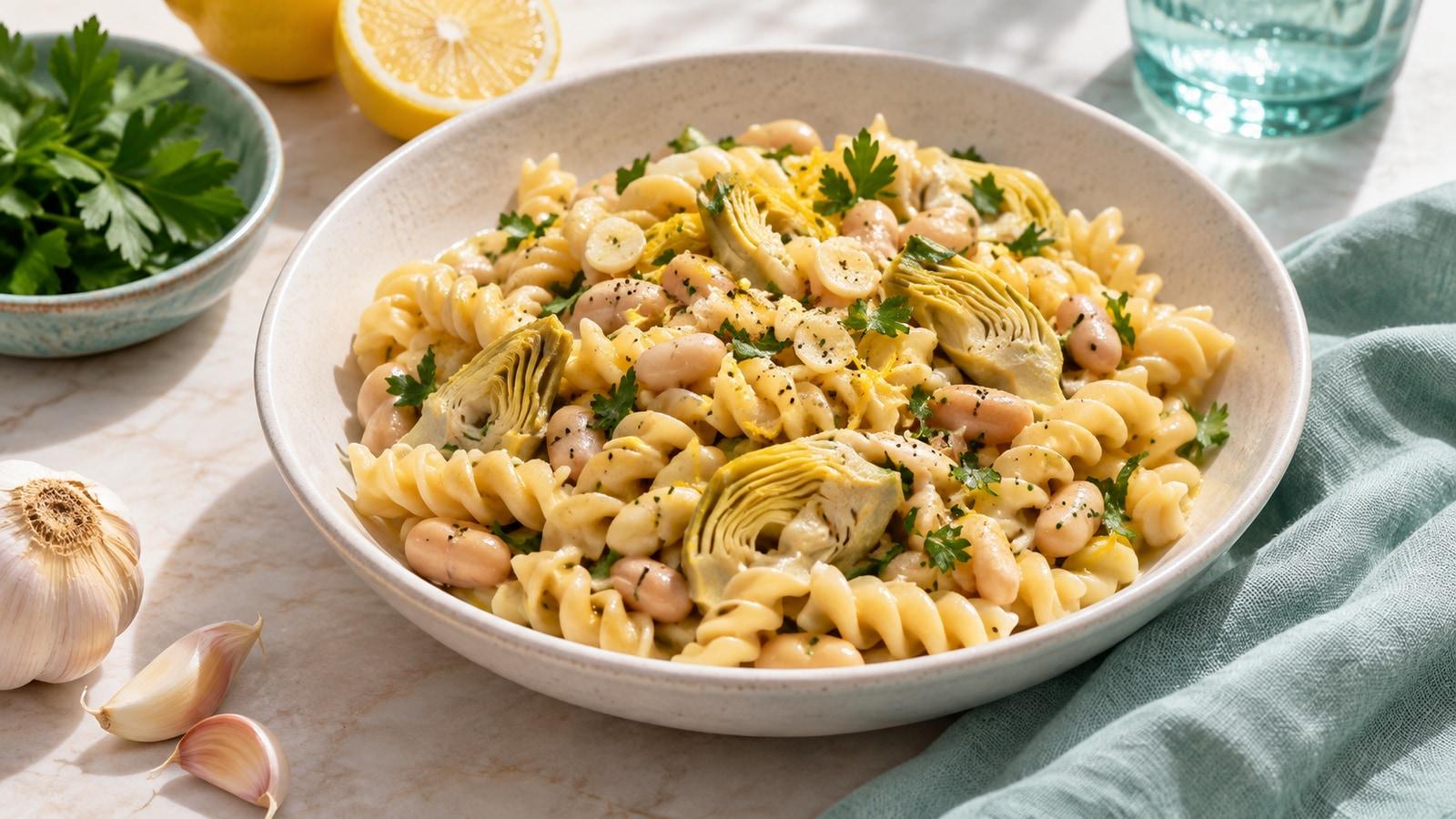
When you want pasta but don’t feel like making a long-simmered sauce, a can of white beans and a jar of artichoke hearts can do a lot of the work. Add garlic, lemon, and a little pasta water, and you have a light sauce that clings to the noodles without needing a separate pot of cream.
This is a pantry-friendly dinner, with a few choices at the end: add parsley for freshness or parmesan for a savory finish. Keep the lemon on the table if everyone likes a different amount.
Ingredients
Makes: about 4 servings
Prep: about 10 minutes
Cook: about 20 minutes
- 8 ounces dry pasta, preferably whole-grain
- 1 tablespoon olive oil
- 2 garlic cloves, thinly sliced
- 1 can (15 ounces) white beans, drained and rinsed
- 1 can or jar (about 14 ounces) artichoke hearts, drained and roughly chopped
- ½ cup lower-sodium vegetable broth or water
- 1–2 teaspoons lemon juice, plus zest if desired
- 2 tablespoons chopped parsley, optional
- Black pepper and grated parmesan, optional
Artichokes packed in water or brine have a different flavor from marinated artichokes. Either can work, but taste a piece before seasoning the pan. Marinated versions may already contain oil, herbs, salt, or acid, so you might want less oil and lemon.
Make the pasta
- Wash your hands and rinse the parsley and lemon. Bring a large pot of water to a boil and cook the pasta according to the package.
- While it cooks, drain the beans and artichokes. Rinse the beans and cut large artichoke pieces into bite-size chunks.
- Warm the oil in a wide skillet over medium-low heat. Add the garlic and cook briefly until fragrant, taking care not to brown it too deeply.
- Add the beans, artichokes, and broth. Simmer gently for about 5 minutes. Mash a few beans against the side of the skillet and stir them into the liquid.
- Reserve about a cup of pasta water, then drain the pasta. Add it to the skillet with lemon juice and a splash of pasta water. Toss until coated, adding more water as needed. Finish with parsley, pepper, and parmesan if you like.
Build the sauce in the pan
The sauce starts out looking thin, then becomes more cohesive as you toss the pasta with the beans and a little cooking water. Mashing a few beans helps, but leave most whole if you want distinct bites. Add the reserved water gradually; it’s easier to loosen the pasta than to remove excess liquid.
Garlic is easy to burn in a small amount of oil. Keep the heat moderate and add the beans and broth as soon as it smells fragrant. If it turns dark brown and tastes bitter, start again with fresh garlic rather than hoping the lemon will cover the flavor.
Artichoke hearts can have firm outer leaves, especially in larger pieces. Trim away anything unpleasantly tough and chop the rest. A little briny flavor is welcome, but rinse them briefly if they taste saltier than you want.
Choosing the beans and pasta
Cannellini beans are large and creamy; navy and great northern beans are smaller. Any of them can make the sauce more substantial. Beans provide plant protein and fiber, and whole-grain wheat pasta adds fiber too. Mash a few beans into the sauce and leave the rest whole if you like some texture.
Short pasta shapes such as penne or rotini catch beans and artichoke pieces. Long noodles work too, though some of the larger pieces may collect at the bottom of the bowl. A spoon alongside your fork takes care of that.
If you avoid gluten, use a suitable labeled gluten-free pasta and check the other packaged ingredients. Cooking times can vary substantially between wheat, rice, corn, and legume pastas, so follow the box and check the texture before draining.
Adjust the bean sauce
For a lightly coated pasta, mash only a spoonful of beans. For a thicker sauce, mash a little more in the pan and add cooking water until the mixture loosens. The artichokes can stay in larger pieces so they don't disappear into the beans.
If you would like a dairy finish, a spoonful of ricotta can be added to each serving. You can also leave the dish dairy-free. Parmesan contributes salt, so taste before adding more seasoning; the artichokes may already be seasoned as well.
Lemon juice tastes bright, while zest adds aroma. Start with a little of each and increase to taste. If you’re serving someone who doesn’t enjoy acidic foods, offer lemon wedges separately instead of adding the full amount to the pan.
Leftovers without dry pasta
Cool leftovers in shallow containers and refrigerate within two hours, or one hour above 90°F. Store at 40°F or below and use within three to four days. The pasta will continue to absorb liquid, so add a splash of water when reheating. Heat leftovers to 165°F and stir so the beans and pasta warm evenly. Add fresh parsley or cheese after warming.
You can also make the bean-artichoke mixture ahead and cook the pasta closer to serving. Chill the mixture promptly and reheat it thoroughly before tossing. That approach keeps the noodles closer to their just-cooked texture.
The basic idea is straightforward: use a little of what the pasta pot gives you, let the beans thicken the liquid, and adjust the lemon at the end. It’s a dependable way to turn pantry ingredients into dinner.