










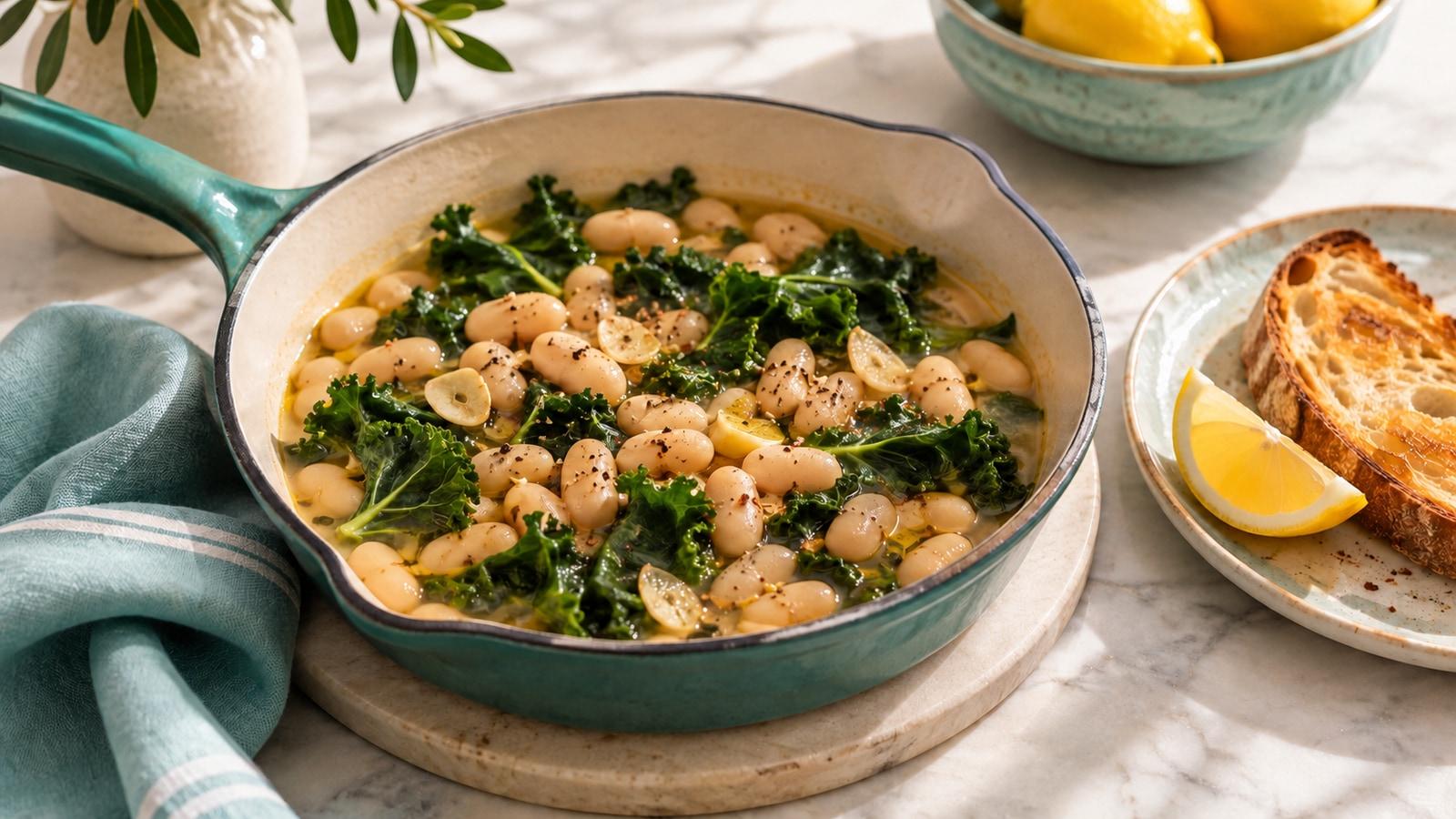
This is a simple pan of beans and greens, the kind of meal that can become lunch with toast or a side dish at dinner. The white beans soften in a little broth while the kale cooks down with garlic. Lemon at the end keeps the whole thing from feeling too heavy.
Use whatever white beans you have: cannellini, navy, or great northern beans all work. They differ in size and texture, so you may need a little more or less liquid, but the method stays the same.
Ingredients
Makes: about 4 side servings or 2–3 larger portions
Prep: about 10 minutes
Cook: about 15–20 minutes
- 1 tablespoon olive oil
- 3 garlic cloves, thinly sliced
- 1 small bunch kale, about 6 cups chopped
- 2 cans (15 ounces each) white beans, drained and rinsed
- ½ cup lower-sodium vegetable broth or water
- 1–2 teaspoons lemon juice
- Black pepper to taste
- Toast, grated parmesan, or a pinch of red pepper flakes, optional
The bunch of kale may look enormous on the cutting board. It shrinks as it cooks, so add it in handfuls if your skillet is full. If you’re using a bag of chopped kale, check for any particularly thick stems and slice those smaller.
Get the skillet going
- Wash your hands and rinse the kale under running water. Remove the thickest stems and chop the leaves into bite-size pieces. Drain and rinse the beans.
- Warm the oil in a large skillet over medium-low heat. Add the sliced garlic and stir for about a minute, just until fragrant. Don’t let it become dark brown.
- Add the kale a handful at a time, turning it in the oil as it wilts. Pour in the broth, cover, and cook for about 5 minutes.
- Add the beans. Cover again and cook for another 5–8 minutes, stirring occasionally, until the kale is tender and the beans are hot. Add a little water if the skillet looks dry.
- Uncover and mash a few beans against the side of the pan. Stir them into the liquid for a lightly creamy texture. Finish with lemon juice and pepper, then serve with toast or another accompaniment.
Keep the garlic gentle
Sliced garlic can turn from golden to bitter quickly. Starting it over medium-low heat gives you more control. Once it smells fragrant, add the kale and broth rather than waiting for it to become deeply browned.
If you prefer a milder garlic flavor, use fewer cloves or add them after the greens have started to soften. For a stronger flavor, add another small clove with the beans. Garlic powder can work in a pinch; add a little to the broth and taste before adding more.
Red pepper flakes are optional. Put them on the table if some people like heat and others don’t. A little grated lemon zest can add another layer of flavor without making the pan too sour.
Get the greens the way you like them
Kale varies. Tender baby kale needs less time than mature curly kale, while the thick stems need more time than the leaves. If you like the stems, chop them finely and add them to the pan a few minutes before the leaves rather than throwing them away.
For a softer texture, add another splash of broth, cover, and cook a few minutes longer. For greens with more bite, check them earlier. Spinach or chard can replace some or all of the kale, but they cook at different speeds, so add tender leaves closer to the end.
Mashing a few beans thickens the broth without requiring cream. Mash more for a spoonable, stew-like skillet; leave them all whole for a lighter, brothier pan. If you accidentally mash too many, a splash of water loosens the mixture.
Make it enough for your table
White beans provide plant protein and fiber. Served over toast, the skillet can be a convenient meal on its own. If you want another source of protein, add an egg, fish, chicken, or tofu on the side according to your preferences. A small amount of parmesan adds a savory finish, though the dish works without dairy.
If beans are new to your routine, begin with a smaller serving and increase gradually if comfortable. You can serve a larger portion of greens with a smaller scoop of beans, or put the skillet in the middle of the table and let everyone serve themselves.
Try whole-grain toast for a firmer base, or spoon the mixture over rice. For a soupier bowl, add more broth and warm it through. A few chopped tomatoes stirred in near the end will make a different version, though they aren’t necessary to make the dish work.
Store the extras
Transfer leftovers to shallow containers and refrigerate within two hours, or within one hour above 90°F. Keep the refrigerator at 40°F or below and use the beans and greens within three to four days. If saving cooked rice, cool and refrigerate it within one hour, use it within 24 hours, and reheat it only once. When reheating, heat to 165°F and stir so the beans and greens warm evenly. Keep toast separate until you’re ready to eat; it will soften if stored underneath the beans.
The mixture may absorb some liquid in the refrigerator. Add a spoonful of water or broth to the pan before reheating. Finish with fresh lemon after warming if you like a brighter flavor. Leftovers also make a good filling for a baked potato or a quick grain bowl.
This isn’t a complicated recipe, and that’s its strength. Once you know how tender you like the kale and how much liquid you prefer, the pan is easy to adapt to what’s already in your kitchen.