










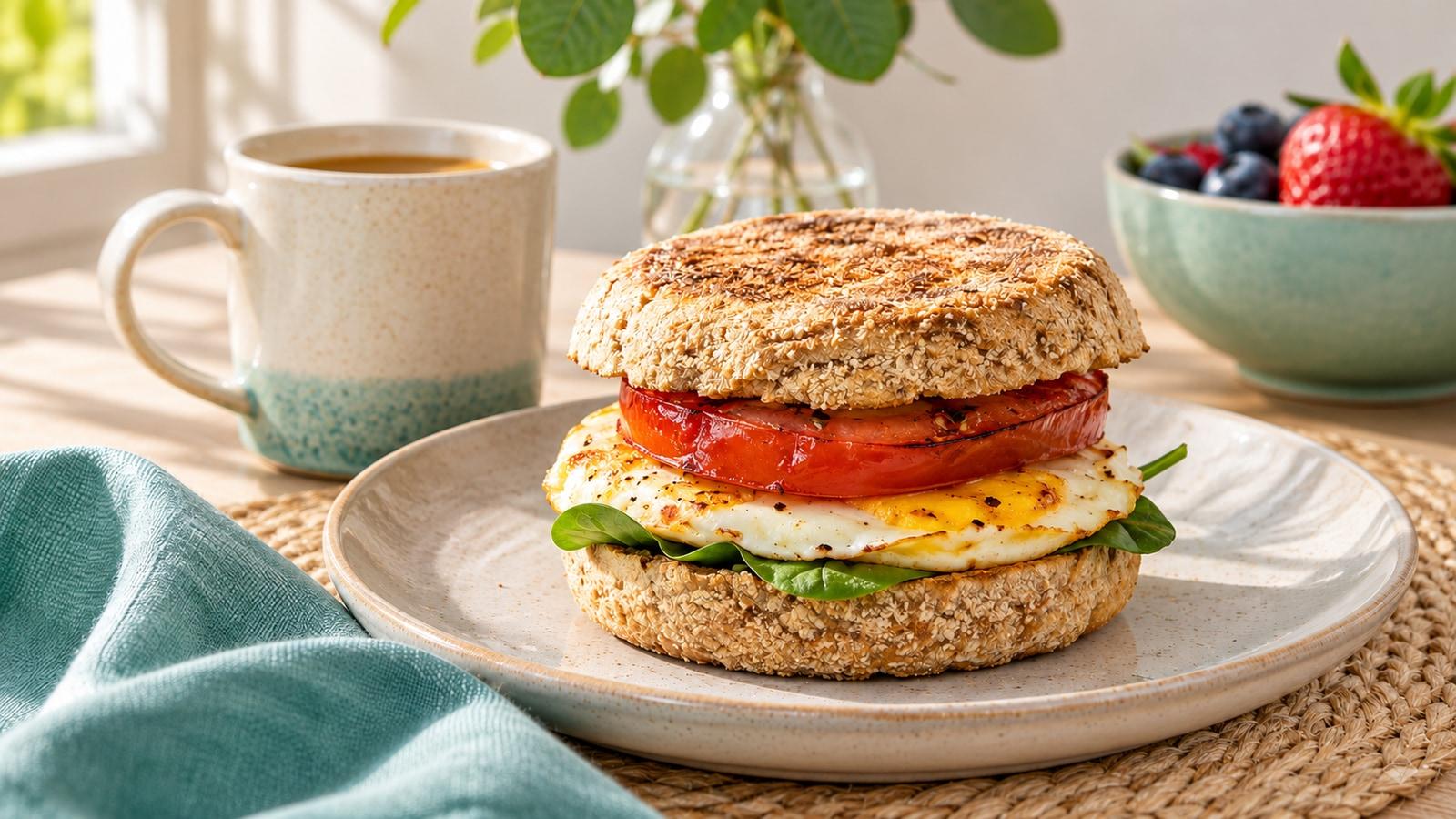
A breakfast sandwich is especially useful on mornings when sitting down for a long meal isn't in the plan. This version pairs a fully cooked egg with roasted tomato on a whole-grain English muffin or small roll. Make the tomato ahead, then assemble the sandwich when you're ready.
The tomato adds moisture and flavor without requiring a complicated sauce. If you're packing the sandwich for later, cool and refrigerate it promptly, keep it cold in transit and reheat the filling safely before eating.
Ingredients
This starting recipe makes one sandwich.
- 1 whole-grain English muffin or small roll
- 1 large egg
- 1 small tomato, cut into thick slices
- 1 teaspoon olive oil
- A small pinch of black pepper and dried oregano
- 1 thin slice of cheese, optional
- A few washed spinach leaves, optional
Choose bread that fits your preferences and any dietary needs. A different size will change the balance between filling and bread, so use the one you enjoy. Check the ingredient list if you have a food allergy or need to avoid gluten.
Tomatoes vary in size and juiciness. You may need only one or two slices for a sandwich; save any extra roasted slices for another meal. If tomato triggers reflux or discomfort for you, choose a different cooked vegetable rather than forcing the combination.
Roast the tomato
Heat the oven to 400°F. Rinse the tomato under running water, dry it and cut it into thick slices. Place the slices on a small baking sheet, brush lightly with olive oil and sprinkle with pepper and oregano.
Roast until the tomato softens and the edges begin to color. Start checking after about 10 minutes, keeping in mind that thick slices and different ovens may take longer. Let it cool briefly before handling.
You can roast several slices while making dinner, then refrigerate the extras promptly for breakfast. Keep the tomato in a covered container and use a clean utensil when assembling the sandwich.
Cook the egg fully
Heat a small nonstick skillet over medium-low heat. Crack the egg into the pan and cook until the white and yolk are firm. If you prefer a folded egg, beat it first and cook it fully before placing it on the bread.
Wash your hands, the bowl and any utensils or surfaces that touched raw egg. Use a clean plate for the cooked egg. Don't rely on the color of the bread to judge whether the egg is done.
If you add cheese, place it on the hot egg or bread so it can soften. Cheese is optional; the sandwich can be flavorful with just the tomato and seasoning.
Assemble the sandwich
Toast the English muffin or roll if you like. Add the cooked egg, roasted tomato and optional washed spinach. Close the sandwich and let it rest briefly before cutting or wrapping it.
For a less slippery filling, blot excess tomato liquid with a clean paper towel before adding it to the bread. If you're eating at home, serve a little fruit or yogurt on the side if that appeals to you. If the sandwich is more than you want at once, save the remaining portion safely for later.
Try a different herb, a mild spread or a cooked vegetable you enjoy. Add toppings after reheating when possible so cool, fresh ingredients keep their texture. The sandwich doesn't need several extras to make a useful breakfast.
Prepare ahead for a busy day
You can cook the egg and roast the tomato ahead, then store them in covered containers in the refrigerator. Toast the bread and assemble when you're ready, or prepare the sandwich in advance if that better fits your morning. Keep it chilled rather than leaving it on the counter until you leave.
If you're carrying the sandwich, use an insulated bag with cold packs and refrigerate it when possible. Reheat the cooked egg and tomato to 165°F before eating, then add any cold spinach or other fresh topping. A microwave may soften the bread; a toaster oven or skillet can help restore texture, provided the filling reaches the safe temperature.
Storage and a few practical choices
Refrigerate cooked egg and tomato within two hours, or within one hour if the temperature is above 90°F. Keep the refrigerator at 40°F or colder and use cooked leftovers within three to four days. If the sandwich has sat out longer than the safe window, discard it rather than relying on smell.
If chewing is uncomfortable, a softer roll or a different meal may work better. Anyone following a prescribed swallowing plan should check whether the sandwich and its mixed textures fit their instructions.
This is a straightforward template: a warm egg, a tomato you prepared when you had time and bread you like. Make it your own without making the morning more complicated.