










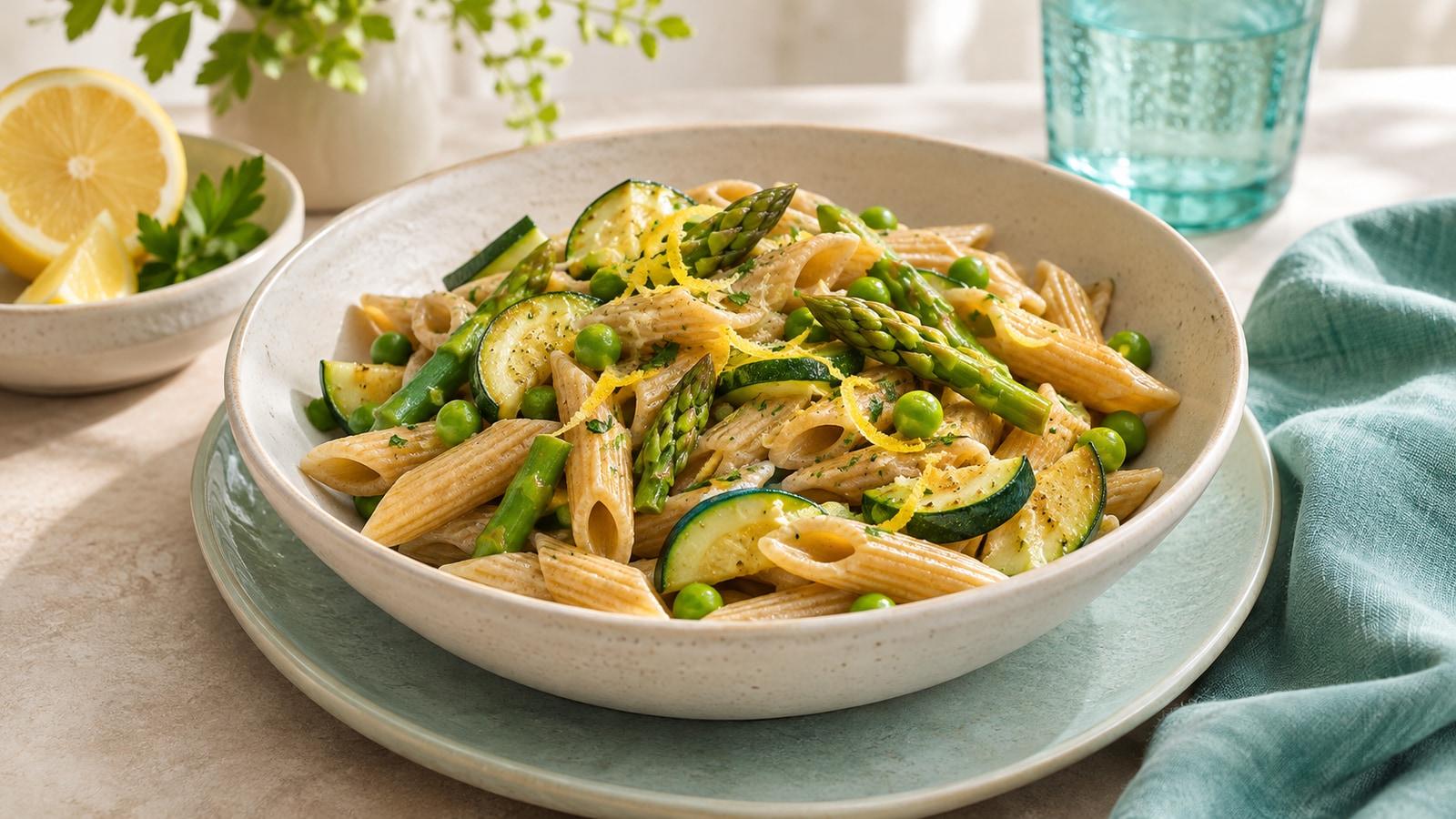
Pasta primavera is a flexible way to use a mix of vegetables. This version combines whole-grain pasta, peas, asparagus, and zucchini with a light lemon sauce. The vegetables are cooked separately enough to keep their own textures, then tossed with the pasta at the end.
Use what’s in season or already in the refrigerator. The useful idea is to cut the vegetables into similar-sized pieces and give the firmer ones a head start.
Ingredients
Makes: about 4 servings
Prep: about 15 minutes
Cook: about 20 minutes
- 8 ounces dry whole-grain pasta
- 1 tablespoon olive oil
- 1 small zucchini, sliced
- 1 cup asparagus, cut into short pieces
- 1 cup peas
- 1 garlic clove, minced
- 1–2 teaspoons lemon juice
- ¼ cup grated parmesan, optional
- Chopped parsley or basil, optional
- Black pepper to taste
Follow the package cooking instructions for frozen peas. Pasta shapes such as penne or rotini catch the vegetables well, but use any shape you enjoy.
Cook and toss
- Wash your hands and rinse the zucchini, asparagus, lemon, and herbs under running water. Cut the vegetables into manageable pieces.
- Cook the pasta according to its package directions. Reserve about ½ cup of the cooking water before draining. Cook the peas as directed on their package.
- Warm the oil in a wide skillet. Add the asparagus and zucchini and cook until tender to your liking, adding a splash of water and covering briefly if you prefer them softer.
- Add garlic and stir briefly, then add the cooked peas and drained pasta. Toss with lemon juice and a little reserved pasta water.
- Add parmesan, herbs, or pepper if you like. Serve while warm.
Add the pasta water gradually. It should help coat the noodles without leaving a puddle in the bottom of the pan. Toss gently so the tender vegetables remain in pieces.
Cook the vegetables at their own pace
Asparagus stems can be thicker than zucchini slices. Trim the tough ends and cut thicker spears smaller, or give them a minute or two in the pan before adding the zucchini. Check a larger piece with a fork.
Peas are small and can become very soft if they spend too long in the skillet. Cook them according to the package, then add them near the end. If using canned peas, drain them and follow the label’s directions for serving.
Other vegetables can work. Broccoli, carrots, or bell peppers need their own cooking time; cut them small and start firmer pieces earlier. Tender greens can go in last and be stirred until wilted.
A light sauce from the pasta pot
The reserved cooking water helps distribute the oil and lemon through the pasta. Start with a few spoonfuls and toss. If the mixture seems dry, add more; if it’s too wet, warm it briefly uncovered.
Lemon juice adds brightness, but a little goes a long way. Offer wedges at the table if people prefer different amounts. Garlic cooks quickly, so add it after the vegetables soften and lower the heat if it starts to brown too fast.
Parmesan adds a savory finish, but the dish can be made without it. Chopped basil or parsley gives freshness. A pinch of chili can be added to individual plates for anyone who wants heat.
Make the meal more substantial
Whole-grain wheat pasta and peas provide fiber. Add chicken, tofu, beans, or another protein-rich food if you want a more substantial plate. The vegetables and pasta can be served in different proportions according to appetite.
If whole-grain pasta is new to you, try it alongside your usual pasta; cook each according to its own package timing. A smaller portion of pasta with tender vegetables may be a useful starting point, with more available if you want it.
If adding cooked chicken or beans from an earlier meal, they should have been refrigerated promptly. Warm them separately or in the skillet to 165°F before serving. Keeping the additions separate also lets one person choose beans while another chooses chicken, without changing the whole pan. A little extra pasta water can loosen the mixture after those ingredients go in.
Wheat contains gluten and can cause wheat allergy. Parmesan contains milk, another common allergen. Choose suitable labeled alternatives if needed and check the other packaged ingredients.
Leftovers
Refrigerate pasta and vegetables promptly in shallow containers. Reheat to 165°F, stirring so the center warms evenly. Add a spoonful of water if the pasta has absorbed the sauce, then finish with fresh herbs or lemon.
If you cook vegetables ahead, chill them promptly rather than leaving them on the counter while the pasta cooks. Use clean utensils for the finished dish.
The method is adaptable: cook firmer vegetables first, save a little pasta water, and add lemon at the end. The vegetable mix can change with the season or the contents of your refrigerator.