










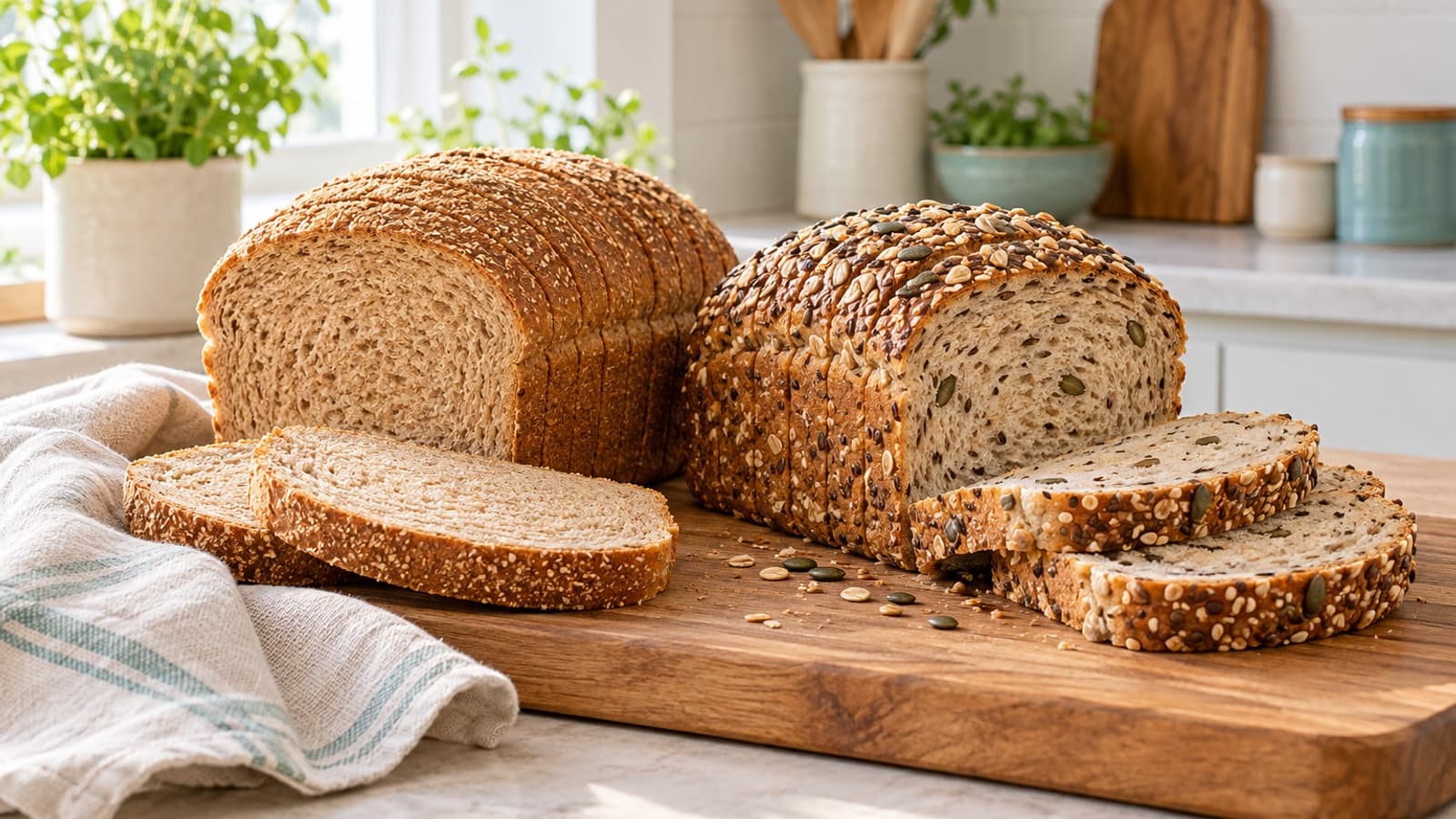
Two loaves sit side by side. One says “multigrain” in large letters; the other says “whole wheat.” Both are brown, both have seeds, and you just want bread for lunch.
You don’t need to decode the whole aisle. A quick look at the words and ingredient list will get you much closer to the loaf you meant to buy.
What the names can tell you
Multigrain tells you there is more than one grain; it does not settle whether those grains are whole. A multigrain bread might use whole grains, refined grains or a combination.
“Whole wheat” identifies wheat that includes the whole grain. On the ingredient list, you might see “whole wheat flour” or another grain named with the word “whole.” That is different information from simply seeing “wheat flour” or “multigrain.”
The color of a loaf isn’t a reliable shortcut. Neither are seeds on the crust. They can add flavor and texture, but their presence alone doesn’t tell you how much of the bread comes from whole grains.
If you want a loaf with a lot of whole grain, look beyond the large words on the front. Read the ingredient list and check for named whole grains. A whole grain near the beginning is a useful clue, though it doesn’t prove the exact percentage, especially when several grain ingredients are involved.
A simple comparison in the aisle
Imagine one bread lists whole wheat flour first. Another lists enriched wheat flour first, followed by whole oats and other grains. The second can still contain whole grain, but the order alone won’t tell you exactly how much of the loaf is whole grain overall.
If a package tells you the percentage of whole grain, that may make the comparison easier. Otherwise, use the information available without pretending the label answers more than it does. You can also choose a loaf for taste or texture; the point is to know what you’re buying.
Check the slice size before comparing the nutrition panels. A thin slice and a much larger slice may not be a useful one-for-one comparison. Fiber is worth looking at if that matters to you, but it isn’t a dependable measure of how much whole grain is in a bread. Some breads contain added fiber or bran.
Pick something that fits your lunch
Think about what you plan to make. A softer sliced loaf might work well for a small turkey sandwich, while a denser bread may be better toasted alongside eggs. If you’re buying for one, freeze slices in a suitable bag and take out what you need.
You don’t have to choose the largest or darkest loaf. If a smaller sandwich feels more comfortable while you’re taking a GLP-1, start there and keep the rest of the meal flexible. An apple, yogurt or another food you enjoy can round it out when you’re hungry.
If you have celiac disease, avoid gluten-containing grains such as wheat, barley and rye, including their whole-grain versions. Check the package for a suitable gluten-free bread and follow your clinician’s advice. A wheat allergy calls for avoiding wheat; the right choice depends on your own needs.
Make the next shop easier
Once you find a bread you like, take a photo of the package or save it to your shopping list. Recipes and labels can change, so give it another look from time to time, especially if an ingredient affects your health.
Want help with the rest of the panel? Our food-label guide explains how serving sizes and nutrient amounts fit together. A little label reading is plenty; lunch doesn’t need to become a research project.