










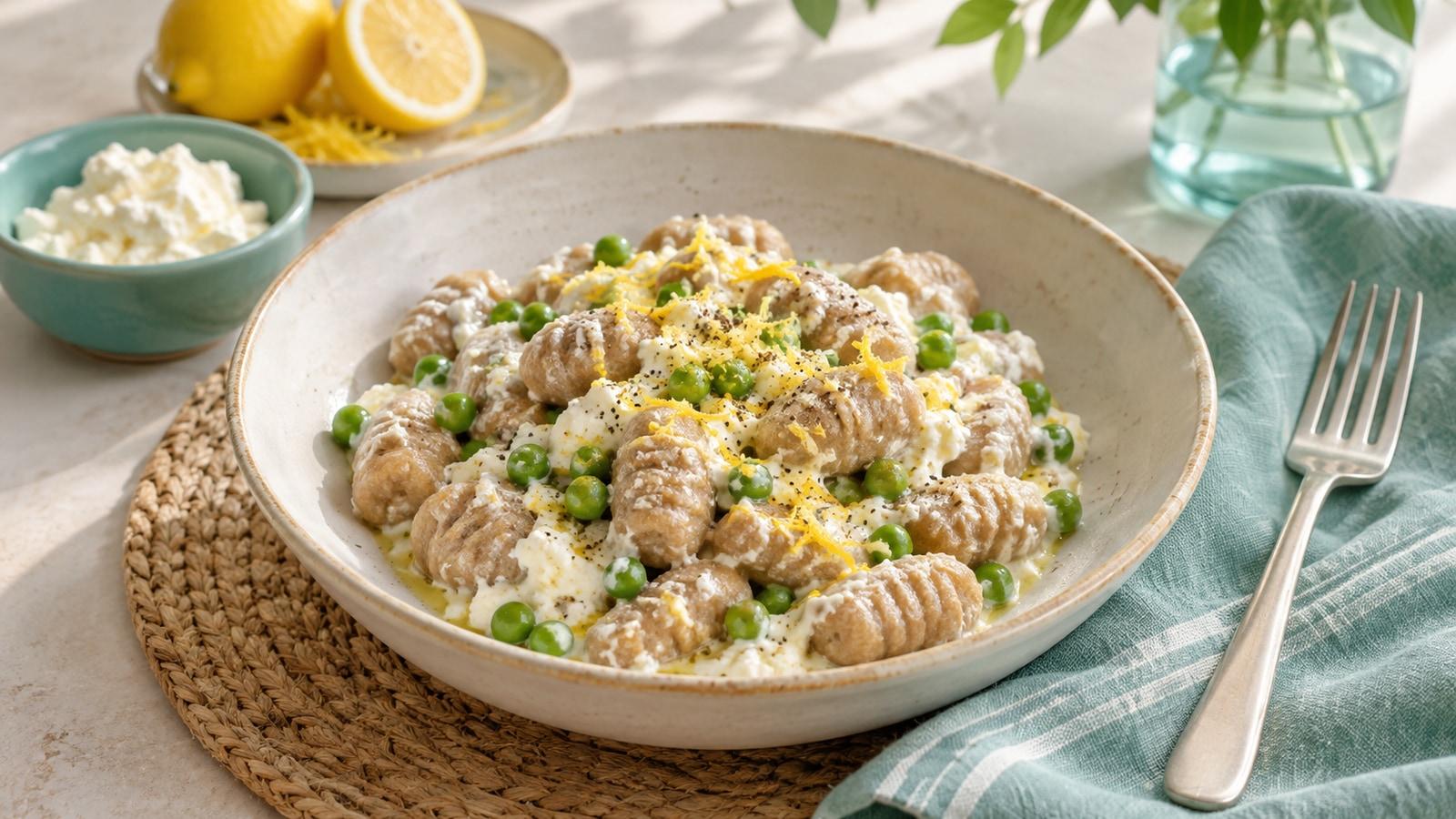
Gnocchi, peas, and ricotta make a quick meal with a creamy sauce that doesn’t require a long simmer. A little cooking water loosens the ricotta, and lemon adds brightness at the end.
Gnocchi products differ: some are shelf-stable, some refrigerated, and some frozen. Follow the package directions for cooking and storage, then use the method below to bring the components together.
Ingredients
Makes: about 4 servings
Prep: about 10 minutes
Cook: about 15 minutes
- 1 package (about 16 ounces) whole-wheat gnocchi
- 1½ cups peas
- ¾ cup ricotta made from pasteurized milk
- 1 teaspoon olive oil
- 1 garlic clove, minced
- 1–2 teaspoons lemon juice
- Black pepper and chopped mint or parsley, optional
- Grated parmesan, optional
Cook frozen peas according to their package directions. Ricotta varies in thickness, so reserve a little gnocchi cooking water to adjust the sauce.
Cook and combine
- Wash your hands and rinse the lemon and herbs under running water. Prepare the peas according to their package directions.
- Cook the gnocchi as the package directs. Reserve about ½ cup of the cooking water before draining.
- Warm the oil in a wide skillet over medium-low heat. Add garlic and stir briefly until fragrant. Add the cooked peas.
- Stir the ricotta with lemon juice and a few spoonfuls of the reserved water in a bowl. Add it to the skillet with the gnocchi and toss gently over low heat. Add more water if needed for a light sauce.
- Serve with pepper, herbs, or parmesan if you like.
Keep the heat gentle after adding the ricotta. The goal is to warm and coat the gnocchi, not boil the sauce hard.
A sauce that coats rather than clumps
Ricotta can be thick and slightly grainy. Mixing it with a little warm cooking water before adding it to the skillet helps distribute it. Add water gradually; too much can make the sauce thin.
If the sauce tightens as it sits, add another spoonful of warm water and toss. If it seems too loose, let it warm gently for a moment. Avoid a high heat that can make dairy separate or stick to the pan.
Lemon juice adds brightness. Start with one teaspoon and offer more at the table. If you use parmesan, taste before adding salt; cheese and packaged gnocchi vary in sodium.
Choosing and cooking gnocchi
Some gnocchi are boiled, while others are designed for a skillet. Follow the directions for the product you bought rather than assuming every package cooks the same way. If you're boiling them, put a heatproof cup beside the pot as a reminder to save some water before draining. If the package doesn’t involve boiling, use a little warm water to loosen the ricotta instead of reserved cooking water.
Whole-wheat gnocchi contain wheat, which contains gluten and can cause wheat allergy. If needed, choose a suitable labeled alternative and follow its instructions. Texture and cooking time can change with different ingredients.
Peas add color and a little sweetness. Frozen peas should be cooked according to their package rather than treated as automatically ready to eat. Add them after cooking so they don’t spend too long in the skillet.
If you want another flavor, add a few chopped roasted red peppers after the peas are cooked. Drain jarred peppers first so their liquid doesn't thin the ricotta. Canned peas are softer and may only need warming; check their label and drain them before use.
Make the plate your own
Ricotta contributes protein, while whole-wheat foods and peas can provide fiber. A salad, roasted vegetables, or another protein-rich side can make the meal larger. Portion according to appetite and the rest of the plate.
Mint gives a fresh flavor, while parsley is milder. Both are optional. Black pepper or a little lemon zest can add another note; rinse the lemon before zesting. If you like heat, offer chili flakes separately.
Ricotta and parmesan contain milk, a common allergen. Choose a suitable alternative if needed and check the label; a dairy-free product may have a different protein content and may behave differently when heated.
For a softer meal, cook the gnocchi and peas until tender according to their instructions. For more texture, serve a crisp salad alongside. A little extra water can make the sauce easier to spoon.
Leftovers
Refrigerate leftovers promptly in shallow containers. Reheat to 165°F, stirring gently so the center warms evenly. Add a spoonful of water if the sauce has thickened, and keep fresh herbs separate until serving.
If you prepare peas or gnocchi ahead, chill them promptly rather than leaving them on the counter while making the sauce. Use clean utensils and keep the ricotta refrigerated until needed.
The dish is easiest when the peas and gnocchi are cooked first, then the ricotta is loosened with a little warm water and added over gentle heat.