










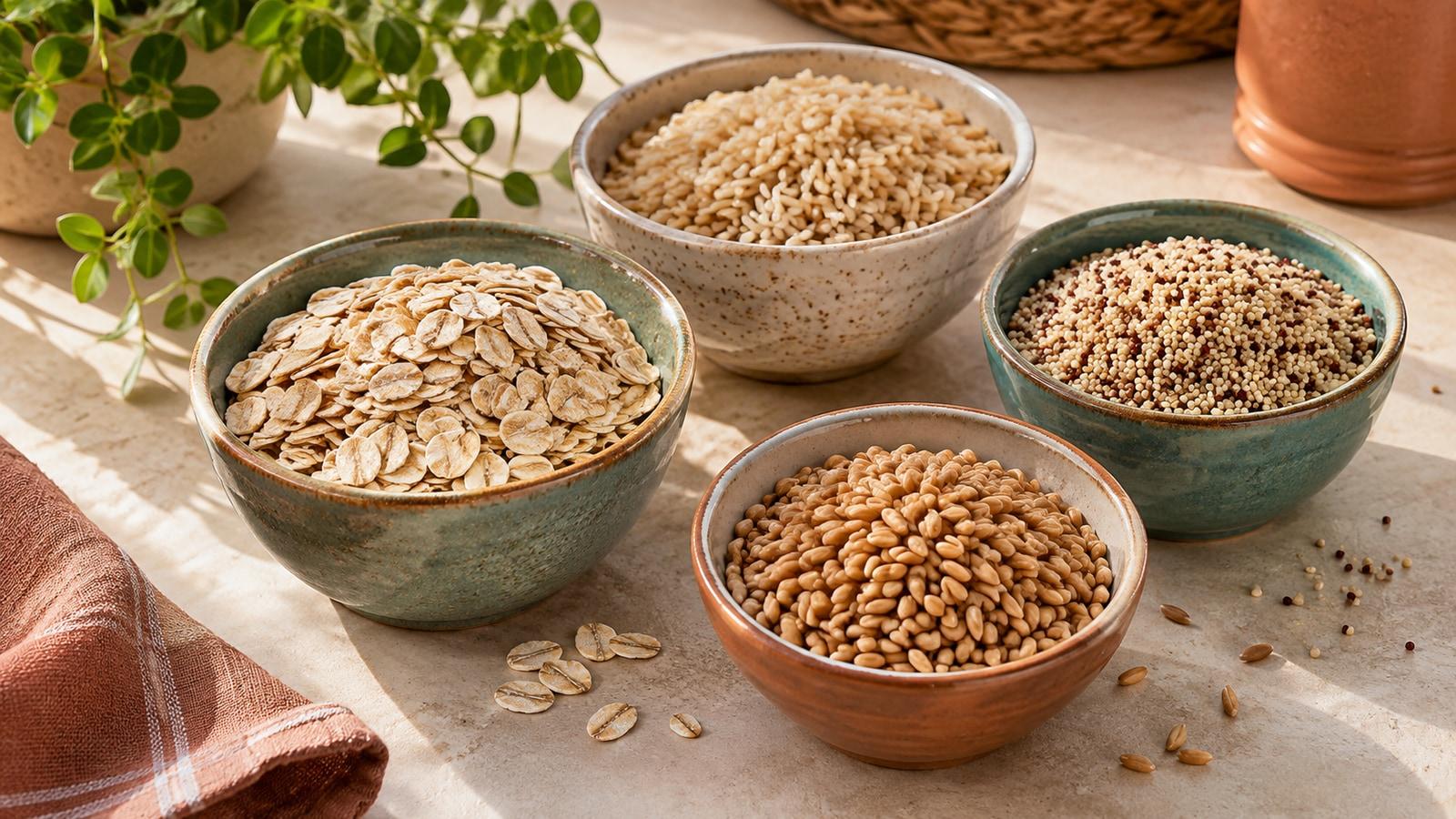
Brown rice looks nothing like a slice of whole-wheat bread, and neither looks much like a bowl of oatmeal. Yet all can be made from whole grains. “Whole” describes the parts of the grain that are present, not whether the food looks like a single intact kernel.
Once you know that, the grain aisle becomes a little easier to navigate. You can choose by texture, cooking time and taste as well as by the words on the package.
Three parts of a grain
A grain kernel contains the bran, germ and endosperm. A whole grain retains all three in their original proportions. A refined grain has been processed to remove the bran and germ, leaving mainly the endosperm.
The whole grain can be cooked intact, cut, rolled or ground. The form changes the way it looks and cooks, but grinding alone doesn't necessarily make it refined. Whole-wheat flour, for example, is ground, while brown rice generally keeps the appearance of separate grains.
Different foods can also combine whole and refined grains. The ingredient list tells you more about that mix than the color or a photograph on the front of the package.
Intact grains: individual pieces in the bowl
Brown rice, whole-grain barley and wheat berries are examples you may encounter as separate grains. They can have different textures and cooking times. Some stay chewy; others become softer with more cooking or liquid.
If you're new to one, follow its package directions and think about how you'll use it. A grain that stays distinct might suit a salad or a bowl with beans. A softer one may be pleasant under a stew. Leftovers can be useful, but cooked grains need prompt refrigeration just like other perishable foods.
Check the label on barley in particular. Forms are processed differently, so the word “barley” alone may not tell you whether a product is whole grain. Ask the manufacturer or choose a clearly identified whole-grain product if that distinction matters to you.
Rolled grains: flatter and often quicker
Rolled oats begin as oat groats that are processed into flakes. They are still considered whole grain when the grain's components remain. Old-fashioned, quick and other oat products can differ in thickness, cooking time and texture, so read the directions for the one you buy.
Oats can be sweet or savory. You might prepare them with fruit and yogurt, or with vegetables and an egg. A plain package also lets you decide what to add. Flavored instant oatmeal can be convenient; check the serving size and added sugar if those details matter to you.
There is no need to choose the longest-cooking version merely because it looks less processed. Convenience, taste and what you will actually eat are part of a practical decision.
Ground grains: flour can still be whole
Whole-wheat flour can be used in bread, tortillas, pasta and baked goods. The grain has been ground, so the finished food won't resemble a wheat berry. A product made with whole-grain flour can still differ from another in fiber, added ingredients, texture and serving size.
Look for a specific whole-grain ingredient, such as “whole wheat,” in the ingredient list. “Wheat flour” by itself doesn't necessarily mean whole wheat. A brown color, “multigrain” or “made with whole grains” on the front also doesn't tell you how much of the grain ingredient is whole.
You can compare products without making the choice a test. One bread may have a flavor you prefer; another may have a different fiber amount or price. Pick what fits the meal and your circumstances.
How should you make a change?
If you want to try more whole grains, start with a food you enjoy. Mix some brown rice with the rice you already cook, try oatmeal in a familiar breakfast, or choose a whole-wheat bread you like. You don't have to change every grain at once.
Some whole-grain foods contain more fiber than refined versions, though amounts vary. If a higher-fiber food is uncomfortable, talk with a clinician or dietitian about a pace and options that fit your health. People with specific digestive conditions may have individual instructions.
Whole wheat, barley and rye contain gluten. People who need to avoid gluten should choose products suitable for their condition and check labels; oats can also require careful selection when cross-contact is a concern. A whole-grain label doesn't override an allergy or medical restriction.
Choose the form you'll use
An intact grain, a rolled grain and a whole-grain flour can all bring different textures to the table. None has to replace every other food in your kitchen.
Start with the cooking time you have, the flavors you enjoy and the information on the package. A food you can prepare and want to eat is a more useful choice than a bag that sits unopened because the plan looked good on paper.