










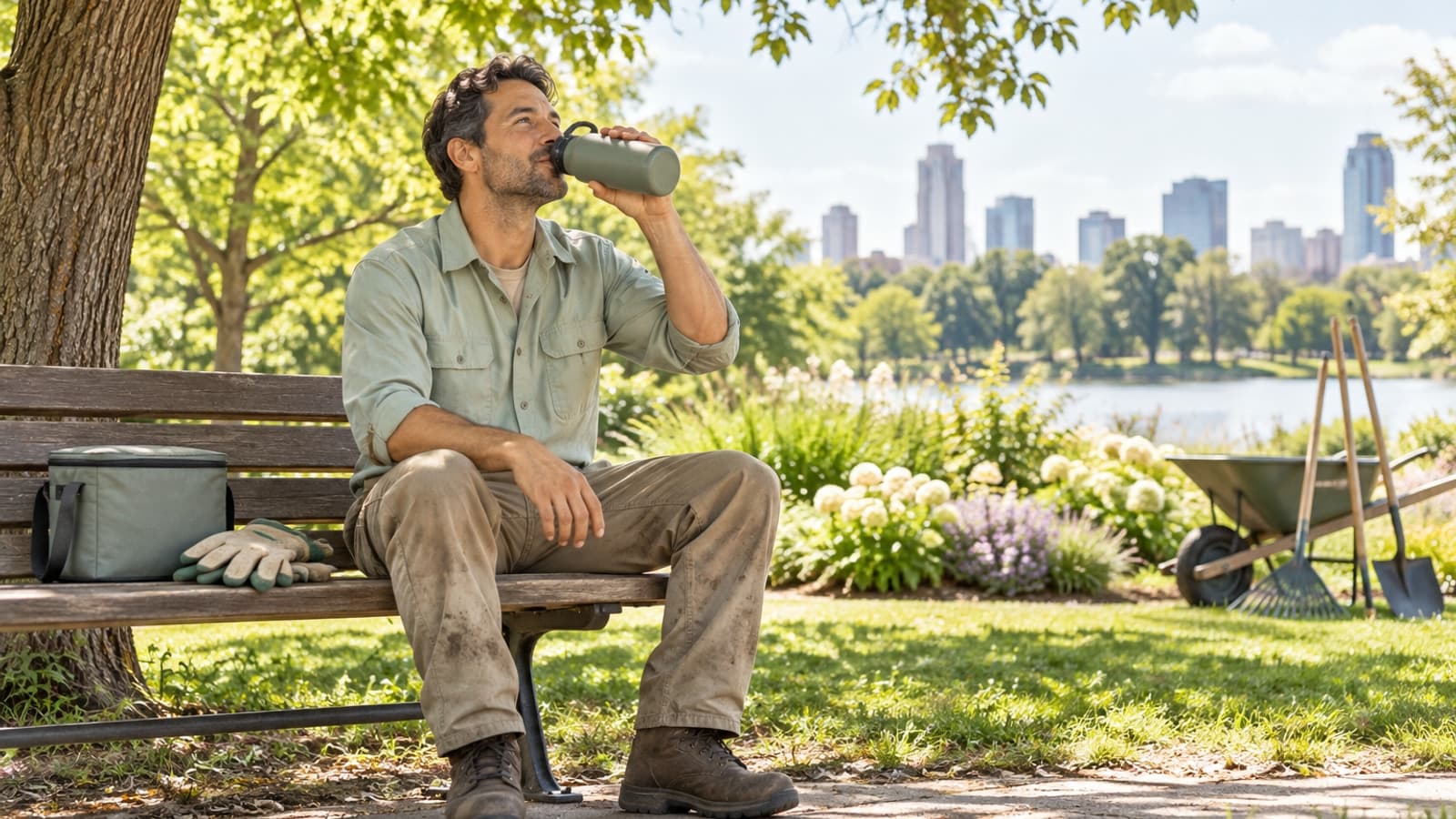
You packed lunch at six in the morning. By noon, the truck has been in the sun for hours, your water bottle is empty and the lunch bag no longer feels cool.
A shady break and a cold lunch both need a plan. That matters whether you’re on a jobsite, making deliveries or working another outdoor shift.
Pack the food for the conditions
If lunch includes chicken, yogurt, cut fruit, a cheese sandwich or another perishable item, start with food that’s already cold. Use an insulated cooler with enough ice or frozen gel packs, and check with a thermometer that the food stays at 40°F or below.
Keep the cooler closed as much as practical and place it in a shaded or cooler area. A soft lunch bag without a cold source isn’t enough to guarantee a safe temperature throughout a hot shift. If you have access to a working refrigerator, use it and check that it’s cold enough.
On a mobile job, check whether you can keep the cooler with you when you move sites. The plan needs to work at the place you’ll take your break, not just when you leave home.
Consider a shelf-stable backup in case the work location changes or your ice melts. Crackers and a suitable nut or seed butter, whole fruit, or a sealed ready-to-eat pouch are examples. Check ingredients for allergies and follow the package directions.
Know when to let lunch go
Perishable food shouldn’t sit at room temperature for more than two hours; when the air temperature is above 90°F, the limit is one hour. If the food has been too warm for too long, discard it. Smelling or tasting it won’t establish that it’s safe.
Pack what you can use during the shift and store any remaining perishable food safely. An extra ice pack and a small thermometer can be more useful than guessing how long a cooler will stay cold.
Put water and rest on the route
Know where you can refill drinking water and take a cooling break. Keep a bottle within practical reach and plan ahead if the job moves between sites. Shade, air conditioning or another cool location gives you a place to recover from the heat.
Your needs depend on the work, temperature and your health. If you’ve been told to limit fluids or manage a heart or kidney condition, ask your clinician how to plan for hot work. A generic water target may not fit you.
If a GLP-1 has reduced your appetite, consider packing a meal in manageable components: a sandwich, fruit and another side, for example. You can eat what feels comfortable during a break and have another opportunity later. Persistent nausea or vomiting can make drinking harder, so tell your care team if symptoms are getting in the way.
Heat symptoms deserve attention
Headache, dizziness, weakness, nausea and heavy sweating can be signs of heat illness. Stop work, move to a cooler place, tell someone and seek medical evaluation. Don’t assume it’s just a medication effect or try to finish the shift first.
Confusion, collapse or a seizure in the heat is an emergency. Call 911, move the person to a cool area and begin cooling them while help is on the way. Stay with them; don’t give a drink to someone who isn’t alert enough to swallow safely.
Make tomorrow easier
After the shift, note what ran short. Did you need more ice, a second water refill or a backup that didn’t require refrigeration? Change that one part before the next workday.
Our workday lunch guide has more ideas for flexible meals. A good outdoor setup keeps both the food and the person eating it in mind.