










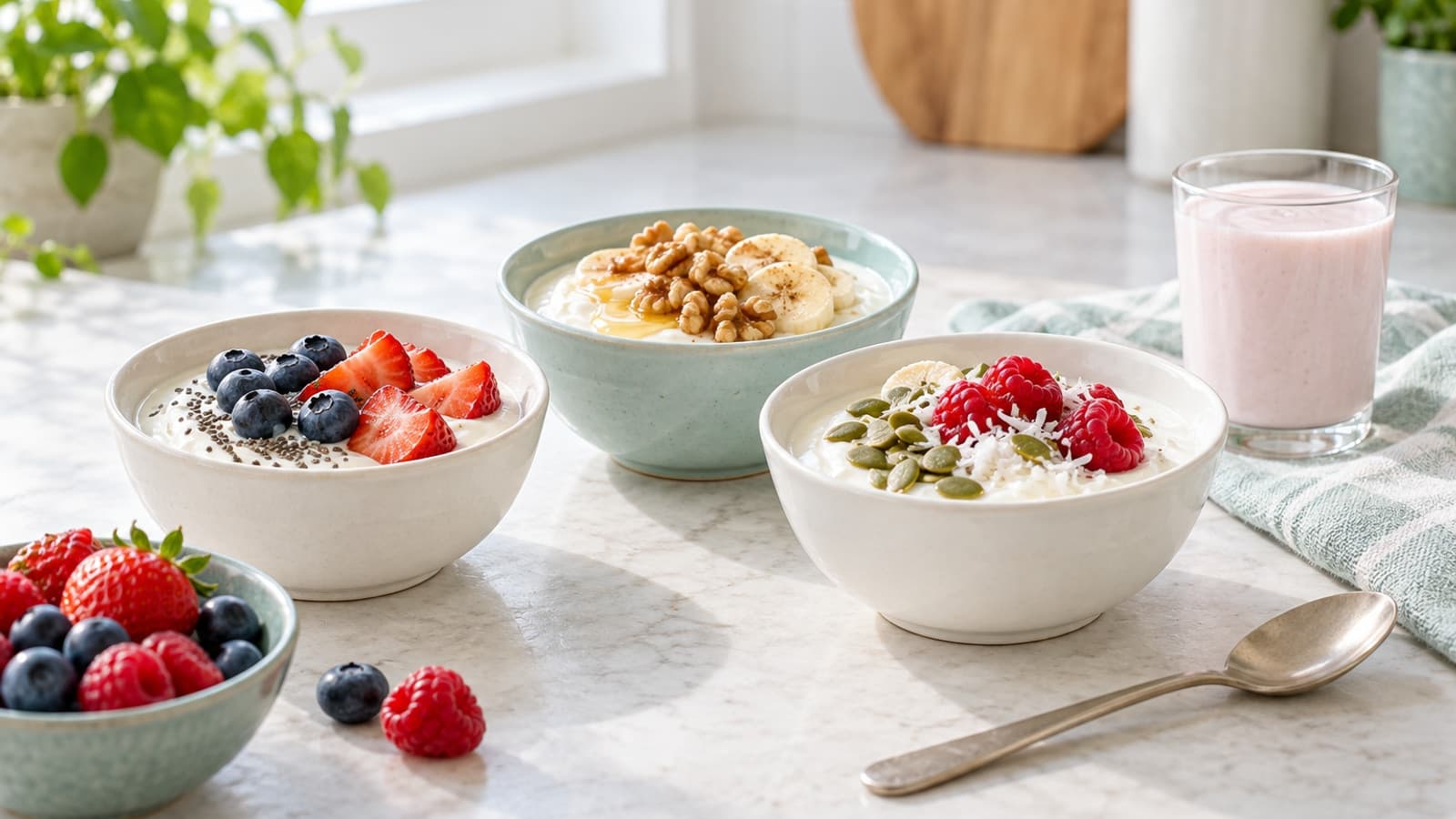
The yogurt case can feel like a wall of tiny promises: creamy, strained, drinkable, high protein, dairy-free, vanilla, no sugar added. Meanwhile, you’re trying to find something for breakfast.
Start with how you want to eat it. The best cup for a desk drawer lunch bag may not be the same one you’d spoon over a baked potato at home.
Choose the job first
For a bowl with fruit, pick a texture you enjoy. Strained styles are often thick and spoonable; other varieties are looser. A plain yogurt gives you room to add berries, cinnamon or a little jam to your own taste. A flavored cup may be convenient when you want to open it and eat.
A drinkable yogurt travels differently. It can work when a spoon is awkward, but you’ll still need to keep it cold. Check the bottle size and ingredients rather than assuming it is the same as a cup from the same brand.
For a savory meal, plain yogurt can stand in for a creamy topping or be mixed with herbs and lemon. Taste it first: tanginess and thickness vary. If the recipe calls for heating, follow a recipe suited to that product because texture can change with heat.
Dairy or plant-based?
Both dairy yogurt and plant-based alternatives come in many forms. Plant-based options may use soy, almonds, coconut or other ingredients, and their nutrition and flavors can differ quite a bit. Dairy-free does not automatically mean free of every allergen.
For a concrete example, the label we checked on October 31, 2026, for Silk’s vanilla protein dairy-free yogurt described a soy-based product. Its 150-gram cup listed 12 grams of protein and nine grams of added sugar. Another flavor or size can be different, and the package in your hand is the one to check.
If you have a milk allergy, avoid milk ingredients and follow the advice you’ve been given for your allergy. Lactose intolerance is different: some people tolerate certain dairy products or choose lactose-free versions. Lactose-free dairy still contains milk proteins and is not suitable for a milk allergy.
Plant-based shoppers should look for their own allergens too. A soy-based cup won’t suit someone avoiding soy, and a nut-based one may not suit someone with a relevant nut allergy. Check every product, even when the front looks familiar.
Decide what you want on the spoon
If yogurt is the main part of your meal, you may want to look at protein and think about what else you’ll add. If it’s a spoonful in a sauce, flavor and texture may matter more for that meal. Check the serving shown on the label before comparing numbers between packages.
Added sugar is another piece of information, not a reason to panic over a flavored cup. Compare options you’d actually enjoy. You might like plain yogurt with your own fruit, or you might prefer the convenience of a lightly flavored one.
When appetite is smaller on a GLP-1, a large tub isn’t always convenient. A single cup can be easy to use, while a larger container gives you more control over the portion. Pick what suits your routine and budget; there’s no required serving for everyone.
Keep it useful after you buy it
Refrigerate yogurt promptly and follow the storage and use-by directions on the container. If you take it to work, use an insulated bag and a cold source. A shelf-stable product is different, so follow its own directions before and after opening.
Try one option for a few meals before buying several. Did you actually like it? Was the texture useful? Did the container fit your week? Those answers are worth remembering.
Our food-label guide can help with the small print. You don’t need a perfect cup; you need one you’ll enjoy eating.