










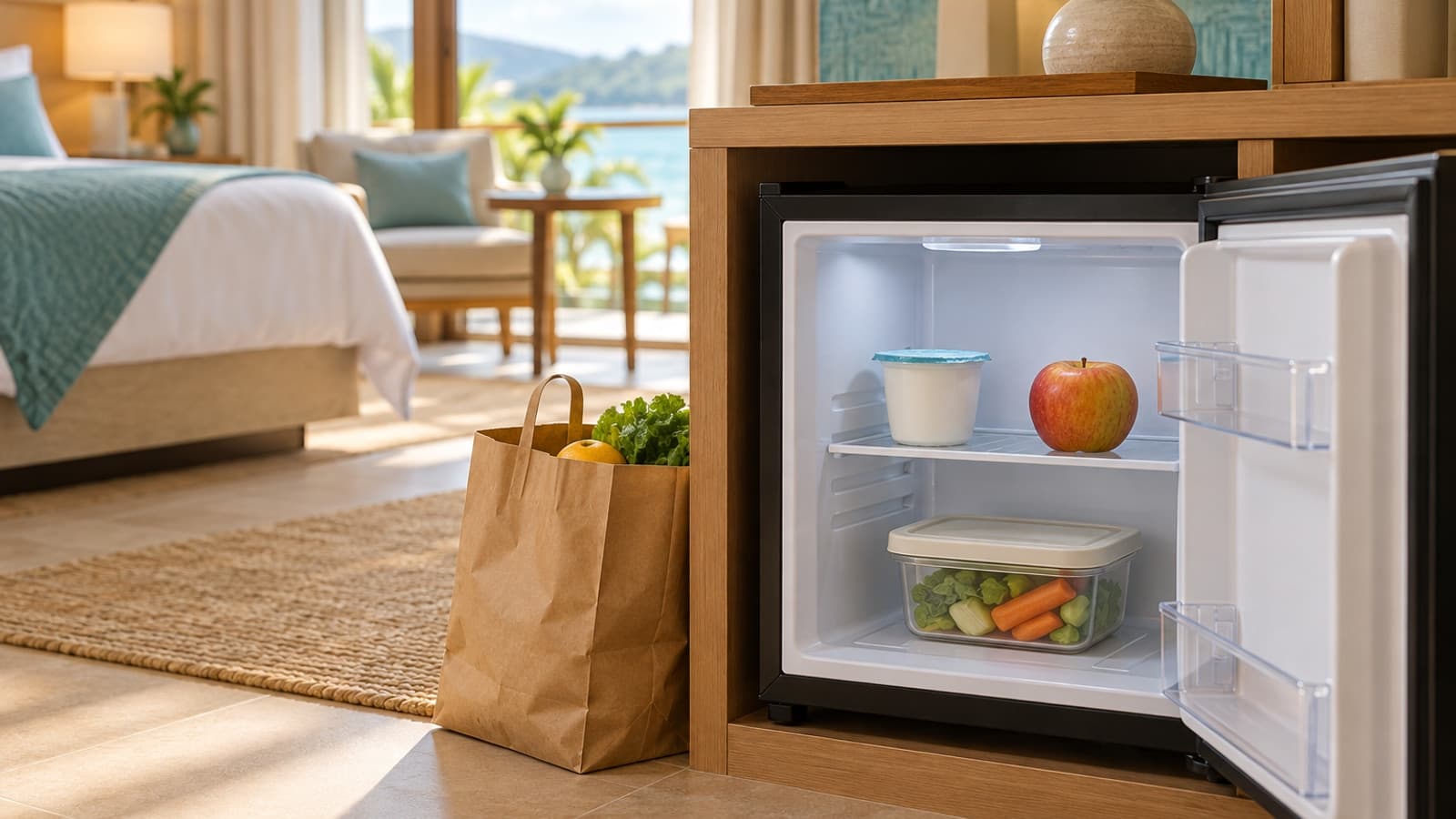
You arrive at the hotel tired and hungry. The room has a coffee maker, but the “kitchenette” you imagined turns out to be a small counter and a mini-fridge.
Meals are still possible. First find out what the room can really do, then pick a few foods that suit your schedule and appetite.
Check the room before shopping
Ask whether there’s a refrigerator, a microwave and a place to wash utensils. Some rooms have a beverage cooler that isn’t designed to keep perishable food at a safe temperature. A refrigerator thermometer can tell you whether the compartment is at 40°F or below; a cold-feeling drink isn’t a reliable test.
If you can’t confirm safe refrigeration, choose foods that can be stored at room temperature unopened or buy a perishable meal just before eating it. Hotel staff may know about a shared refrigerator or microwave, but availability and access vary.
Check the grocery options too. A store near the hotel might close before your arrival, while the lobby shop could have a limited selection. Look at opening hours and travel time before planning a full shopping trip.
Put together one day of flexible meals
For breakfast, a shelf-stable oatmeal cup prepared as directed and a piece of fruit may be convenient. If you have a reliable refrigerator, yogurt with fruit is another possibility. Check whether the oatmeal needs a microwave or hot water and use only the equipment intended for that purpose.
At lunch, a ready-made sandwich bought close to mealtime may save you from preparing ingredients in a small room. For dinner, you might choose a prepared meal from a grocery store or assemble crackers, a suitable shelf-stable bean pouch and a piece of fruit. Follow each package’s instructions; some shelf-stable foods still need heating before eating.
These are examples, not a required menu. Choose familiar foods that fit your allergies, budget and the room’s equipment. If your appetite is smaller on a GLP-1, start with an amount that feels comfortable and plan another eating opportunity later if needed.
Buy for the actual stay
For a two-night trip, a few individual items can be easier to manage than large containers. A larger package may still make sense if you’re sharing it or know you’ll use it. Check what utensils come with ready-made foods and ask the front desk if you need a spoon or napkin.
If your schedule includes a conference breakfast or a dinner with colleagues, count those opportunities before buying groceries. Keep a small backup for a meeting that runs late rather than assuming every planned meal will happen on time.
Handle leftovers carefully
Refrigerate perishable foods promptly. As a general guide, don’t leave them at room temperature for more than two hours, or more than one hour when the temperature is above 90°F. If you can’t tell how long food has been warm or whether the fridge stayed cold enough, don’t taste it to decide whether it’s safe.
Use a clean, covered container and follow food-specific storage directions. A meal you won’t have time to refrigerate after a restaurant visit may be better ordered in a smaller amount. Ice in a hotel bucket isn’t a substitute for checking that a cooler can hold a safe temperature.
Keep the rest of travel simple
Place drinking water where you’ll see it and check the next day’s schedule for a realistic meal break. If persistent nausea or another symptom makes it hard to eat or drink, contact your care team for advice.
Our travel-day eating guide covers the journey itself. Once you’re at the hotel, knowing the room’s limits makes the next food decision much easier.