










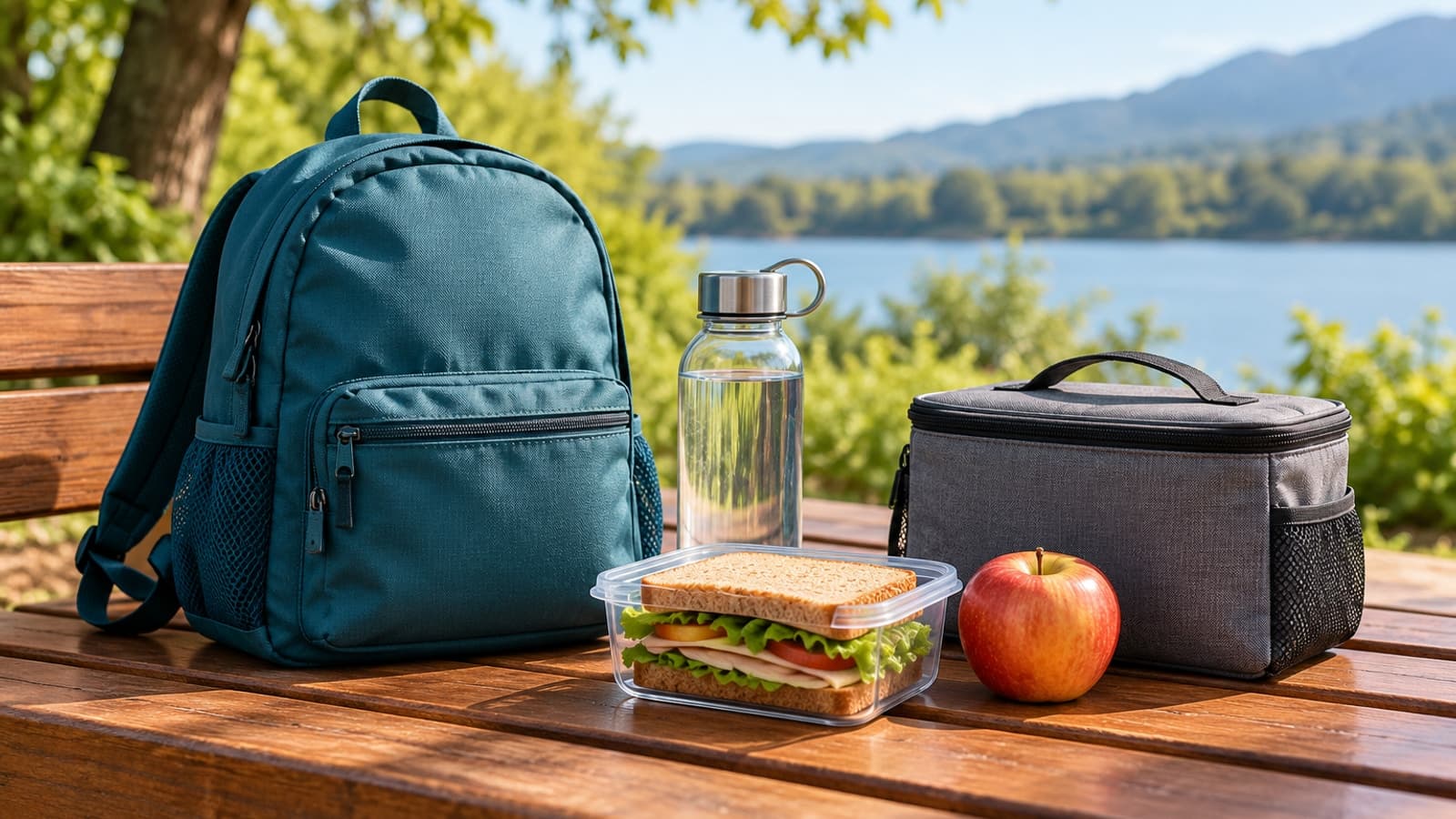
Travel days have a way of moving lunch to the bottom of the list. The gate changes, the traffic slows, or the only nearby food is something you don’t feel like eating. A smaller appetite during GLP-1 treatment can make it even easier to go a long time without a meal.
Pack for the delay as well as the journey
Bring a familiar option that fits your route and any transport rules. Whole fruit, crackers, nuts if suitable, or a sealed shelf-stable snack may be easier to keep handy than a full meal. Think about what you can comfortably eat when the day runs late.
If you pack yogurt, meat, eggs, or other perishable food, use appropriate cold storage. A sandwich left in a warm car for hours isn’t a dependable backup. Check how you’ll keep food cold and when it needs to be eaten.
Choose a meal you already know
A travel day usually isn’t the best time to test a huge meal or a food that often bothers your stomach. Look for a manageable combination: a sandwich, soup with another food, or a simple plate with protein and a side.
You can order a smaller amount and have another eating opportunity later. If you save leftovers, make sure you can store them safely. Carrying a container around all afternoon may not work.
Make drinks and breaks part of the route
Keep fluids accessible and follow any fluid guidance from your care team. On a road trip, plan reasonable stops for food, drinks, and movement. During a flight, a reminder can help you notice that several hours have passed.
Don’t deliberately go without fluids just to avoid stopping. If nausea or another symptom is making drinking difficult, get advice before a long journey.
Keep the medicine plan separate
Food planning doesn’t replace checking your medicine’s storage and travel instructions. Confirm those details with the pharmacist, especially for a long trip or a change in time zone.
Before leaving, decide on one meal option and one backup. That small amount of preparation leaves you with fewer decisions when you’re tired, delayed, or somewhere unfamiliar.