










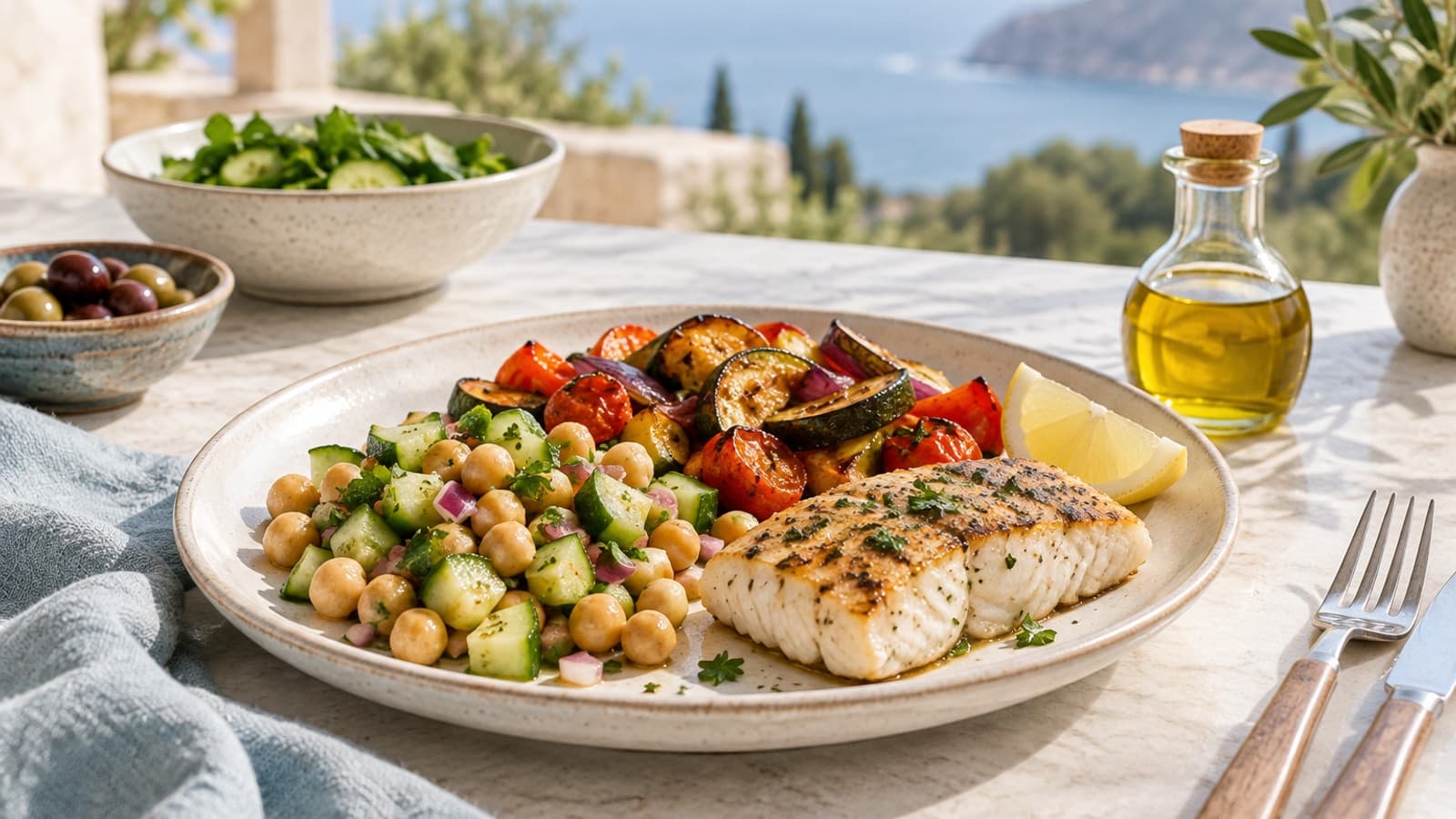
A Mediterranean-style meal might be a bowl of lentils and rice, fish with vegetables, or toast with a bean spread. It doesn't have to be an elaborate dinner, and it doesn't have to come from one particular country.
There is no single Mediterranean menu you have to follow. Eating patterns around the region vary. Many share familiar elements: vegetables and fruit, grains, beans, nuts or seeds, olive oil and a mix of other foods.
Start with what is already in your kitchen
Look for an easy meal you make regularly. Could you add beans to a soup, use olive oil in a dressing or serve vegetables alongside a favorite grain? You might already be eating some of the foods associated with this pattern.
Frozen vegetables, canned beans and ordinary grocery-store olive oil can all be practical. You don't need imported ingredients or a special subscription. Choose foods that fit your budget, culture and taste.
The pattern can include fish, poultry, eggs or dairy for people who eat them. If you avoid one of those foods, work with the options you enjoy and tolerate. Nuts and seeds can be useful for some people, but they aren't appropriate if you have the relevant allergy.
Make the portion fit your appetite
If you're taking a GLP-1, a plate that looked normal a few months ago may now feel like too much. Start with an amount you can manage and save the rest safely for later.
For example:
- Put a small serving of chickpeas, rice and cooked vegetables in a bowl.
- Pair fish or tofu with potatoes and a vegetable you like.
- Have yogurt with fruit and a little grain or seed topping if those foods suit you.
- Spread a checked bean dip on toast and add sliced cucumber.
These are starting points rather than required combinations. If raw vegetables feel uncomfortable, cooked vegetables may be easier for you. If beans cause gas, a smaller portion or a different protein food may work better.
Use fat for flavor without forcing it
Olive oil is a common ingredient in many Mediterranean-style meals. A small amount can carry herbs and spices, make a dressing or finish a bowl of vegetables.
If rich foods leave you feeling overly full during treatment, consider the amount in the whole meal. You can add a little, taste it and decide whether you want more. You don't have to pour oil on everything to follow a pattern.
Other foods can provide unsaturated fats too. Choose around your allergies and health needs. If a clinician has given you a specific eating plan, use that guidance as the starting point.
What does the research tell us?
Researchers have studied Mediterranean-style patterns for heart health. One large study in Spain followed adults at higher cardiovascular risk and compared dietary advice, including Mediterranean-style groups given olive oil or nuts, with advice to reduce dietary fat.
That study wasn't a test of Mediterranean meals combined with a GLP-1, and it can't promise a particular result for you. Think of it as evidence about a broader eating pattern, not proof that one ingredient will cause weight loss.
Wine sometimes appears in descriptions of Mediterranean eating, but you don't need alcohol to follow the pattern. If you don't drink, there's no reason to start for this purpose.
A useful rhythm, not a checklist
Pick two breakfasts, two lunches and a couple of dinners you can repeat. A yogurt bowl, a bean soup and a fish-and-potato plate might be enough to get started. Change the seasonings or sides when you want variety.
Our balanced-meal guide offers another way to think about putting foods together. If a small appetite makes it hard to eat enough or include a variety of foods, ask your care team or a dietitian for help.
The best version is the one that fits your own table. Keep the ideas you like and leave the rest.