










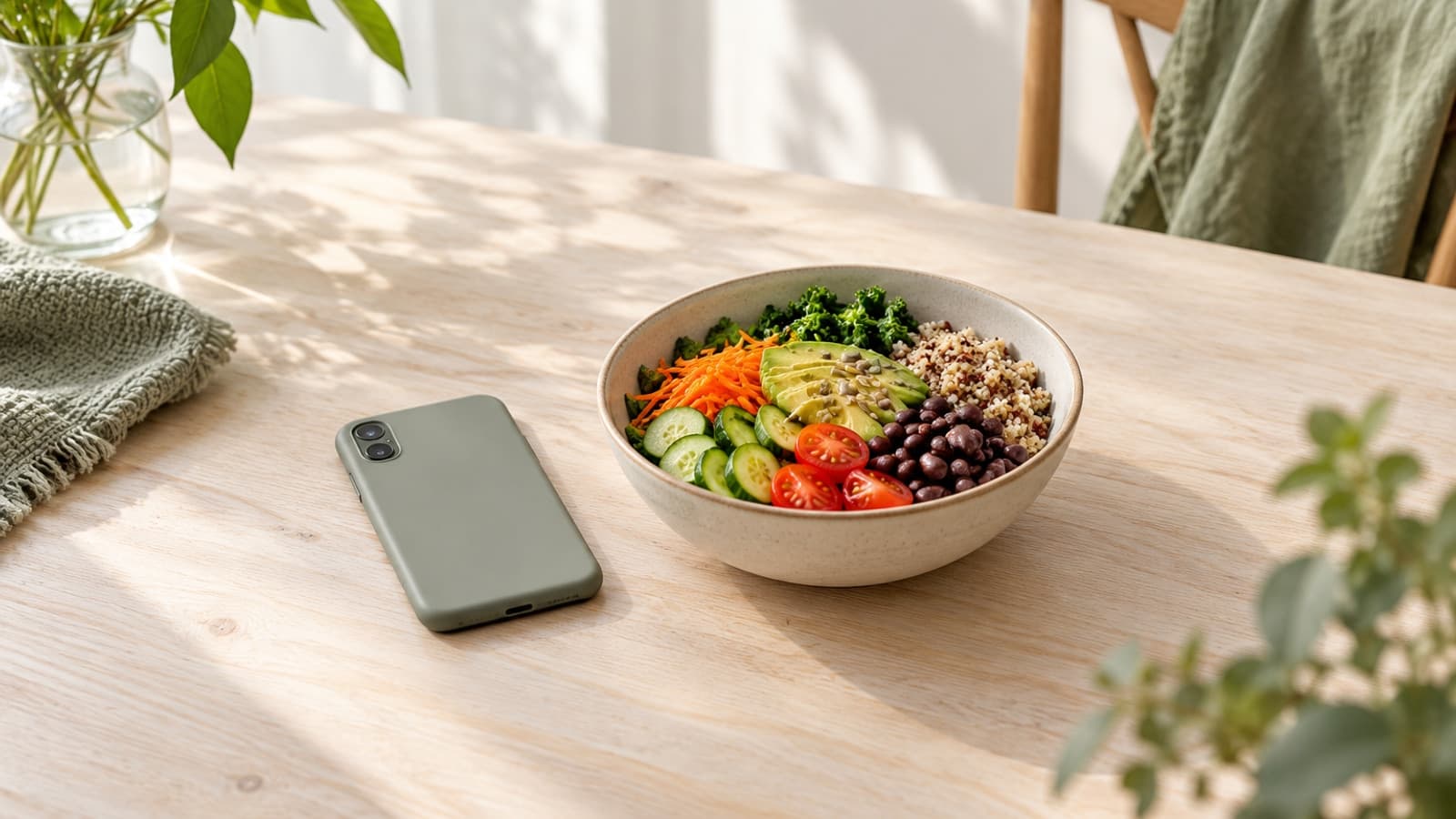
Maybe you’ve been meaning to notice whether you have time for lunch, or what makes breakfast easier on busy days. A detailed food log is one way to look, but it isn’t the only one. If you already use a phone, a few quick photos might give you a useful reminder without asking you to count every calorie.
A photo can be a reminder, not a report card. This is an optional experiment, and it should make life easier rather than turn every meal into a task.
Pick one question first
Choose something practical. You might ask, “What breakfasts leave me with enough time to get out the door?” or “What do I have available when I miss my usual lunch break?” If you’re taking a GLP-1 and your appetite has changed, you could talk with your care team about what you’re managing to eat and whether meal timing has become difficult.
A clear question keeps the experiment small. You don’t need a perfect record of your eating habits to learn that keeping a few easy lunches on hand would help.
Try a short photo window
For a couple of days, take a quick picture of the meals or snacks relevant to your question. A normal phone camera is enough; a dedicated app is optional. If you forget a photo, leave a brief note or simply move on. There is no need to recreate the day or compensate for a gap.
Add context only if it helps. “Ate at my desk,” “made this ahead,” or “felt rushed” may be more useful than trying to calculate a number from the picture. You can note how you felt if you want to, without assuming the meal caused a symptom. Bring persistent or concerning symptoms to your clinician.
Look for something you can use
At the end of the short window, scroll through the pictures with your original question in mind. Maybe you notice that a prepared lunch helps on office days, or that eating with a friend gives you a break you enjoy. Choose one small change to try, then decide whether you need the photos anymore.
A picture can’t reliably show every ingredient, amount or detail of what you ate. It also can’t tell you how much nutrition you absorbed or whether a meal is “good” or “bad.” If you need help meeting your needs, a dietitian can use the photos as a starting point for a fuller conversation.
Keep the pictures where you want them
Before saving or uploading food photos, check where your phone stores them and whether they sync to a cloud account or shared album. If you try an app, review its photo permission and sharing choices. Settings differ, so take a moment to look at your own device instead of assuming everything stays only on the phone.
You can crop out people, documents or identifying details before sharing anything. Decide in advance whether you want to keep the pictures, delete them from the device, or ask an app about deleting stored data. Removing an app by itself may not remove information held in an account.
If you choose to share the pictures with a professional, ask which sharing method they prefer and include only the images you want them to see. A short note about your question can make the conversation more useful.
Know when to put the camera away
If photographing food makes you anxious, preoccupied or uncomfortable eating around others, stop and consider another approach. Anyone with an eating-disorder history or distress around tracking can discuss options with their treatment team before starting.
You might prefer a short written reminder, a meal-planning conversation, or no record at all. Our weekly habit tracker offers other ways to notice routines. Choose what helps you, and give yourself permission to stop when it no longer does.