










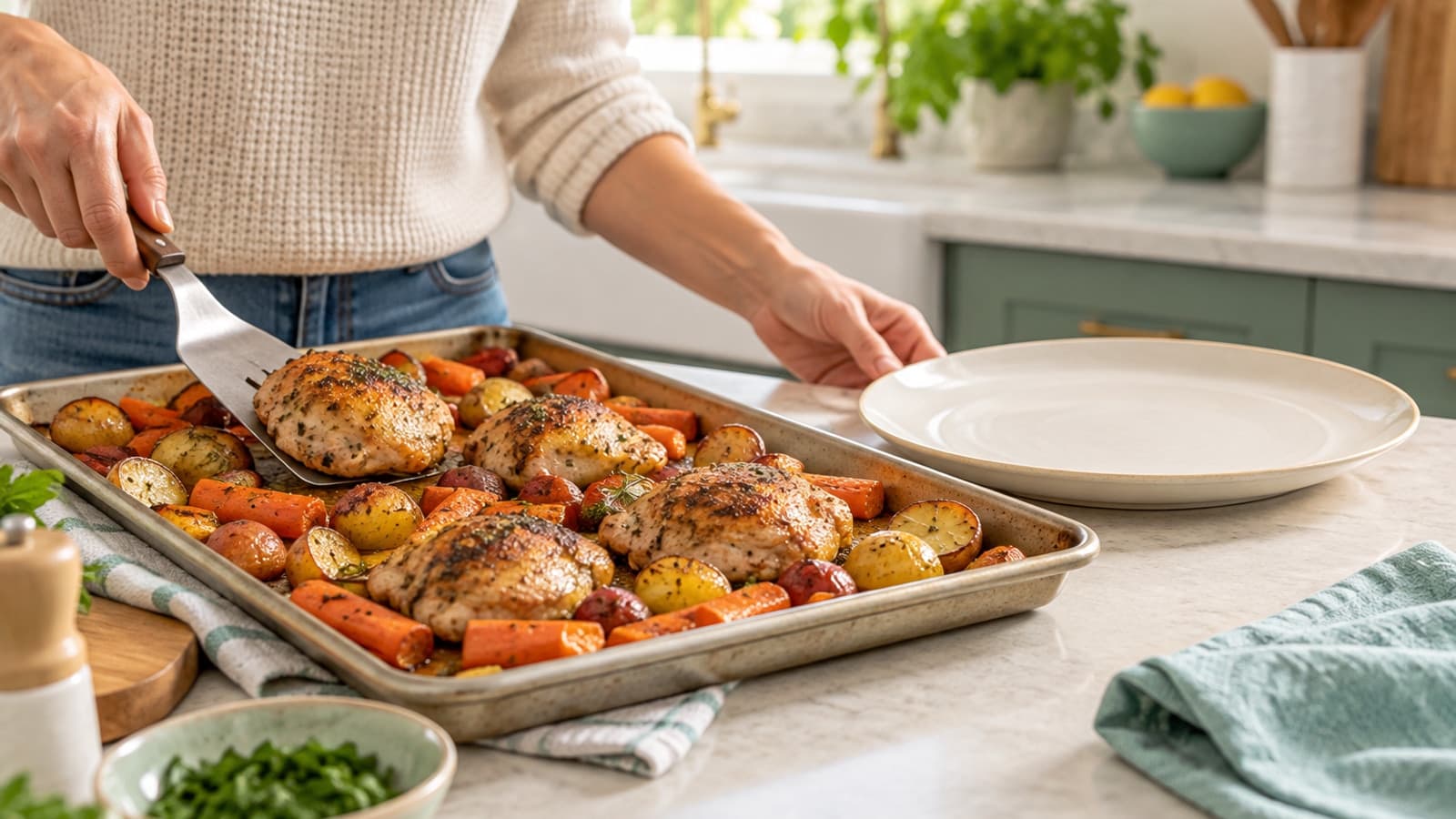
A sheet-pan dinner is useful when people at the table want different amounts. The ingredients can stay separate, so one person can take more potatoes while another starts with a smaller plate.
The part that takes a little planning is timing. A carrot, a piece of chicken and a tender vegetable won't necessarily be ready at the same moment.
Pick a familiar combination
Start with a protein food, a vegetable and a starch you enjoy. That might be chicken, carrots and potatoes, or tofu with peppers and a grain served alongside. Choose foods that fit your allergies and dietary needs.
If you haven't made the combination before, use a reliable recipe as a starting point. The size and thickness of the pieces, the pan and the oven all affect cooking time. A photo of a beautifully browned tray can't tell you whether the food is safely cooked.
For a smaller household, use a pan that gives the ingredients space rather than automatically preparing a full-size recipe. If you're cooking for several people, a second pan may be more practical than stacking everything together.
Start with the ingredients that need the longest
Firmer vegetables and potatoes may need more time than softer vegetables. Cut pieces of the same ingredient to a reasonably similar size, then follow a recipe that accounts for the differences. Some recipes start the longer-cooking foods first and add quicker items later.
Spread vegetables in a single layer where possible. A crowded heap can make it harder to cook them evenly. Season with familiar herbs or a sauce you enjoy, but avoid adding a sauce containing raw-meat juices to food that is ready to serve.
Check the oven as directed and use a mitt when handling the hot pan. Turn or rearrange ingredients if the recipe calls for it. Cooking until a vegetable is tender is a texture choice; safely cooking meat or poultry requires a temperature check as well.
Keep raw poultry separate from ready-to-eat food
Use separate utensils and cutting surfaces for raw chicken and for ingredients you won't cook afterward. If raw poultry and vegetables share a tray, follow a reliable recipe designed to cook the entire combination safely. Never serve vegetables raw if they have touched raw poultry or its juices; cook them or discard them. If you are unsure how to prepare the combination safely, use a separate pan for the poultry.
Check chicken and other poultry in the thickest part with a food thermometer. It needs to reach 165°F throughout. A golden surface or a timer alone doesn't establish doneness.
If you're using another protein, follow the relevant food-safety instructions for that food. Clean the thermometer and utensils after contact with raw or undercooked ingredients.
Let everyone build a plate
Bring the finished components to the table, or serve them separately in the kitchen. If your appetite is smaller with a GLP-1, start with what feels comfortable and keep more available if you want it. Someone else at the table can serve a different amount.
A sauce, yogurt topping or squeeze of lemon can be offered on the side. Check the ingredients for allergies and choose flavors that sound good to you. The meal doesn't need a special “diet” version to allow flexible portions.
Plan tomorrow while you clean up
Put suitable leftovers into shallow containers and refrigerate promptly, within two hours or one hour if exposed to temperatures above 90°F. Reheat leftovers to 165°F and check with a thermometer. A small portion of vegetables can become part of a wrap or grain bowl later.
Our family dinner guide has more ways to serve a shared meal. Pick a combination you enjoy, give it room to cook and let each person decide what goes on their plate.