










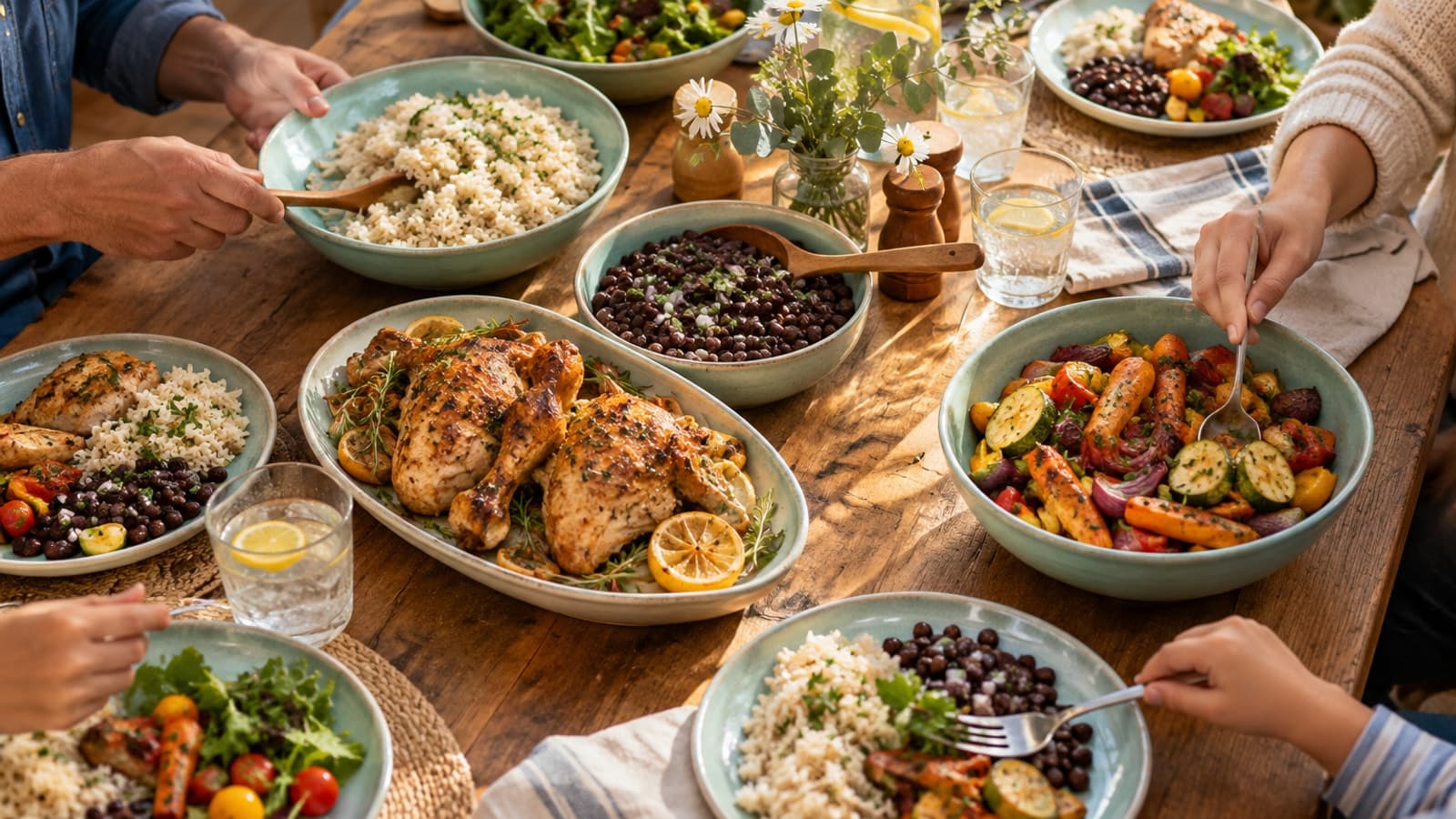
Cooking a separate “diet dinner” can make an already busy evening feel harder. If your appetite has changed with GLP-1 treatment, a shared meal with flexible components may be a more workable option. People at the same table don’t need identical portions.
Put the components on the table
A bowl-style dinner is easy to adapt. Offer rice or another grain, beans, chicken or tofu, vegetables, and a few toppings. Each person can assemble a plate that suits their appetite and preferences.
Other possibilities include a tray of roasted vegetables with a protein food and bread, pasta with separate sauce and sides, or soup with a sandwich option. Use ingredients your household already enjoys. The point is flexibility, not a new set of food rules.
Start with a comfortable serving
You can serve a modest amount and return for more if you want it. Give yourself time to notice how the meal feels rather than trying to keep pace with everyone else.
If you’re satisfied earlier, store suitable leftovers safely. A small remaining portion might become lunch or part of another meal. It doesn’t need to be finished just because it’s on the plate.
Keep the conversation ordinary
You don’t owe the table a running explanation of your appetite. A simple “This amount feels good to me tonight” can be enough. Ask family members for practical support, such as leaving toppings separate or helping put leftovers away.
Avoid making someone else’s serving the benchmark for yours, especially with children at the table. Different people have different needs. Your treatment plan isn’t a set of rules for the whole household.
Use an easy version on busy nights
A prepared protein food, microwave grain, and frozen vegetables can form a meal without much cooking. A bean soup and toast may be all the kitchen effort you have available. Convenience can help keep dinner happening.
If small portions turn into consistently inadequate intake, or symptoms make shared meals difficult, bring that up with your care team or dietitian. A flexible dinner routine should support nourishment and family life together. It shouldn’t become another source of pressure.