










Dinner is rice, vegetables and the protein you made yesterday. That's convenient, but it doesn't have to taste exactly like yesterday's dinner. A good sauce can make a familiar meal feel different.
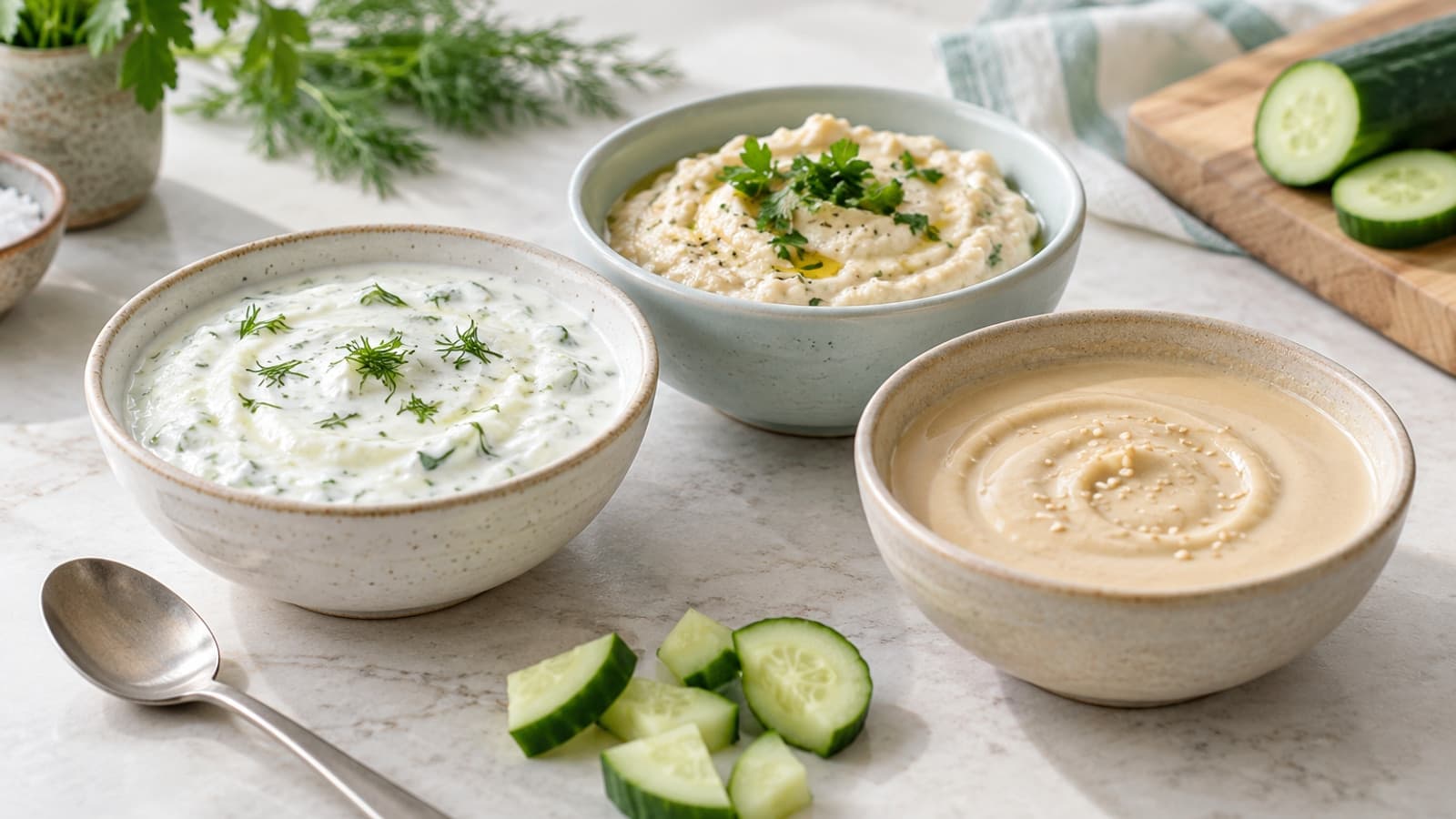
Three useful starting points are plain yogurt, cooked beans and tahini. They have different flavors and ingredients, so choose the one you enjoy and can eat safely. These are flexible ideas rather than interchangeable nutrition formulas.
1. A cool yogurt sauce
Stir chopped herbs into plain yogurt and add a little lemon if you like it. For a thinner sauce, add water a little at a time. Spoon it over warm vegetables, use it beside cooked chicken, or serve it with a grain bowl.
Yogurts differ in thickness, tang and protein content. If those details matter to you, compare the labels. A thicker yogurt may make a good dip; a thinner one may be easier to drizzle.
Yogurt made from dairy contains milk proteins. Lactose-free dairy is not suitable for someone avoiding milk because of an allergy. Choose another base if milk is an allergen for you, and check any nondairy product's ingredients as well.
2. A blended bean sauce
Blend or mash cooked white beans with a little water, a suitable oil and seasonings you like. Stop when the texture works for you: thick enough for a spread, or softer for spooning over a plate. A fork can do the job if you don't mind a less smooth result.
Try it in a wrap, alongside roasted vegetables or stirred into a bowl of warm grains. Beans contribute protein, but a spoonful of sauce is not automatically the same amount of protein as a serving of another food. The amount you use and the rest of the meal both matter.
If beans cause discomfort, try a different sauce or discuss a manageable approach with a dietitian. Don't use a food you're allergic to as an experiment.
3. A tahini drizzle
Tahini is made from sesame. Stir a little with water and season to taste; the mixture can change consistency as you mix, so add liquid gradually until it reaches the texture you want. A small spoonful can bring a distinct flavor to cooked vegetables, a grain bowl or a wrap.
Sesame is an allergen. If you avoid it, choose a sauce without sesame and check prepared sauces and other ingredients carefully. Milk, soy, nuts and other allergens can appear in sauces too, depending on the recipe.
If rich foods feel uncomfortable, the amount and the rest of the meal may matter. Start with a little sauce and see what suits you, rather than assuming every creamy topping will feel the same.
Use what is already in the kitchen
One herb, a little black pepper or a squeeze of lemon can be enough to change a sauce. If you don't like tart flavors, leave out the lemon. Try a small amount before seasoning the whole bowl, and add more of a flavor only if you want it.
For a meal you take to work, pack a perishable sauce in a small covered container and keep it cold. Add it when you're ready to eat so the texture of the rest of lunch stays the way you like it.
Make enough for the way you eat
You don't need a large batch. Mix a small amount for a meal and keep any perishable remainder covered in the refrigerator promptly. Follow storage guidance for the specific ingredients, use clean utensils and discard food that hasn't been kept safely.
Keep the sauce separate until serving if you want leftovers to stay more flexible. Tomorrow's vegetables might become a wrap with yogurt sauce or a bowl with the bean spread thinned into a dressing.
Flavor should work for you. Skip an ingredient that doesn't agree with you, choose herbs you already have and adjust the texture a little at a time. For ideas on what to serve with your sauce, see our balanced-meal guide.