










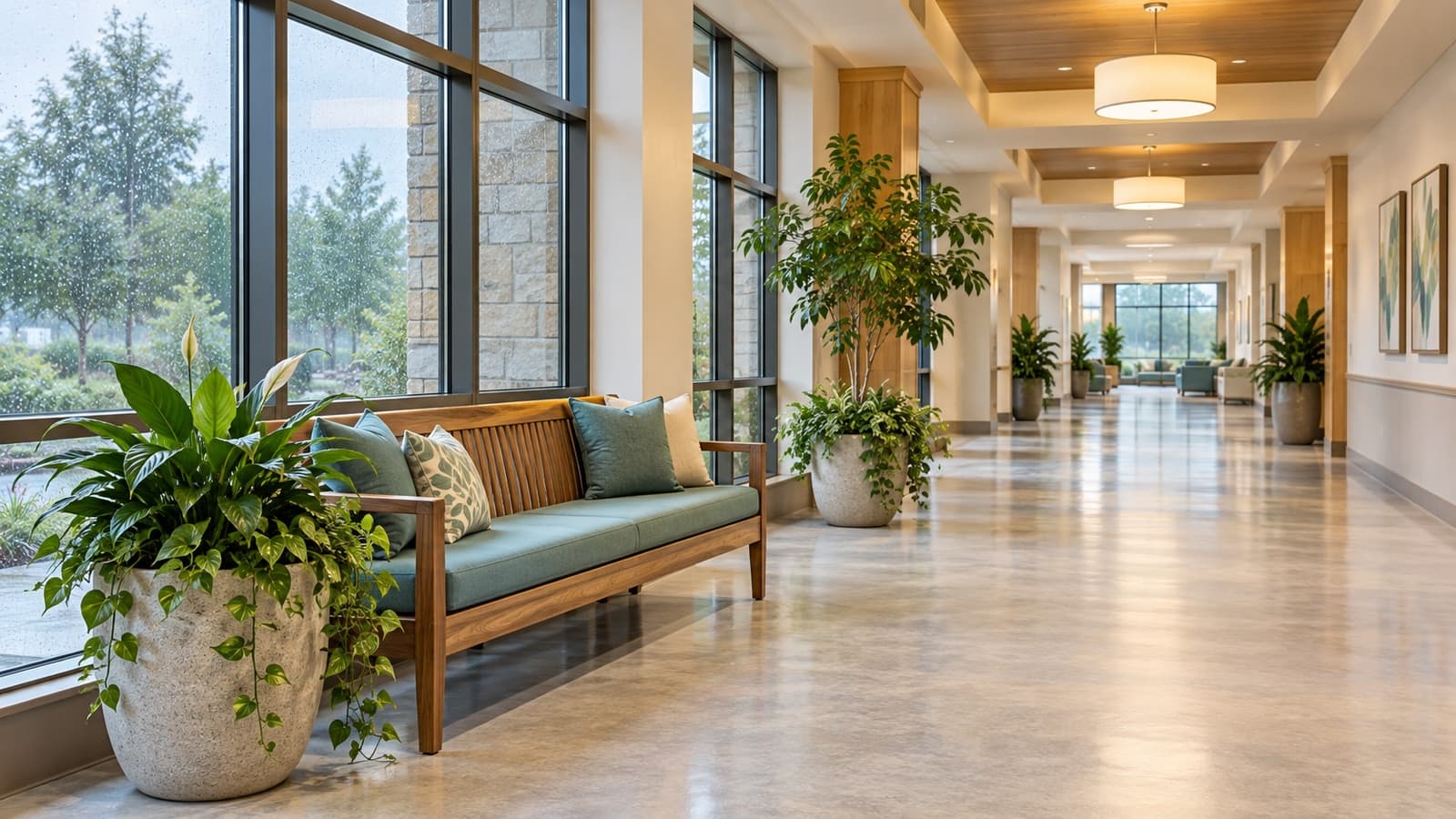
The forecast says rain all afternoon. You could wait for it to clear, but the rest of the week is already full. An indoor walking route gives you another option without requiring a treadmill or a complicated workout.
It can be as simple as a clear path through your home or a loop around a community building that welcomes walkers. A useful indoor route starts with a clear path. Choose somewhere with enough room to turn around and a spot where you can pause without blocking someone else’s way.
Look at the space you already have
At home, walk through the route once before you start. Move loose cords, small rugs or other trip hazards out of the way, and make sure the floor isn’t slippery. Leave doors open or closed in a way that keeps the route clear. Choose a well-lit area and wear footwear that feels secure on that surface.
You don’t need a long hallway. A comfortable loop through two rooms, or a short path with plenty of space to turn, can work. If the available space is crowded, shared or difficult to navigate safely, another location may be a better choice.
Keep a chair or other appropriate resting place nearby. If you use a mobility aid, make sure the route accommodates it and follow the guidance you’ve been given. Don’t move furniture in a way that blocks an exit or makes the space harder for someone else to use.
Try a place outside the house
A mall, community center or recreation facility may offer sheltered room to walk. Before making the trip, check the hours, accessibility, any fee and whether independent walking is permitted. Some malls have organized walking times; others may be much quieter at certain hours.
Look for level surfaces, accessible entrances, bathrooms and somewhere to sit. A building that works well for one person may not work for another, so check the actual layout instead of assuming it matches a photo. Ask staff which areas are open and avoid service corridors or other restricted spaces.
Think about the trip there and back, too. Parking, transit, temperature and the walk from the entrance may matter as much as the indoor loop itself. If the weather makes travel unsafe, a home option or a rest day can make more sense.
Give the route a trial run
Walk one easy lap or a short stretch first. Notice tight corners, other people, wet entrance mats and places where you may need to slow down. Leave room for shoppers, staff and wheelchair users. There’s no need to weave through a crowd to keep moving.
Choose a natural stopping point: perhaps a bench, a window or the end of the hallway. You can take a break there and decide whether another lap sounds appealing. If counting laps feels tedious, put on music at a volume that still lets you hear what’s happening around you, where the venue allows it.
Make the route yours. One day you might walk while waiting for an appointment; another day you might meet a friend and catch up. You can stop early if your schedule changes. A short indoor walk is still a way to take a break from sitting.
Keep comfort on the checklist
Bring water if appropriate and plan food around your usual needs. If a GLP-1 leaves you dizzy, vomiting or unable to drink, contact your care team and address that before exercising. Stop for pain, feeling faint or unusual breathlessness. Call 911 for new or unexplained chest pain or other possible signs of a heart attack. Other severe symptoms need emergency attention too.
After trying a location, save a note with the entrance, hours and quietest time. That way the next rainy day requires less planning. If indoor walking isn’t comfortable or accessible, our joint-friendly cardio guide offers other possibilities to explore.