










If your idea of cardio involves running on pavement, joint discomfort can make exercise feel off-limits. But cardio describes a type of activity, not a single sport. There are several ways to move at a steady effort, and the best starting option depends on your body and preferences.
“Joint-friendly” doesn’t mean an activity is pain-free or appropriate for everyone. It means looking for a version you can do with a manageable load and comfortable movement.
Choose the movement that feels workable
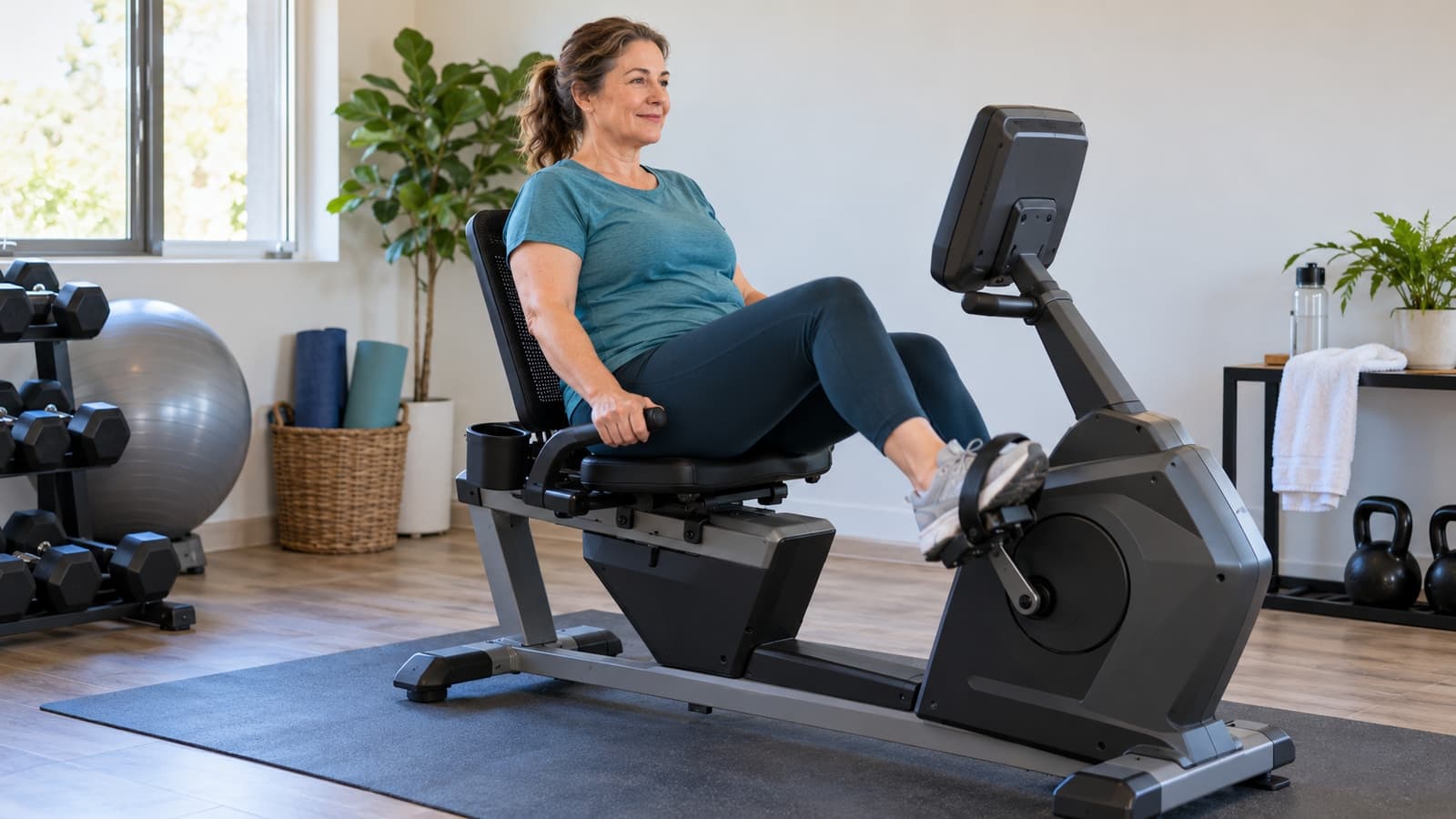
Walking on a level surface may be a good fit for one person. Another might prefer a stationary or recumbent bike. Water walking or a suitable pool class can offer a different way to move when access and health allow it.
Think about practical details as well as the activity name. Is there a place to sit? Can you get on and off the equipment safely? Is the pool easy to enter? Does the bike adjust to your body? Those details can decide whether a plan is usable.
Start with a small test
If you’ve been cleared for the activity, try a short, comfortable session before committing to a long one. Notice how your joints feel during it, later that day, and the next morning.
Repeat a tolerable starting level before adding more. Increasing time, speed, resistance, and hills together makes it harder to tell which change was too much.
If you have an injury, ongoing joint pain, significant balance issues, or a chronic condition, a clinician or physical therapist can help you choose and adapt the activity. Equipment labeled “low impact” isn’t a substitute for that advice.
Let comfort guide adjustments
Sharp pain, increasing joint pain, or altered movement is a reason to stop and reassess. Don’t use pain as proof of a productive session. Chest pain, faintness, or unusual breathlessness also needs attention, urgently when severe.
On a day when digestive symptoms or poor intake leave you feeling unwell, reduce the demand or rest. The exercise plan should work alongside treatment, not compete with it.
Make the routine easy to return to
Choose an option that fits your location, budget, and schedule. A short walk near home may happen more reliably than a class across town. Having a second option can help when weather or access changes.
Keep a note of what felt good and what didn’t. You’re looking for a sustainable way to move more often, with enough flexibility to keep your joints and the rest of you in the conversation.