










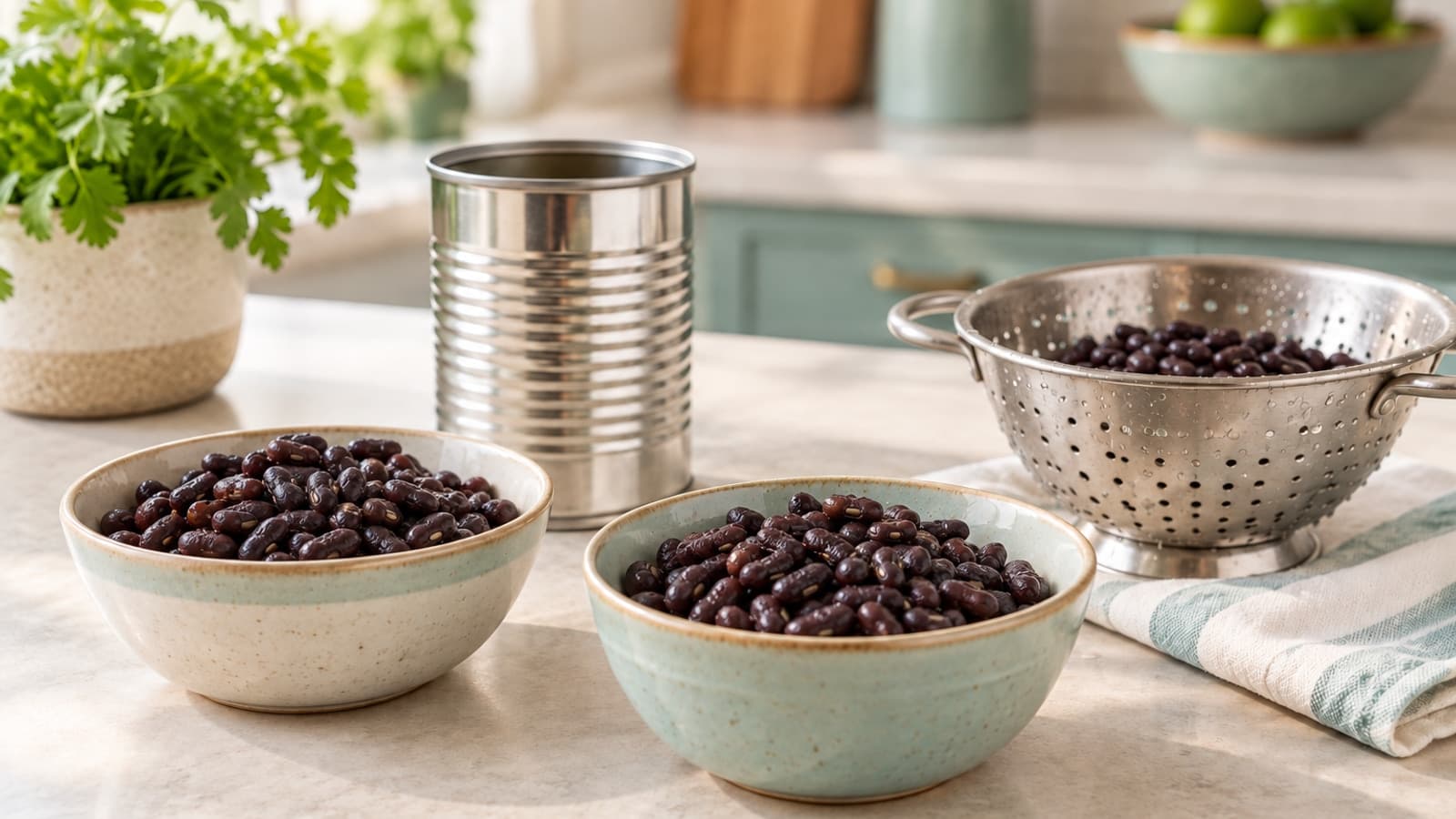
A can of beans is one of those quiet pantry helpers. It waits until you need a quick lunch, then turns rice, a tortilla or a little soup into something more substantial.
The shelf has plenty of options, though: seasoned, plain, lower-sodium, different sizes and different prices. Choose the can that works for the meal you have planned.
Take a look at the sodium
Labels can differ even when the cans look alike. When we checked Goya’s online information on October 31, 2026, its regular black beans listed 410 milligrams of sodium per half-cup serving. Its organic black beans listed 135 milligrams for the same stated half-cup, 122-gram serving. Each listed eight grams of protein.
That’s a comparison of two specific products, not a rule about all organic or regular beans. Recipes and labels can change, so look at the can you’re buying. If sodium is something you watch, compare the serving amount as well as the number.
Plain beans give you room to season the meal yourself. A prepared or seasoned can may be convenient and flavorful, but the seasonings can change the sodium and ingredient list. Look for anything you need to avoid, especially if you have an allergy.
To rinse or not to rinse?
Drain and rinse beans when you want a cleaner, less salty starting point. In a published study, draining and rinsing reduced measured sodium per serving compared with serving the tested beans in their packing liquid; the change varied by product. It doesn’t let you calculate an exact number for every can at home.
You might keep some liquid for a soup or another recipe that uses it. The liquid can help create a thicker texture, while rinsed beans are handy in a salad or wrap. Follow your taste and the recipe, and remember that using the liquid changes what goes into the meal.
If beans are new to you or you find them uncomfortable, start with an amount that feels manageable and increase gradually if it suits you. People’s tolerance differs. If digestive symptoms are persistent or concerning, talk with your care team rather than assuming the beans are the cause.
Make one can do a few jobs
Try a small scoop of black beans with rice, avocado and cooked vegetables. Another day, mash some beans onto toast and add a squeeze of lime. Or stir them into soup near the end of cooking and warm them through.
You can use a modest portion and save the rest; there’s no prize for finishing a can at one sitting. If your appetite is smaller on a GLP-1, build a meal around what sounds comfortable, then make another eating opportunity available later if you need it.
For a different texture, choose chickpeas for a salad or white beans for a softer mash. They have their own flavors and labels, so compare the actual products rather than assuming every can is interchangeable.
Give leftovers a place to go
Once opened, transfer unused beans to a covered food-safe container and refrigerate promptly. Follow the package’s storage directions, label the container with the date and plan a use for it. You can also freeze suitable portions in a freezer-safe container if you won’t use them soon.
Before choosing a larger can, consider how much you’ll use and the space available to store the rest. Compare prices for similar amounts, but include the cost of anything you expect to discard. A smaller can may be a better fit for one household; a larger can may work for another.
For more pantry ideas, see eating well on a budget. Keep a can you actually like on the shelf, and you’ve already made the next busy meal a little easier.