










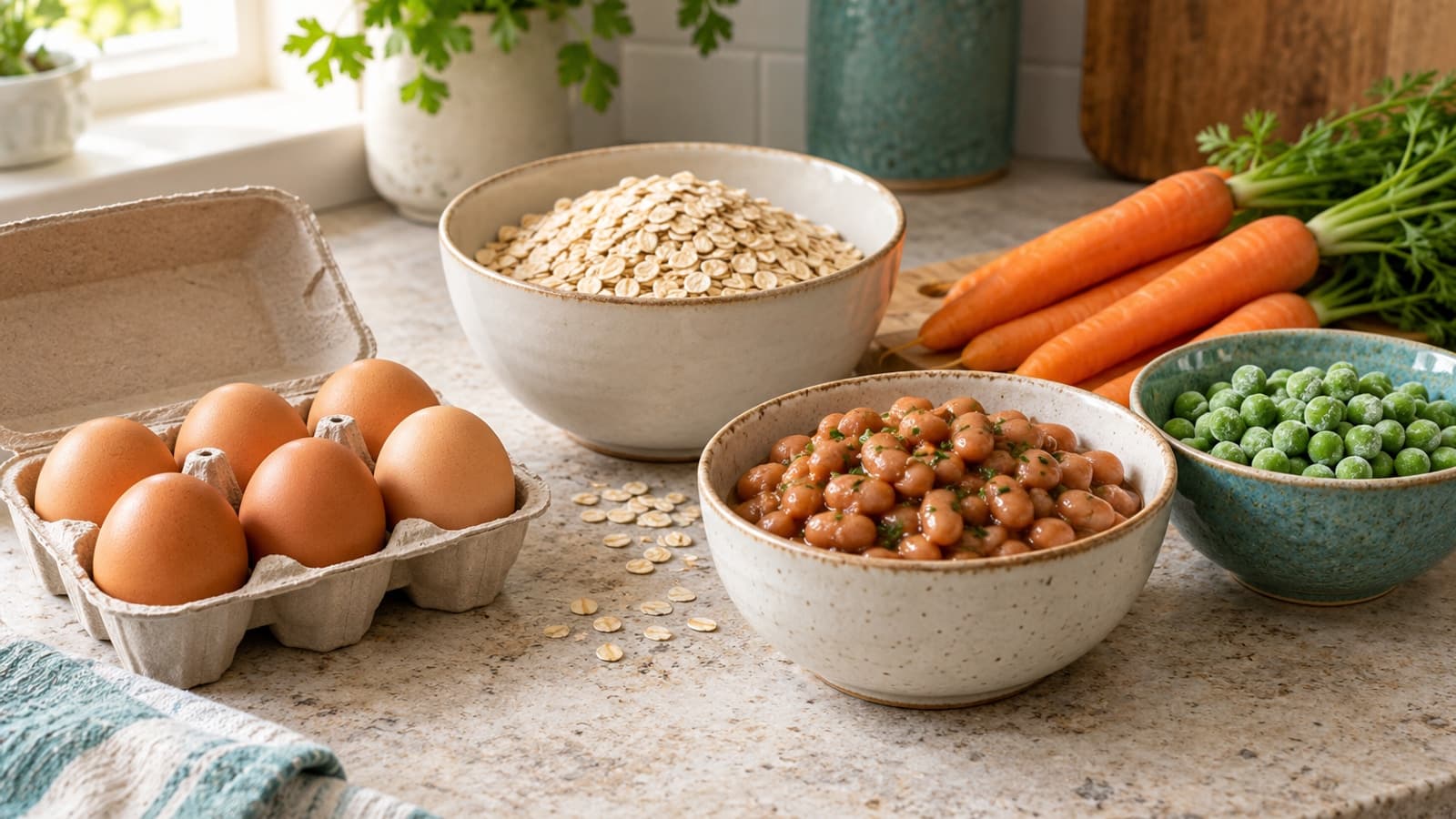
A smaller appetite doesn’t always mean a smaller grocery bill. Food can go unused when portions change, symptoms interrupt the week, or you buy ingredients for meals that no longer sound appealing. A flexible shopping plan can help.
Shop for the week you actually have
Check what’s already in the kitchen, then choose a few meals around your schedule. If you’ll be home late three nights, plan easy options for those evenings. A realistic shortcut can cost less than ingredients that sit untouched until they spoil.
Keep the list short enough to use. You can buy more produce later if needed, while keeping frozen or canned options available for backup.
Pick foods that can do several jobs
Eggs might become breakfast, a sandwich filling, or part of dinner. Beans can go into soup, tacos, or a rice bowl. Oats, plain yogurt, tofu, canned fish, and frozen vegetables may be useful too, depending on your preferences and local prices.
Compare the price per ounce or other unit when choosing between packages. A larger container is only better value if you can use or safely store it. Convenience foods can still earn a place when they help you eat regularly and avoid waste.
Leave room for changing portions
Serve an amount that feels manageable and keep more available. Freeze suitable leftovers in portions you’re likely to use, and label them with the date. You don’t need to buy single-serving versions of everything to have a smaller meal.
If a food is repeatedly difficult to tolerate, pause before buying it again. Try another option that fills a similar role rather than building a growing collection of expensive specialty products.
Spend on nourishment, not promises
There’s no need to fill the cart with products marketed specifically to GLP-1 users. Look at what a food contributes, how it fits your meals, and whether you enjoy it. A supplement or shake isn’t automatically necessary because treatment changed your appetite.
If getting enough food is difficult because of cost, tell your care team. Ask about a dietitian and local food resources. If persistent symptoms are the problem, bring those up too. The aim is a food routine you can afford and manage, with enough variety to support your needs.