










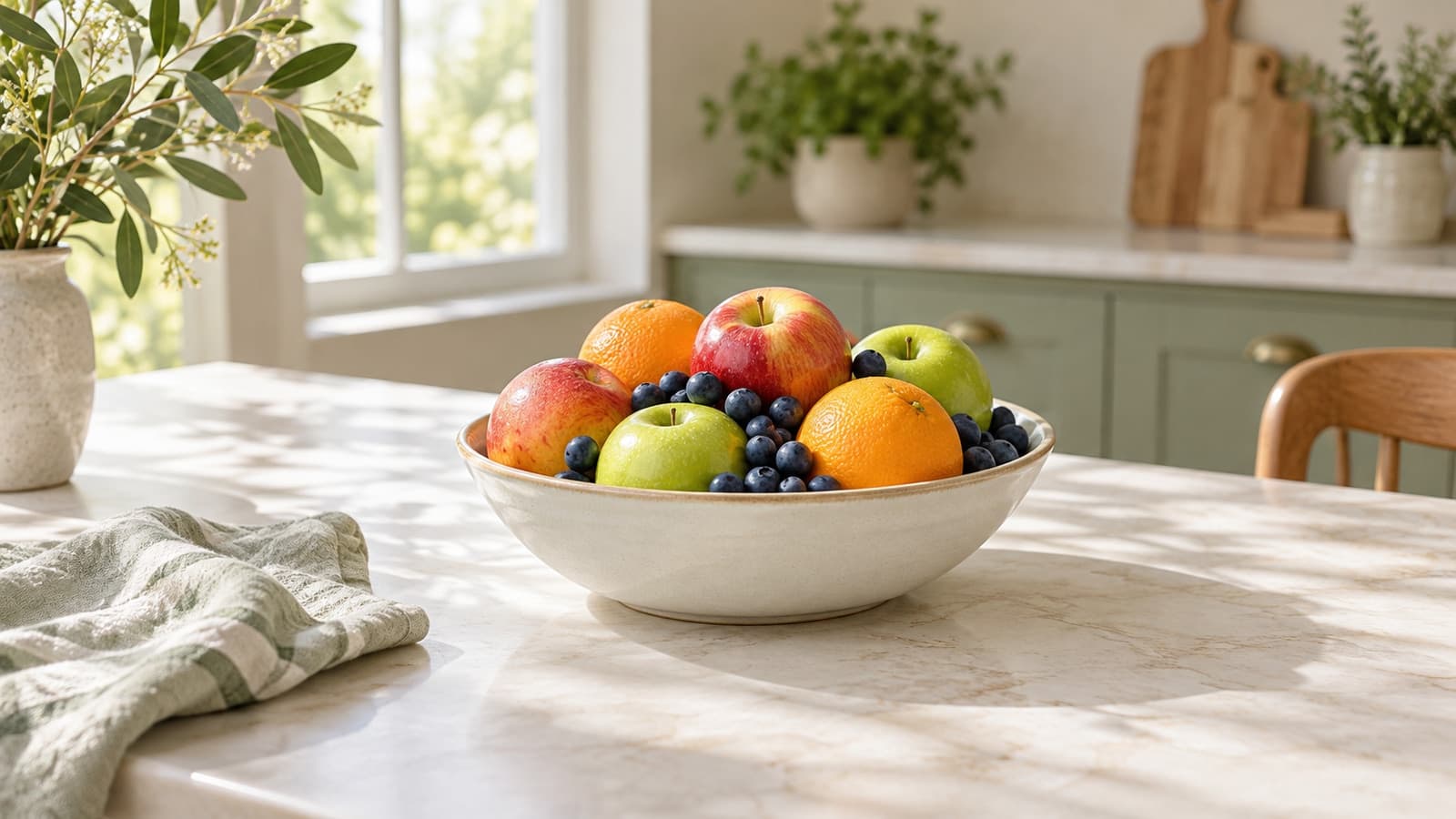
A friend tells you bananas have “too much sugar.” A video says berries are the only fruit worth eating. Suddenly the apple you used to pack for lunch feels like something to second-guess.
Fruit can fit into a weight-management plan. You don’t need to sort every fruit into a list of permitted and forbidden choices. Different fruits bring different flavors and nutrients, and the way they fit your day matters more than an alarming label on a video.
Fruit contains more than sugar
Fruit naturally contains sugar, but it also provides water, vitamins, minerals and, in whole form, fiber. An orange is not simply a spoonful of sugar; it is a whole food you peel, chew and enjoy. Those other features are part of the picture.
That doesn’t mean one fruit has a special power to cause weight loss. It means fruit can be a useful and enjoyable part of an eating pattern that supports your goals. The rest of the meal, your appetite and your preferences still count.
You may hear fruit discussed alongside carbohydrates. Carbohydrates are found in many foods, including beans, milk, rice and vegetables. Our guide to carbohydrates on a GLP-1 explains why the whole food matters more than a single category name.
Pick the form that works for you
Fresh fruit is convenient for some households. Frozen berries can be easy to keep for a bowl of oatmeal or yogurt. Canned peaches or pears can be useful when fresh options are expensive or spoil too quickly. Check the package if you want to compare fruit packed in juice, water or syrup.
The best choice may change with the season and your budget. If you like a banana with breakfast, there is no need to replace it with a fruit you dislike simply because a list online ranks one higher than the other.
If chewing, swallowing or a digestive condition makes certain textures difficult, ask your care team which forms are comfortable and appropriate for you. General food advice should leave room for your actual needs.
Build a snack you’ll enjoy
Fruit can stand on its own or be paired with another food. Try an apple with cheese, berries with yogurt, an orange alongside a handful of nuts, or grapes with a sandwich. Choose around allergies, your appetite and what sounds appealing.
On a GLP-1, your appetite may be smaller than before. If a large piece of fruit feels like too much, you could start with part and save the rest safely for later. The goal is to make eating manageable, not to make the portion as small as possible.
If you repeatedly fill up before getting enough food across the day, a dietitian can help you think through timing, variety and comfortable portions. Fruit is one part of the day, not a replacement for every other food you need.
What about diabetes?
People with diabetes can have individual advice about carbohydrate intake, meal timing and blood-sugar monitoring. If you have diabetes, ask your care team how fruit fits your treatment and the medicines you use. A list of “good” and “bad” fruits cannot account for your own circumstances.
Whole fruit and juice are also different forms. Many juices contain less fiber, and fruit drinks may have added sugar. That is a reason to look at what you’re choosing, not a reason to feel guilty about every glass.
Keep your choices flexible
Maybe fruit is part of breakfast most days. Maybe you prefer it as an afternoon snack, or you enjoy it when it’s in season. You can work with the foods you already like and add variety when it feels easy.
If a claim tells you an ordinary piece of fruit will undo all your progress, pause before changing your routine. A sustainable plan has room for foods you enjoy, including fruit.