










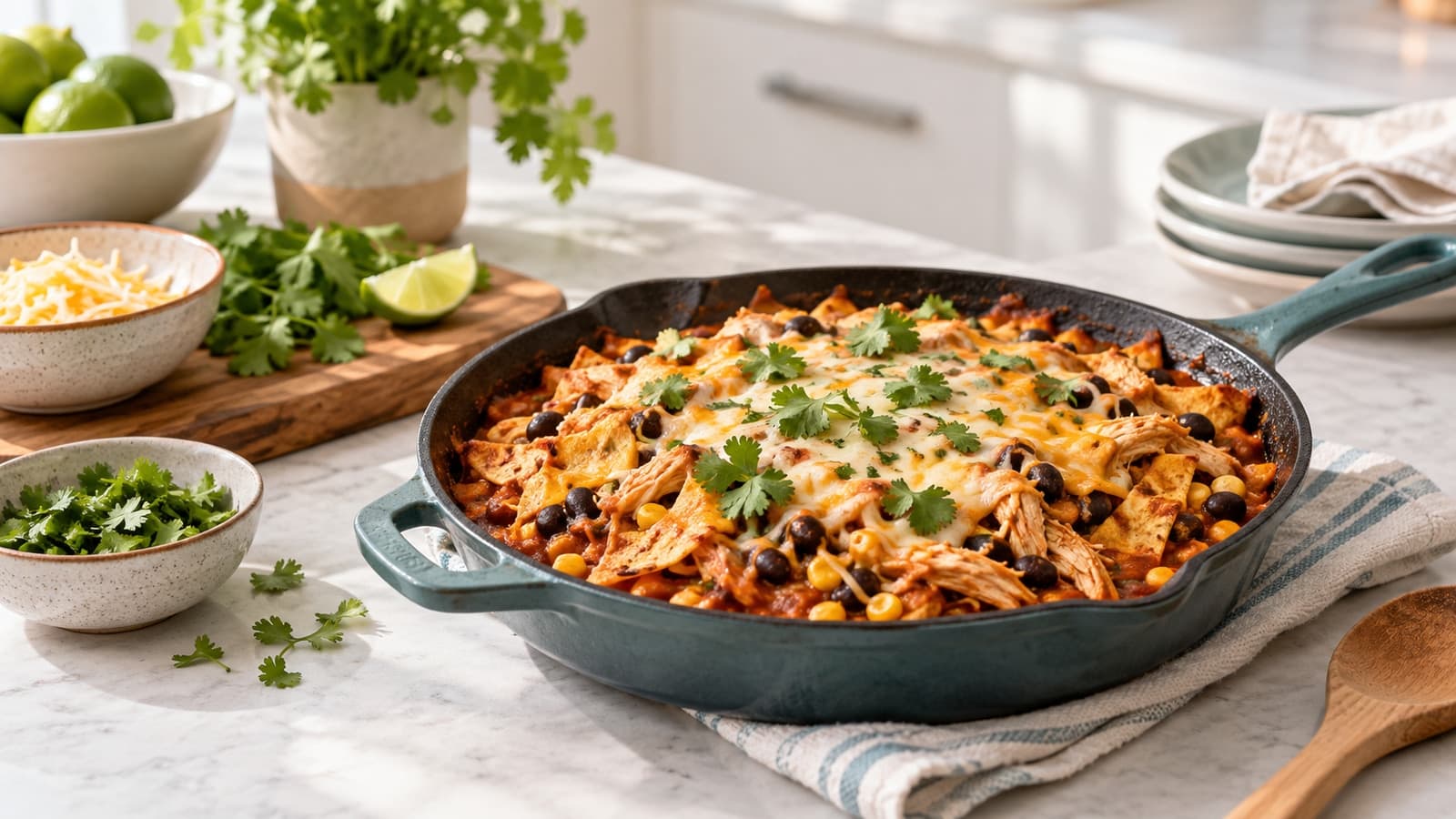
Enchilada night doesn’t always need a baking dish and a row of rolled tortillas. A skillet can bring the same familiar ingredients to the table in a looser, spoonable form.
This version starts with cooked chicken and canned black beans. It’s a flexible meal idea: use the sauce and toppings your household likes, and choose a skillet large enough to stir without spilling.
Gather the components
Start with safely cooked chicken. Shredded chicken from a meal you prepared earlier or a suitable refrigerated product can save time. You’ll also need drained black beans, corn tortillas, enchilada sauce and a vegetable such as cooked pepper or corn. A little shredded cheese is optional.
Check the ingredient lists on the sauce, tortillas and cheese if you manage allergies. Sauces vary in heat and sodium, so choose one that suits your taste. If you’re using frozen corn or another frozen vegetable, follow the package cooking directions.
Rinse and drain the beans if you like. Tear or cut the tortillas into pieces; smaller pieces will soften more readily in the sauce. Keep the uncooked components and any cooked chicken chilled until you’re ready to use them.
Build the skillet
Warm the sauce in the skillet, then stir in the beans, cooked vegetables and chicken. Add the tortilla pieces and let the mixture heat, stirring as needed. If it becomes too thick, a little water or broth can loosen it.
If your pan is shallow, heat the chicken and beans in batches and combine them in a larger serving dish. You can also keep some tortilla pieces out until serving if you prefer them to hold their shape. That gives a reheated portion a different texture, too.
The chicken and other leftovers should reach 165°F throughout, checked with a clean food thermometer. Don’t use bubbling sauce as the only sign that the thickest pieces are hot enough. If the mixture isn’t ready, continue heating and check again.
If you’re starting with raw chicken instead, cook it separately to 165°F before shredding it. Keep raw poultry and its utensils away from ready-to-eat ingredients, then wash hands and surfaces. Starting with safely cooked chicken makes the assembly simpler.
Sprinkle cheese over the hot skillet if you want it, cover briefly to melt, and serve with a clean spoon. Cheese made from dairy contains milk; leave it off or choose a suitable alternative for someone with a milk allergy.
Put the finishing touches on the table
Chopped cilantro, avocado, yogurt or a sauce you enjoy can be offered separately. That lets one person keep the meal mild while another adds more flavor. If a topping contains milk or another allergen, keep it separate from the rest and use its own utensil.
Some people like the tortillas very soft; others prefer to serve a warmed tortilla on the side. Both approaches keep the familiar flavors. The best choice is the texture that makes the meal appealing to your household.
If a large serving feels like too much on a GLP-1, take a comfortable amount and leave the rest available. Someone else can add rice or another side. There’s no need to build a separate dinner for every appetite.
Save a portion for later
Transfer leftovers to shallow covered containers and refrigerate within two hours, or within one hour if exposed to temperatures above 90°F. Keep the refrigerator at 40°F or below. Reheat the saved portion to 165°F, stirring and checking several places for even heating.
You can save the toppings separately so they’re fresh when the skillet is reheated. A portion that’s too small for a full meal can sit beside rice, vegetables or a warmed tortilla the next day.
Our family dinner guide has more ways to serve a shared meal. For this one, let the skillet do the work and let everyone choose their own finish.